Ignite Your Team: 50+ Engaging Team Building Activities for Success
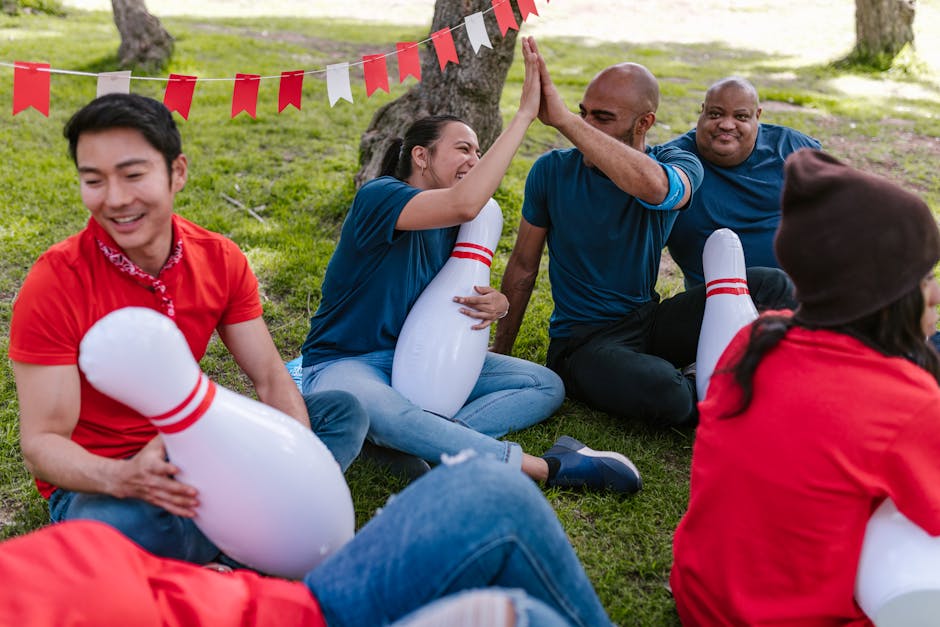
Is your team feeling disconnected, with productivity hitting a plateau? You’re not alone. In today’s fast-paced work environments, fostering strong team cohesion isn’t just a ‘nice-to-have’ – it’s a critical driver of success. Imagine if a single activity could unlock better communication, spark innovation, and boost overall morale. It’s possible. This comprehensive guide will equip you with over 50 engaging team building activities to ignite your team’s potential and drive collective success.
Table of Contents
- Executive Summary
- The Unignorable Power of Team Building
- Types of Team Building Activities
- 1. Icebreakers and Get-to-Know-You Activities
- 2. Problem-Solving and Strategy Games
- 3. Skill-Building Workshops
- 4. Physical and Outdoor Activities
- 5. Virtual Team Building Activities
- Planning Your Next Team Building Event
- Overcoming Common Challenges
- Resistance to Participation
- Time Constraints
- Lack of Budget
- Ensuring Inclusivity
- Conclusion: Investing in Your Greatest Asset
- References
Executive Summary
- Team building is a strategic imperative, not a perk, essential for enhancing communication, morale, problem-solving, and overall productivity.
- Activities can be categorized into icebreakers, problem-solving games, skill-building workshops, physical/outdoor challenges, and virtual options, catering to diverse team needs.
- Successful team building requires defining clear goals, understanding team dynamics, selecting appropriate activities, meticulous planning, active facilitation, and a crucial debriefing process.
- Common challenges like resistance, time constraints, budget limitations, and inclusivity issues can be overcome with thoughtful strategies.
- Investing in team building is investing in your people, leading to a more resilient, innovative, and high-performing organization.
The Unignorable Power of Team Building
Think about the last time your team truly clicked. Was it during a brainstorming session where ideas flowed freely? Or perhaps after successfully navigating a challenging project together? These moments of synergy don’t happen by accident. They are often the result of intentional efforts to strengthen relationships and improve collaboration. Team building activities act as the catalyst, transforming a group of individuals into a cohesive unit capable of achieving extraordinary results.
- Enhanced Communication: Activities that require collaboration naturally break down communication barriers. When team members are encouraged to share ideas, listen actively, and provide constructive feedback, their overall communication skills improve. This is foundational for any leader aiming to excel in Leadership Communication Styles. Effective communication is like the central nervous system of a team, ensuring all parts work in harmony.
- Boosted Morale and Engagement: Feeling valued and connected to colleagues significantly impacts job satisfaction. Team building events provide a relaxed setting for employees to bond, fostering a sense of belonging and camaraderie that translates into higher engagement levels. A happy team is a productive team, much like a well-watered plant that flourishes.
- Improved Problem-Solving: Many team building exercises are designed to present challenges that require creative thinking and collective effort to overcome. This not only sharpens Problem Solving Skills for Leaders but also helps individuals understand how their unique skills contribute to the team’s success. It’s about teaching the team to see challenges not as roadblocks, but as puzzles to be solved together.
- Increased Productivity and Performance: When trust and understanding are high, teams operate more efficiently. Less time is wasted on misunderstandings, and individuals are more willing to support each other, leading to a direct impact on Team Performance Optimization. A well-oiled machine runs smoother and faster.
- Building Trust: At the heart of every high-performing team is a strong foundation of trust. Activities that encourage vulnerability and mutual reliance are key to Building Trust in Leadership, a cornerstone of effective management. Trust is the glue that holds the team together, allowing individuals to rely on each other without hesitation.
Types of Team Building Activities
Not all team building activities are created equal. The most effective ones align with your team’s specific goals and culture. Here’s a breakdown of common categories, each designed to serve a unique purpose:
1. Icebreakers and Get-to-Know-You Activities
These are perfect for new teams, integrating new members, or simply refreshing existing connections. They focus on fostering personal connections and making everyone feel comfortable and seen.
- Two Truths and a Lie: Each person shares three ‘facts’ about themselves – two true, one false. The group then guesses which statement is the lie. This is a fun way to uncover surprising aspects of colleagues’ lives and encourage lighthearted interaction.
- Human Bingo: Create bingo cards with squares like “Has traveled to Europe,” “Speaks more than two languages,” “Is left-handed,” or “Can play a musical instrument.” Participants mingle to find colleagues who fit the descriptions and get their signatures. It encourages movement and conversation.
- Desert Island Scenario: Pose the question: “If you were stranded on a desert island, what three non-essential items would you bring and why?” This reveals priorities, values, and helps people understand each other’s thinking processes in a low-stakes environment.
- Personal User Manuals: Each team member creates a short document outlining their communication preferences, working style, strengths, and how they prefer to receive feedback. Sharing these creates a roadmap for better collaboration.
2. Problem-Solving and Strategy Games
These activities are designed to challenge teams to think critically, collaborate under pressure, and devise effective strategies. They simulate real-world challenges in a controlled, engaging environment.
- Escape Rooms: Teams work together against the clock to find clues, solve intricate puzzles, and “escape” a themed room. This activity heavily relies on communication, logical deduction, and shared responsibility.
- Scavenger Hunts: Design a hunt that requires teams to decipher riddles, find specific hidden items, or complete creative tasks at various locations. This can be adapted for office spaces, city streets, or even virtual environments.
- Marshmallow Challenge: Teams are given a limited amount of spaghetti, tape, string, and one marshmallow, then tasked with building the tallest free-standing structure that can support the marshmallow on top. It’s a surprisingly effective exercise in rapid prototyping, iterative design, and understanding team dynamics under pressure.
- The Logic Puzzle: Present a complex scenario with multiple interconnected variables and constraints. The team must work together to deduce the correct sequence of events or the optimal solution. This directly hones Problem Solving Skills for Leaders and encourages systematic thinking.
- Building Bridges: Divide the team into two groups and give each group half of the materials needed to build a bridge. They must then negotiate and collaborate to complete the bridge, often requiring one team to work physically on the other’s side. This highlights interdependence and communication across team boundaries.
3. Skill-Building Workshops
These sessions are focused on developing specific professional or interpersonal skills within a collaborative team context. They offer tangible takeaways that can be immediately applied to work.
- Communication Workshops: Interactive sessions focusing on crucial areas such as Active Listening for Leaders, assertive communication, or conflict resolution.
- Creative Thinking Sessions: Workshops designed to stimulate innovative thinking using techniques like Design Thinking, Brainstorming variations (e.g., Brainwriting), or SCAMPER.
- Negotiation and Persuasion Skills for Leaders Training: Practical exercises and role-playing scenarios to improve the team’s ability to influence, negotiate effectively, and reach mutually beneficial agreements.
- Feedback and Coaching Skills: Training that equips team members with the ability to give and receive constructive feedback, fostering a culture of continuous improvement.
4. Physical and Outdoor Activities
These activities are excellent for boosting energy levels, encouraging teamwork in a different, often more relaxed, setting, and promoting healthy competition. They can also be great for team members who prefer kinesthetic learning and engagement.
- Team Sports: Organizing a friendly, low-stakes game of soccer, basketball, volleyball, or even a company-wide kickball tournament. The focus should be on fun and participation, not just winning.
- Ropes Courses/Adventure Parks: These involve physical challenges that require trust, support, and encouragement among team members. They are particularly effective for building trust and overcoming fears together.
- Company Field Day: A classic revival of schoolyard games like sack races, three-legged races, water balloon toss, and obstacle courses. This brings out a sense of playful competition and nostalgia.
- Outdoor Exploration/Hiking: A guided hike or nature walk can be a refreshing way for teams to connect, converse informally, and enjoy a change of scenery.
- Kayaking or Canoeing Trip: These water-based activities require coordination and teamwork, especially if done in pairs or groups.
5. Virtual Team Building Activities
For remote and hybrid teams, virtual options are not just alternatives but necessities. They ensure that distance doesn’t create division and that all team members feel included and connected.
- Online Trivia or Game Shows: Utilizing platforms like Kahoot!, Mentimeter, or dedicated virtual event companies to host engaging trivia competitions or game shows. These can be themed around company knowledge, pop culture, or general trivia.
- Virtual Coffee Breaks or Happy Hours: Scheduling informal, recurring video calls where team members can simply chat about non-work-related topics, share weekend plans, or discuss hobbies.
- Online Escape Rooms: Many companies now offer virtual versions of escape room experiences, where teams solve puzzles collaboratively on their screens.
- Remote Talent Show: Encourage team members to share a hidden talent – be it singing, playing an instrument, juggling, or reciting poetry – via a video call.
- Virtual Pictionary or Charades: Using online drawing tools or video conferencing features to play classic guessing games.
- Collaborative Storytelling: One person starts a story with a sentence, and each subsequent person adds a sentence, building a narrative together.
- Virtual Book Club: Select a book (professional or leisure) for the team to read and then discuss during a scheduled virtual meeting.
Planning Your Next Team Building Event
To ensure your team building efforts are not just fun but also impactful and successful, a structured approach is key. Think of it like preparing for a crucial game – you need a strategy, the right players, and clear objectives.
Step 1: Define Your Goals
Before selecting an activity, clearly articulate what you aim to achieve. Are you trying to solve a specific problem, or is it a general boost? Consider:
- Improve inter-departmental communication
- Boost team morale after a challenging quarter
- Enhance cross-functional problem-solving skills
- Foster a culture of innovation and idea-sharing
- Effectively onboard new team members and integrate them culturally
- Celebrate a significant team or company success
- Strengthen trust among team members
Step 2: Know Your Team
Understanding your team members is crucial for selecting activities that resonate and are inclusive. Consider:
- Team size and demographics (age, cultural background)
- Physical abilities, health conditions, and comfort levels with physical exertion
- General interests, personalities (introvert/extrovert), and past experiences with team building
- Budgetary constraints and available time blocks
- The team’s current work environment (e.g., fully remote, hybrid, in-office) and whether they are experienced in Leading Hybrid and Remote Teams.
Step 3: Choose the Right Activity
With clear goals and a good understanding of your team, select an activity that offers the best alignment. For instance, a high-energy physical activity might be perfect for boosting morale after a lull, but inappropriate if the team is dealing with burnout. Conversely, a reflective workshop might be ideal for a team needing to rebuild trust after conflict, aligning with principles of Psychological safety restoration. Variety is key – consider mixing different types of activities throughout the year.
Pro-Tip: Always have a backup plan! Weather can change, technology can fail, or an activity might not land as expected. Being prepared with an alternative activity or a way to pivot can save the day.
Step 4: Plan and Communicate
Meticulous planning ensures a smooth experience:
- Secure a date and time that minimizes disruption to critical work.
- Book venues, facilitators, or virtual platforms well in advance.
- Clearly communicate the purpose, objectives, schedule, location (or virtual link), and any necessary preparations (e.g., what to wear, what to bring) to the team well in advance.
- Ensure buy-in and support from senior management, as their visible participation often encourages team members.
Step 5: Facilitate and Participate
The success of an activity often hinges on its facilitation:
- Lead by example: Participate actively, show enthusiasm, and demonstrate the desired behaviors.
- Encourage inclusion: Ensure everyone has an opportunity to participate and contribute, fostering an environment where Emotional Intelligence in Leadership is practiced.
- Maintain a safe and positive environment: Emphasize respect, fun, and learning over competition or judgment.
- Be flexible: Adapt the activity if needed based on the group’s energy and engagement levels.
Step 6: Debrief and Follow Up
This is arguably the most critical step for translating activity engagement into lasting impact:
- Discuss learnings: Facilitate a conversation about what happened during the activity, what challenges were faced, and how they were overcome.
- Connect to work: Guide the team to identify how the skills, insights, or relationships developed during the activity can be applied to their daily tasks and team dynamics. For example, “How can we use the communication strategies we practiced today in our next project meeting?”
- Gather feedback: Ask for honest feedback on the activity itself – what worked, what could be improved, and what types of activities the team would enjoy in the future. Use this to inform future planning.
- Reinforce positive changes: Acknowledge and encourage the continued application of positive behaviors and insights gained from the team building experience in regular team interactions and project work.
Overcoming Common Challenges
Even with the best intentions, team building can face hurdles. Recognizing these beforehand can help you navigate them smoothly, ensuring your efforts yield the desired results.
Resistance to Participation
- Why it happens: Employees might perceive activities as “forced fun,” a superficial waste of valuable work time, or feel personally uncomfortable with certain types of activities (e.g., public speaking, physical challenges).
- Solution: Clearly and consistently communicate the purpose, objectives, and genuine benefits of the activity. Offer a variety of activities that cater to different personalities and preferences. Ensure leadership participates enthusiastically and genuinely, setting a positive example. Frame activities as investments in team well-being and effectiveness, not just leisure.
Time Constraints
- Why it happens: In high-pressure environments, carving out dedicated time for non-project-related activities can seem impossible. Busy schedules and tight deadlines often push team building to the bottom of the priority list.
- Solution: Integrate short, impactful activities into existing meeting structures (e.g., a 15-minute icebreaker at the start of a weekly sync). Schedule events during core work hours to signal that the organization values this time, rather than expecting employees to sacrifice personal time. Mastering Time Management for Leaders principles can help identify and protect these valuable windows for team development. Even 30-60 minutes can be highly effective if well-planned.
Lack of Budget
- Why it happens: Not all companies allocate specific funds for team building, especially smaller businesses or those facing financial pressures.
- Solution: Focus on creative, low-cost, or entirely free activities. Examples include: organizing a team potluck lunch, utilizing office common areas for a game session, conducting an internal skill-sharing workshop where team members teach each other something new, planning a group walk during lunch, or using free online collaboration tools for virtual games. The effectiveness often lies in the intention and execution, not the price tag.
Ensuring Inclusivity
- Why it happens: Activities might inadvertently exclude individuals due to physical limitations, dietary restrictions, introverted personalities, neurodiversity, or cultural differences. What’s engaging for one person might be anxiety-inducing for another.
- Solution: Offer a diverse range of activities catering to different energy levels, physical capabilities, and social preferences. For physically demanding activities, ensure there are alternative ways to participate or contribute (e.g., team coach, scorekeeper, planner). Be mindful of cultural norms and dietary needs when planning events. Consider activities well-suited for introverts or those who thrive on quieter, more focused engagement, aligning with principles found in frameworks like ambient leadership frameworks that nurture innovation within diverse teams. Always seek input from team members on their preferences and comfort levels.
Important Warning: Never force participation in activities that could compromise an individual’s privacy, comfort, or personal beliefs. Inclusivity means ensuring *everyone* can feel safe and respected, even if their level of participation varies. Forced fun can backfire, leading to resentment rather than cohesion.
Conclusion: Investing in Your Greatest Asset
Team building activities are far more than just a break from the routine; they are a strategic investment in your organization’s most valuable asset: its people. By intentionally fostering stronger connections, enhancing communication channels, and cultivating a spirit of collaboration, you are laying the essential groundwork for a more resilient, innovative, and ultimately, successful team. Whether you’re looking to Build High-Performing Teams from the ground up or re-energize and unite an established group, consistent and thoughtful team building is the key to unlocking your team’s full potential.
References
- The Impact of Team Building Activities on Employee Engagement and Productivity. (n.d.). Retrieved from scholar.google.com
- Katzenbach, J. R., & Smith, D. K. (2015). The Wisdom of Teams: Creating the High-Performing Organization. Harvard Business Review Press.
- Lencioni, P. M. (2002). The Five Dysfunctions of a Team: A Leadership Fable. Jossey-Bass.
- Hofmann, D. A. (2017). The Group-Level Causes of Employee Misconduct. Journal of Applied Psychology, 102(2), 189–204. doi.org/10.1037/apl0000170
- Why Team Building is Crucial for Company Success. (2023, October 26). Forbes. Retrieved from www.forbes.com
- Duchon, D., & Vuczkov, K. (2017). Building High-Impact Teams: Accountability, Collaboration, Transformation. www.executivetheory.com
- Carmeli, A., &affe, D. (2007). Team’s Psychological Safety in the Context of Innovation and Creativity. Journal of Trust Research, 7(1), 1-19. www.tandfonline.com/doi/abs/10.1080/27697107.2017.11725529
Featured image by RDNE Stock project on Pexels