Leadership-Driven Team Building Strategies
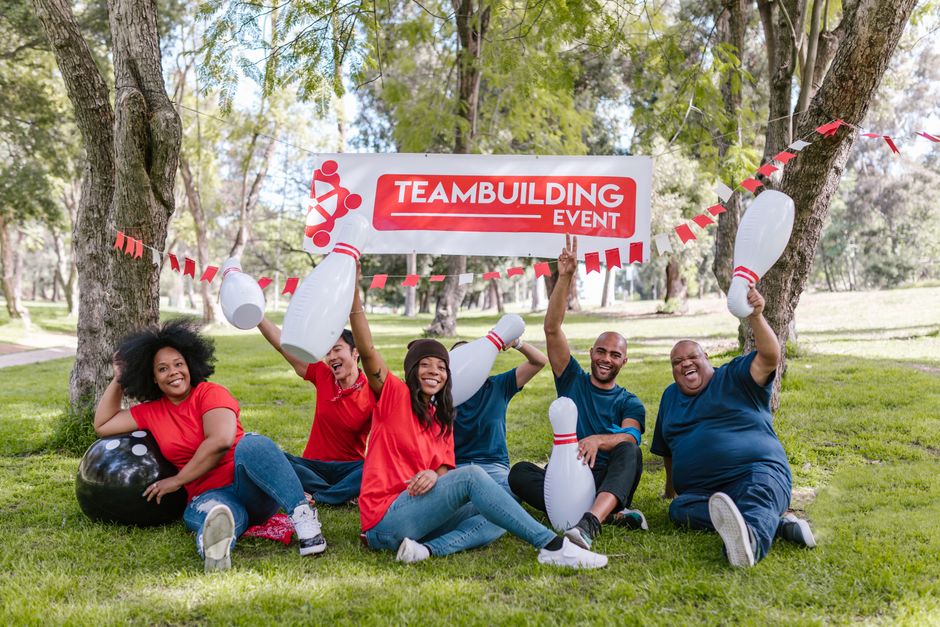
Table of Contents
- Defining Leadership’s Role in Team Building
- Strategies for Enhancing Communication and Collaboration
- Empowering Team Members for Growth and Autonomy
- Cultivating a Positive and Inclusive Team Culture
- Measuring and Adapting Team Building Efforts
Defining Leadership’s Role in Team Building
The notion that effective team building is solely the purview of HR departments or a dedicated "team lead" is a pervasive, yet fundamentally flawed, assumption. As seasoned industry professionals know, leadership’s role in forging cohesive, high-performing teams is not merely supervisory; it’s foundational. Leaders are the architects, the navigators, and the cultivators of team success.
Understanding the Leader’s Responsibility Beyond Task Delegation
To truly excel in leadership, one must transcend the transactional act of delegating tasks. While assigning responsibilities is crucial, a leader’s impact lies in how and why those tasks are assigned, and the environment created around their execution. It’s about understanding the individual strengths and developmental needs of each team member and weaving them into a collective tapestry of purpose. This means actively listening, providing constructive feedback, and championing growth opportunities. It’s about fostering a culture where individuals feel empowered to contribute their best, not just to tick boxes, but to genuinely impact the team’s objectives. This holistic approach to team development is a core tenet of effective Team Building Strategies.
The Impact of Leadership Style on Team Cohesion and Performance
Your leadership style is a powerful force that directly shapes team dynamics and, consequently, performance. A command-and-control approach, for instance, might yield short-term compliance but will likely stifle innovation and engagement in the long run. Conversely, a transformational or servant leadership style, which emphasizes empowerment, inspiration, and development, tends to cultivate deeper levels of trust, loyalty, and a shared commitment to goals. The subtle nuances of how a leader communicates, provides recognition, and handles challenges can either build bridges or erect barriers within a team. Understanding Team Dynamics in Leadership is therefore paramount for any leader aiming to enhance team cohesion and drive exceptional results. This is particularly evident in fast-paced environments like sales, where Sales Team Leadership Strategies can make or break performance.
Establishing a Clear Vision and Shared Purpose for the Team
A team without a clear vision is like a ship without a rudder. Leaders have the profound responsibility to articulate a compelling vision that transcends individual tasks and provides a sense of overarching purpose. This vision needs to be more than just a set of objectives; it should inspire, motivate, and align every team member towards a common goal. When individuals understand why their work matters and how it contributes to a larger, meaningful objective, their engagement and commitment skyrocket. This is a cornerstone of Project Leadership: Vision, Strategy & Team Building, ensuring that everyone is pulling in the same direction.
Case Study: Bridging the Divide in a Cross-Functional Project
When a major product launch faced significant delays due to a lack of coordination between engineering and marketing teams, the newly appointed project lead, Sarah, recognized the need for a deeper intervention than simply scheduling more meetings. She initiated a series of workshops focused on clarifying the overarching product vision, emphasizing how each team’s contribution was critical to its success. Sarah then implemented a shared communication platform and encouraged cross-team “buddy systems” to foster understanding of each other’s challenges and workflows. This focus on shared purpose and empathy, rather than just task management, significantly improved interdepartmental collaboration, leading to a successful, albeit delayed, launch and a lasting improvement in how these teams worked together. This exemplifies how Team Collaboration Strategies for Project Success are directly driven by leadership.
Fostering an Environment of Trust and Psychological Safety
Perhaps the most critical, yet often overlooked, aspect of leadership’s role in team building is the cultivation of trust and psychological safety. This is the bedrock upon which all other team-building efforts are built. When team members feel safe to express ideas, admit mistakes, and offer constructive criticism without fear of retribution or embarrassment, innovation flourishes, and collaboration deepens. Leaders achieve this by demonstrating vulnerability, actively listening, being transparent in their decision-making, and consistently acting with integrity. Creating an environment where "it’s okay to not be okay" (within professional boundaries) allows for genuine connection and a willingness to take risks, which is essential for high performance, especially in complex or Virtual Team Collaboration Strategies environments. As Amy Edmondson, a leading researcher in this field, highlights, psychological safety is a prerequisite for learning and innovation in teams. A truly cohesive team, with strong Team Cohesion Strategies for Leaders, is one where members feel respected, valued, and secure enough to be their authentic selves.
Strategies for Enhancing Communication and Collaboration
Effective leadership hinges on the ability to foster robust communication and seamless collaboration within a team. Without these foundational elements, even the most talented individuals can struggle to achieve collective success. This section delves into practical strategies leaders can implement to enhance these critical areas, drawing upon proven Team Building Strategies.
Implementing Effective Communication Channels and Protocols
The bedrock of any high-performing team is clear, consistent, and accessible communication. Leaders must proactively establish and champion well-defined communication channels and protocols. This isn’t merely about having a chat platform; it’s about defining how and when different types of information should flow. For instance, urgent decisions might necessitate immediate calls or instant messaging, while broader project updates could be best suited for scheduled team meetings or detailed email summaries. Establishing a clear hierarchy for information dissemination, especially in larger or distributed teams, prevents confusion and ensures everyone is operating with the most up-to-date information. Consider adopting a "communication charter" that outlines preferred platforms for different communication types, expected response times, and guidelines for professional conduct across all channels. This proactive approach is a cornerstone of successful Project Leadership: Vision, Strategy & Team Building.
Encouraging Active Listening and Constructive Feedback
Communication is a two-way street, and true collaboration thrives when every team member feels heard and valued. Leaders play a pivotal role in cultivating a culture of active listening and constructive feedback. This means modeling attentive behavior, paraphrasing to ensure understanding, and asking clarifying questions. Beyond passive listening, leaders must actively encourage feedback, both positive and developmental. This involves creating psychologically safe spaces where individuals feel comfortable sharing their thoughts, concerns, and ideas without fear of reprisal. Implementing regular one-on-one meetings, anonymous feedback mechanisms, and post-project retrospectives can all contribute to a culture where feedback is seen as a gift for growth. As highlighted by Harvard Business Review, fostering an environment of candid yet compassionate feedback is essential for Team Dynamics in Leadership.
Case Study: Bridging the Gap with “Daily Huddles”
A mid-sized tech company, struggling with siloed departments and missed deadlines, implemented a daily 15-minute “stand-up” meeting across all teams. The objective was simple: each team member briefly shares what they worked on yesterday, what they plan to work on today, and any roadblocks they are facing. This initiative, driven by a commitment to transparency and rapid problem-solving, significantly improved cross-functional awareness. Developers began to proactively assist marketing with technical queries, and product managers gained real-time insights into engineering challenges. This simple protocol not only accelerated project timelines, aligning with Team Productivity Strategies but also fostered a greater sense of camaraderie and shared purpose.
Facilitating Cross-Functional Collaboration and Knowledge Sharing
Breaking down departmental silos is paramount for innovation and efficiency. Leaders must actively champion cross-functional collaboration, creating opportunities for individuals from different areas to work together and share their unique expertise. This can involve forming cross-functional project teams, initiating "lunch and learn" sessions where different departments present their work, or establishing internal knowledge-sharing platforms. Encouraging this interdisciplinary exchange not only leads to more robust solutions but also broadens individual perspectives and fosters a more holistic understanding of the business. For teams operating remotely, Virtual Team Collaboration Strategies are particularly crucial for maintaining this interconnectedness.
Utilizing Technology to Support Team Communication and Project Management
In today’s dynamic work environment, leveraging technology is not optional; it’s essential for effective team communication and project management. A suite of tools can facilitate seamless interaction, streamline workflows, and enhance transparency. Project management software, such as Asana, Trello, or Jira, provides a central hub for task assignment, progress tracking, and deadline management, directly supporting Team Productivity Strategies for Leaders. Communication platforms like Slack or Microsoft Teams enable real-time messaging, file sharing, and video conferencing, which are invaluable for both co-located and distributed teams. For leaders of remote teams, mastering Remote Team Management Strategies often involves strategically selecting and implementing these technological solutions. Furthermore, collaborative document editing tools and shared cloud storage facilitate efficient knowledge sharing and co-creation, reinforcing Team Dynamics and Collaboration Strategies.
Empowering Team Members for Growth and Autonomy
True leadership isn’t about hoarding tasks; it’s about cultivating an environment where every team member can thrive. Empowering your people is a cornerstone of effective Team Building Strategies, fostering a sense of ownership, driving innovation, and ultimately, boosting productivity.
Delegating Effectively to Build Confidence and Ownership: Delegation is more than just offloading work; it’s an investment in your team’s capabilities. When you delegate thoughtfully, providing clear objectives, necessary resources, and then stepping back, you signal trust and provide a crucial opportunity for team members to develop new skills and take pride in their contributions. This approach is particularly vital in fast-paced environments like sales, where empowering individuals can significantly impact Sales Team Productivity Strategies. Start with smaller, manageable tasks and gradually increase responsibility as confidence and competence grow. This iterative process builds not only individual assurance but also collective responsibility for Project Leadership: Vision, Strategy & Team Building.
Providing Opportunities for Skill Development and Learning: A team that isn’t learning is a team that’s stagnating. Leaders must actively champion a culture of continuous learning. This can manifest in various ways: sponsoring external training, encouraging participation in workshops, setting aside time for internal knowledge-sharing sessions, or even providing access to online learning platforms. When team members feel their professional development is a priority, their engagement and loyalty deepen, contributing to Leadership Strategies for Employee Retention. Consider implementing structured mentorship programs, where more experienced team members can guide and develop emerging talent, a powerful aspect of Sales Team Leadership Development.
Recognizing and Leveraging Individual Strengths and Talents: Every individual brings a unique set of skills, experiences, and perspectives to the table. Effective leaders take the time to truly understand their team members, identifying their strengths and then strategically assigning tasks and projects that allow those strengths to shine. This not only makes work more enjoyable and fulfilling but also maximizes the team’s overall effectiveness. This deep understanding is crucial for fostering positive Team Dynamics in Leadership and can be especially important when navigating Mastering Cross-Cultural Leadership: Adaptability for Global Teams. By aligning individual talents with team goals, you create a powerful synergy.
Encouraging Initiative and Problem-Solving at All Levels: A truly empowered team doesn’t wait for instructions; they proactively identify challenges and propose solutions. Leaders should create an environment where taking initiative is not only accepted but celebrated. This means fostering psychological safety, where team members feel comfortable voicing ideas, even if they’re unconventional, and are not penalized for taking calculated risks. Encourage experimentation and learning from failures. This can be facilitated through well-structured brainstorming sessions, as discussed in Mastering Meeting Facilitation: The Unsung Hero of Leadership Team Effectiveness. By empowering individuals to solve problems at their level, you free up leadership bandwidth and cultivate a more agile and resilient organization, contributing to strong Team Productivity Strategies. This focus on autonomy and self-direction is a key component of Building Executive Grit: How to Forge Tenacious Leadership Teams.
- Actively delegate tasks, providing clear guidance and support.
- Invest in training and development opportunities for all team members.
- Conduct regular one-on-one meetings to understand individual strengths and career aspirations.
- Foster an open environment where new ideas and problem-solving approaches are encouraged.
- Recognize and reward initiative, even when outcomes are not perfect.
Cultivating a Positive and Inclusive Team Culture
A thriving team isn’t just a collection of individuals; it’s a well-oiled machine fueled by a shared purpose and a culture that champions mutual respect and support. As leaders, our role in cultivating this positive and inclusive environment is paramount. This goes beyond simply assigning tasks; it’s about intentionally shaping the very atmosphere in which your team operates, impacting everything from Team Productivity Strategies to overall morale.
Setting Clear Expectations and Fostering Accountability
At the bedrock of any strong team culture lies clarity. Leaders must meticulously define what success looks like, not just in terms of outcomes, but also in how the team conducts itself. This means establishing explicit expectations for behavior, communication, and professional conduct. When everyone understands the non-negotiables – respect, collaboration, honesty – it lays the groundwork for a cohesive unit. Crucially, this clarity must be coupled with robust accountability. When expectations are missed, whether in deliverables or in interpersonal interactions, leaders must address it promptly and impartially. This doesn’t mean punitive measures, but rather a commitment to learning and improvement. This approach is fundamental to effective Team Dynamics in Leadership and is particularly vital when implementing Team Building Strategies.
Championing Diversity and Inclusion
A truly powerful team harnesses the richness of diverse perspectives, experiences, and backgrounds. Leaders must actively champion diversity and foster an inclusive environment where every team member feels valued, heard, and empowered to contribute their unique insights. This involves actively seeking out and incorporating a variety of viewpoints, ensuring that all voices have an equal opportunity to be heard, and challenging any biases that may inadvertently surface. When diversity and inclusion are woven into the fabric of the team, it unlocks greater creativity, better problem-solving, and ultimately, more robust outcomes. This is especially true in today’s globalized workforce, demanding a nuanced approach to Mastering Cross-Cultural Leadership: Adaptability for Global Teams.
Celebrating Success and Learning from Setbacks Together
The journey of any team is marked by both triumphs and challenges. Leaders play a critical role in acknowledging and celebrating successes, no matter how small. Publicly recognizing achievements boosts morale, reinforces desired behaviors, and strengthens team cohesion. Equally important is how the team navigates failures. Instead of assigning blame, leaders should foster an environment where setbacks are viewed as invaluable learning opportunities. A collaborative post-mortem, focusing on what can be learned and improved, encourages resilience and a growth mindset, a core component of Building Executive Grit: How to Forge Tenacious Leadership Teams. This shared experience of overcoming obstacles can forge even stronger bonds and enhance Team Cohesion Strategies for Leaders.
Navigating Conflict with Constructive Resolution
Conflict is an inevitable part of team dynamics. However, how it is managed can either derail a team or serve as a catalyst for deeper understanding and stronger relationships. Leaders must equip themselves with the skills to resolve conflicts constructively and impartially. This involves creating a safe space for open communication, actively listening to all perspectives, and guiding the team towards mutually agreeable solutions. By addressing conflict head-on with empathy and fairness, leaders can transform potentially damaging situations into opportunities for growth and improved Team Dynamics and Collaboration Strategies. For guidance on specific techniques, consider exploring Leadership strategies for resolving workplace conflict.
FAQ: How can leaders effectively encourage diverse perspectives in team meetings?
Leaders can encourage diverse perspectives by proactively soliciting input from quieter team members, using techniques like round-robin sharing, and ensuring that meeting agendas allow ample time for discussion and debate. Creating psychological safety where team members feel comfortable challenging the status quo is also critical. For remote teams, leveraging collaboration tools that facilitate asynchronous input can be incredibly effective. This ties directly into Virtual Team Collaboration Strategies and Team Collaboration Strategies for Remote Teams.
FAQ: What is the best way to handle a situation where a team member’s behavior is negatively impacting team culture?
The most effective approach is to address the behavior directly and privately with the individual. Focus on the specific actions and their impact, rather than making personal judgments. Clearly reiterate the team’s behavioral expectations and collaboratively discuss strategies for improvement. If the behavior persists, further action may be necessary, but always with fairness and a commitment to the team’s overall well-being. This aligns with the principles of Leadership’s Role in Culture Building.
Measuring and Adapting Team Building Efforts
As leaders, our commitment to fostering effective teams doesn’t end with implementing a new initiative. The true mark of seasoned leadership lies in our ability to rigorously measure the impact of our Team Building Strategies and adapt our approach based on tangible results and team feedback. Without this iterative process, even the most well-intentioned efforts can become stale and ineffective.
The first step in this critical measurement phase is establishing key performance indicators (KPIs) for team effectiveness. These shouldn’t be abstract notions, but rather concrete metrics that reflect desired outcomes. Depending on the team’s function and your organizational goals, these KPIs could include improvements in project completion rates, a reduction in errors, enhanced cross-functional collaboration, increased employee engagement scores, or even direct impacts on revenue, particularly for a sales team where metrics are paramount. For instance, if your focus is on improving Team Productivity Strategies within a development team, KPIs might track sprint velocity or bug resolution times. For Sales Team Leadership Strategies, key indicators might be conversion rates, average deal size, or customer satisfaction scores.
To gain a holistic understanding of team health, we must go beyond quantitative data and gather feedback through surveys and one-on-one discussions. Anonymous pulse surveys can provide a quick temperature check on morale and perceived effectiveness, while individual conversations offer a deeper dive into challenges, successes, and individual perceptions of team dynamics. These discussions are invaluable for uncovering nuanced issues that quantitative data might miss, such as breakdowns in communication or feeling unvalued. This qualitative data is a goldmine for understanding Team Dynamics in Leadership.
Next, it’s crucial to analyze team dynamics and identify areas for improvement. This involves actively observing how team members interact, communicate, and resolve conflicts. Are there silos forming? Is feedback being openly shared? Are certain individuals dominating discussions while others remain silent? Understanding these patterns is key to pinpointing specific interventions. For example, recognizing a pattern of underdeveloped Team Cohesion Strategies for Leaders might lead to more structured social events or collaborative problem-solving sessions. Similarly, if Remote Team Management Strategies are not yielding expected results, a closer look at Remote Leadership Challenges & Communication Strategies becomes essential.
Finally, and perhaps most importantly, we must iterate on strategies based on performance data and feedback. Team building is not a one-and-done event; it’s an ongoing process of refinement. If a particular team-building activity didn’t resonate or didn’t produce the desired results, we shouldn’t be afraid to abandon it or modify it significantly. Conversely, if a certain approach demonstrably improved collaboration, we should explore how to scale or replicate its success. This continuous improvement loop ensures that our efforts remain relevant and impactful. As noted by Harvard Business Review, "The best leaders don’t just implement strategies; they are constantly evaluating and adjusting them based on real-world outcomes." This agile approach to team development is foundational to sustained success, reflecting an ongoing commitment to Leadership Learning Strategies and fostering high-performing teams, whether in a traditional office or across the globe with Virtual Team Collaboration Strategies.
- Define clear, measurable KPIs aligned with team goals.
- Implement a consistent feedback loop using both surveys and individual check-ins.
- Actively observe and analyze team interactions and communication patterns.
- Be prepared to adapt or pivot strategies based on data and feedback.
Featured image by RDNE Stock project on Pexels