Financial Forecasting for Executives: Drive Strategic Decisions with Precision
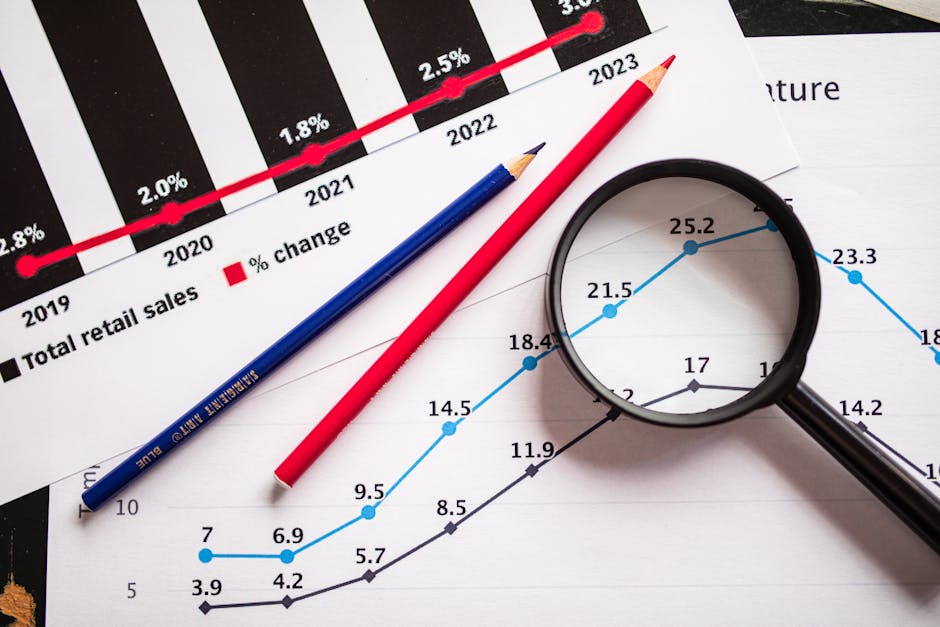
Does your executive team feel adrift in a sea of market uncertainty? Imagine making critical strategic decisions not based on gut instinct, but on a clear, data-backed vision of the future. Financial forecasting transforms this vision into a tangible roadmap, empowering leadership to navigate complexities and seize opportunities with confidence.
Executive Summary
This article explores the critical role of financial forecasting for executive teams. It delves into the core components of effective forecasting, the methodologies employed, the benefits for strategic decision-making, and best practices for implementation. The aim is to equip leaders with the knowledge to leverage financial forecasts as powerful tools for growth and stability.
Table of Contents
- What is Financial Forecasting and Why It Matters
- Key Components of Effective Financial Forecasting
- Common Financial Forecasting Methodologies
- Benefits of Robust Financial Forecasting for Executives
- Implementing Financial Forecasting Effectively
- Frequently Asked Questions
- References
What is Financial Forecasting and Why It Matters
Financial forecasting is the process of estimating future financial outcomes based on historical data, current trends, and informed assumptions. For executive teams, it’s not merely an accounting exercise; it’s a strategic imperative. It provides a forward-looking perspective crucial for setting realistic goals, allocating resources efficiently, and steering the company through dynamic market conditions. Without a solid forecast, leadership can inadvertently make decisions based on incomplete information, leading to missed opportunities or unexpected financial strain.
Key Components of Effective Financial Forecasting
Effective financial forecasting is built upon several pillars:
Historical Data Accuracy
The foundation of any reliable forecast lies in the quality and accuracy of past financial data. Clean, well-organized historical records are essential for identifying trends and patterns.
Market and Economic Analysis
Understanding external factors such as industry trends, competitor actions, economic indicators (inflation, interest rates), and regulatory changes is vital for contextualizing internal data.
Realistic Assumptions
Forecasting involves making educated guesses about the future. These assumptions, whether about sales growth, operational costs, or market share, must be grounded in research and rationale.
Defined Time Horizon
Decide whether the forecast is short-term (e.g., quarterly), medium-term (e.g., 1-3 years), or long-term (e.g., 5+ years). The chosen horizon dictates the level of detail and the methodologies used.
Regular Updates and Revisions
Markets are fluid. A forecast is a living document that requires periodic review and adjustment as new information becomes available.
Common Financial Forecasting Methodologies
Several methods can be employed, often in combination, to create a comprehensive financial forecast.
Time Series Analysis
This technique uses historical data points over time to predict future values. It assumes that past patterns will continue into the future. Common methods include moving averages and exponential smoothing.
Regression Analysis
Regression models analyze the relationship between a dependent variable (e.g., sales) and one or more independent variables (e.g., marketing spend, economic indicators). This helps understand the drivers of financial outcomes.
Scenario Planning
Scenario planning involves developing multiple plausible future scenarios (e.g., best-case, worst-case, most-likely) and forecasting financial outcomes for each. This is crucial for understanding potential risks and opportunities and is a cornerstone of robust Budgeting & Financial Planning for Leaders.
Pro-Tip: When developing scenarios, involve cross-functional teams to ensure diverse perspectives and assumptions, making the scenarios more realistic and actionable.
Benefits of Robust Financial Forecasting for Executives
Financial forecasting offers profound advantages for executive leadership:
Informed Strategic Decision-Making
Forecasts provide the data needed to make strategic choices about market entry, product development, capital investments, and mergers or acquisitions. It moves decision-making from reactive to proactive. This aligns with the principles of building high-performing teams, where clear strategic direction is paramount for Unlock Peak Performance: Your Blueprint for Building High-Performing Teams.
Resource Allocation Optimization
Understanding future financial needs and potential revenue streams allows executives to allocate capital, human resources, and other assets more effectively, ensuring investments are directed towards the most promising areas.
Risk Management and Mitigation
By anticipating potential financial challenges – such as revenue shortfalls or cost overruns – forecasts enable the executive team to develop contingency plans and mitigation strategies, safeguarding the organization.
Important Warning: Over-reliance on a single forecast without considering alternative scenarios can lead to significant vulnerabilities. Always prepare for the unexpected.
Performance Monitoring and Control
Forecasts serve as benchmarks against which actual performance can be measured. Deviations can trigger investigations and corrective actions, maintaining financial discipline.
Implementing Financial Forecasting Effectively
Successful implementation requires a structured approach:
Gathering Accurate Data
Invest in systems and processes that ensure the integrity and accessibility of financial data. This includes robust ERP systems and clear accounting practices.
Choosing the Right Tools and Technology
Leverage specialized forecasting software, advanced analytics platforms, or even sophisticated spreadsheet models. The choice depends on the organization’s complexity and needs. Consider how these tools can support an agile leadership approach, similar to how Neuro-Agile Leadership adapts to change.
Collaborative Approach
Forecasting should not be siloed within the finance department. Involve sales, marketing, operations, and other key departments to gather input and ensure buy-in. This collaborative spirit can enhance Cross-Cultural Leadership Adaptability by fostering shared understanding across diverse teams.
Regular Review and Adaptation
Schedule regular meetings to review forecast performance against actual results. Be prepared to adjust assumptions and revise the forecast as market conditions evolve. This iterative process is key to maintaining strategic agility and refining Executive Presence Coaching through data-informed feedback.
Frequently Asked Questions
Q1: How often should financial forecasts be updated?
A1: The frequency of updates depends on the volatility of the business environment and the length of the forecast horizon. For short-term forecasts (e.g., monthly or quarterly), updates might be needed monthly or quarterly. For longer-term strategic forecasts, annual or semi-annual reviews may suffice, with significant market shifts prompting immediate re-evaluation.
Q2: What is the difference between budgeting and forecasting?
A2: Budgeting is a plan for spending over a specific period, usually set annually, representing a commitment to a certain level of expenditure and revenue. Forecasting is an ongoing projection of future financial outcomes based on the latest information and trends, allowing for adjustments. While a budget is a target, a forecast is an estimate. Many leaders find value in understanding both through resources like Budgeting & Financial Planning for Leaders.
Q3: Can small businesses benefit from financial forecasting?
A3: Absolutely. While the complexity may differ, even small businesses can greatly benefit. Forecasting helps them manage cash flow, plan for growth, secure funding, and make informed operational decisions, which is particularly helpful for Executive Coaching for New Managers as they learn to manage financial responsibilities.
References
- https://www.hbr.org/topic/forecasting
- https://www.mckinsey.com/capabilities/strategy-and-corporate-finance/our-insights/capital-projects-and-infrastructure
- https://www.investopedia.com/terms/f/forecasting.asp
- https://www.imf.org/en/Data
- https://www.fao.org/economic/economic-research-and-development/en/
- https://academic.oup.com/book/38106/chapter/327319608
Featured image by RDNE Stock project on Pexels