Habit Stacking for Productivity: The Ultimate Guide to Effortless Self-Improvement
Master Your Mornings (and Afternoons!) with Habit Stacking
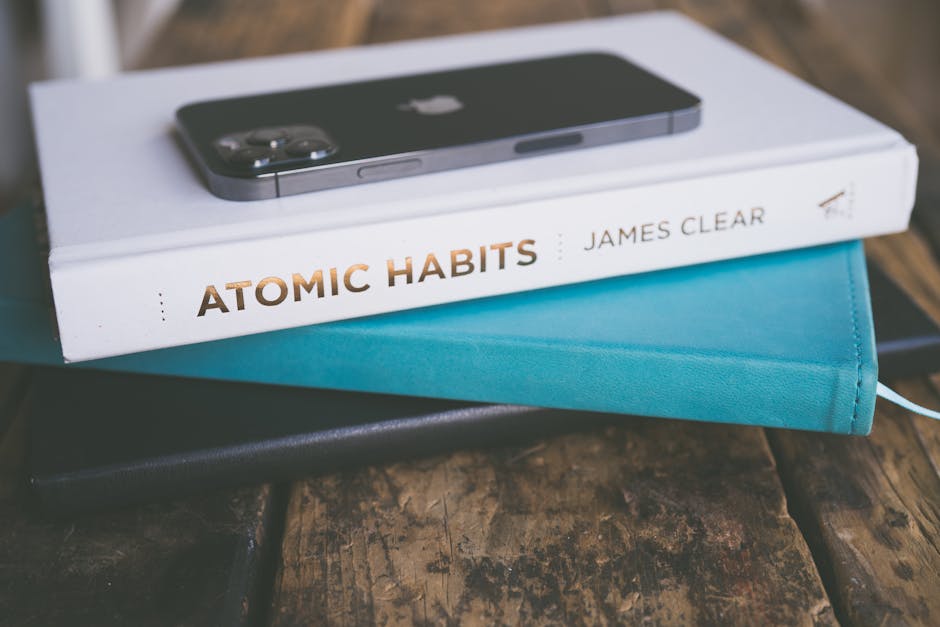
In the relentless pursuit of productivity, we often seek complex systems or revolutionary techniques. Yet, sometimes, the most effective solutions are the simplest. Enter habit stacking – a powerful strategy that leverages existing routines to build new, beneficial habits with remarkable ease. This method, popularized by Dr. BJ Fogg and further explored by James Clear in his book Atomic Habits, is a cornerstone for anyone looking to make lasting personal and professional improvements.
Table of Contents
- Executive Summary
- Understanding the Power of Habit Stacking
- The Science Behind the Stack
- Why It’s More Effective Than Other Methods
- How to Implement Habit Stacking Effectively
- Step 1: Identify Your Current Habits
- Step 2: Choose Your New Habits Wisely
- Step 3: Create Your Habit Stack Formula
- Step 4: Make the New Habit as Easy as Possible
- Step 5: Be Patient and Iterate
- Overcoming Common Objections to Habit Stacking
- Advanced Habit Stacking Strategies
- Chaining Stacks
- Stacking for Different Life Areas
- The Two-Minute Rule
- Conclusion
- Discussion Prompt
- References
Executive Summary
- What is Habit Stacking? Linking a new habit to an existing one to create a seamless transition.
- How it Works: Uses an established cue (the existing habit) to trigger the desired new action.
- Key Principle: Makes new habits easier to remember and implement by attaching them to something you already do consistently.
- Benefits: Increases consistency, reduces willpower depletion, builds momentum, and simplifies habit formation.
- Implementation: Identify existing habits, choose small new habits, and link them using a clear formula.
Understanding the Power of Habit Stacking
At its core, habit stacking is about making the desired behavior as easy as possible to initiate. We all have established daily routines – brushing our teeth, making coffee, commuting to work. These existing habits serve as reliable cues. By attaching a new habit to one of these established anchors, you bypass the need for significant willpower or constant reminders.
The Science Behind the Stack
This technique taps into established principles of behavioral psychology. Our brains are wired to create associations. When a specific cue reliably leads to a particular action, that pathway strengthens. Habit stacking exploits this by creating a new, intentional association. Instead of relying on vague intentions like "I’ll start meditating," habit stacking transforms it into a concrete action: "After I brush my teeth, I will meditate for two minutes." This specificity is crucial for overcoming inertia and procrastination.
Why It’s More Effective Than Other Methods
Many productivity strategies, like simply setting goals or trying to rely solely on willpower, often falter. Willpower is a finite resource that depletes throughout the day. Habit stacking conserves this energy by making the new habit automatic. It’s less about forcing yourself to do something and more about building a natural flow from one action to the next. This is a core concept echoed in the pursuit of effectiveness, much like the foundational principles discussed in The 7 Habits Of Highly Effective People by Stephen Covey.
How to Implement Habit Stacking Effectively
Creating a successful habit stack isn’t complicated, but it does require a thoughtful approach. It’s a process that builds upon itself, much like the journey of Habit Stacking for Beginners: The Simple Science of Building Lasting Habits.
Step 1: Identify Your Current Habits
Start by listing out your daily routines. Be specific. Don’t just say "morning routine"; break it down: Wake up, get out of bed, go to the bathroom, brush teeth, drink water, make coffee, eat breakfast. The more detailed your list, the more opportunities you’ll find to insert new habits.
Step 2: Choose Your New Habits Wisely
When starting, select small, manageable new habits. The goal is consistency, not overwhelming yourself. Examples include:
- Drinking a glass of water.
- Meditating for one minute.
- Doing five push-ups.
- Reading one page of a book.
- Writing down one thing you’re grateful for.
These small wins build confidence and momentum.
Step 3: Create Your Habit Stack Formula
The most common formula is: "After I [CURRENT HABIT], I will [NEW HABIT]."
Examples:
- After I pour my morning coffee, I will write down my top 3 priorities for the day.
- After I get into my car, I will take three deep breaths.
- After I finish dinner, I will load the dishwasher.
- After I brush my teeth, I will read one page of a book.
Step 4: Make the New Habit as Easy as Possible
Reduce friction for your new habit. If you want to meditate, lay out your cushion the night before. If you want to drink water, fill a glass and place it by your bedside. The easier it is to start, the more likely you are to do it.
Step 5: Be Patient and Iterate
Don’t get discouraged if you miss a day. The key is to get back on track immediately. If a particular stack isn’t working, analyze why. Is the new habit too big? Is the cue not strong enough? Adjust and try again. This iterative process is crucial for long-term success, similar to how What Are The Main Benefits Of Time Blocking For Productivity? involves refining your schedule over time.
Overcoming Common Objections to Habit Stacking
It’s natural to have doubts. Let’s address a few:
-
"I forget to do the new habit even after the cue."
This often happens when the new habit is still too novel or the cue isn’t strong enough. Try making the new habit even smaller (e.g., just thinking about meditating for 30 seconds before actually doing it). You can also add visual cues, like a sticky note on your coffee machine. -
"My existing habits aren’t consistent."
This is precisely why habit stacking is so powerful! If your current habits are a bit shaky, focus on solidifying those first, perhaps by using simpler habit stacking for them. Once your anchor habits are more robust, you can layer new ones on top. -
"I don’t have any ‘obvious’ habits to stack onto."
Everyone has routines! Think about transitions: ending a phone call, closing your laptop, sitting down on the couch. These moments are perfect cues. If all else fails, create a deliberate small anchor habit, like "After I stand up from my chair," and stack from there.
Advanced Habit Stacking Strategies
Once you’ve mastered the basics, you can expand your habit-stacking repertoire:
Chaining Stacks
Once a stack becomes automatic, you can add another habit. For example, "After I brush my teeth, I will meditate for two minutes, and then I will do ten push-ups." This creates a chain reaction of positive behaviors.
Stacking for Different Life Areas
Don’t limit habit stacking to just personal growth. Use it for work, health, relationships, and hobbies. Stack a work-related micro-habit onto your commute, or a relationship-building action onto your evening routine.
The Two-Minute Rule
As popularized by James Clear, make the initial version of your new habit take less than two minutes. This drastically lowers the barrier to entry and ensures you build consistency before gradually increasing the duration or intensity.
Conclusion
Habit stacking is a deceptively simple yet incredibly effective strategy for building positive habits and enhancing productivity. By leveraging the power of existing routines, you can create a cascade of beneficial behaviors with minimal effort and maximum impact. Start small, be consistent, and watch your productivity soar.
Discussion Prompt
What existing habit could you realistically stack a new, small positive habit onto starting today? Share your ideas in the comments below!
References
- Fogg, B. J. (2002). Tiny Habits: The Small Changes That Change Everything. Bantam Books.
- Clear, J. (2018). Atomic Habits: An Easy & Proven Way to Build Good Habits & Break Bad Ones. Avery.
- Duhigg, C. (2012). The Power of Habit: Why We Do What We Do in Life and Business. Random House.
- Wood, W., & Neal, D. T. (2009). The Habitual Consumer. Journal of Consumer Psychology, 19(4), 583–595. scholar.google.com
- Lally, P., & van Jaarsveld, B. M. (2010). How many times does it take to make a habit? European Journal of Social Psychology, 40(6), 976–988. scholar.google.com
- Gray, P. (2018, February 15). The Power of Habits. Psychology Today. psychologytoday.com
- Gaines, B. (2019, July 29). How to Build Better Habits. Harvard Business Review. hbr.org
- Gryski, E. (2021, November 19). MIT research shows how habits form. MIT News. mit.edu
- Collins, J. C., & Porras, J. I. (1996). Building Your Company’s Vision. Harvard Business Review. hbr.org
- Robbins, T. (2016). Money: Master the Game: 7 Simple Steps to Financial Freedom. Simon & Schuster.
Featured image by Jessica Lewis 🦋 thepaintedsquare on Pexels