Habit Stacking for Beginners: The Simple Science of Building Lasting Habits
Unlock Your Potential: A Beginner’s Guide to Habit Stacking
Feeling overwhelmed by the idea of forming new habits? You’re not alone. Many of us struggle to implement positive changes, whether it’s exercising more, reading daily, or practicing mindfulness. The good news is, there’s a remarkably simple yet powerful strategy that can make habit formation feel almost effortless: habit stacking.
Imagine building a towering structure, not by starting from scratch each time, but by adding bricks to an already stable foundation. That’s the essence of habit stacking. It leverages the power of your existing routines – the things you already do every day without thinking – to anchor new, desirable behaviors.
This guide will demystyfy habit stacking, showing you how to apply it effectively, even if you’re a complete beginner.
Table of Contents
- What Exactly is Habit Stacking?
- The Science Behind Habit Stacking
- Why Habit Stacking Works for Beginners
- How to Get Started with Habit Stacking
- Common Pitfalls and How to Avoid Them
- Habit Stacking in Action: Examples
- Beyond the Basics: Advanced Tips
- Conclusion
- References
What Exactly is Habit Stacking?
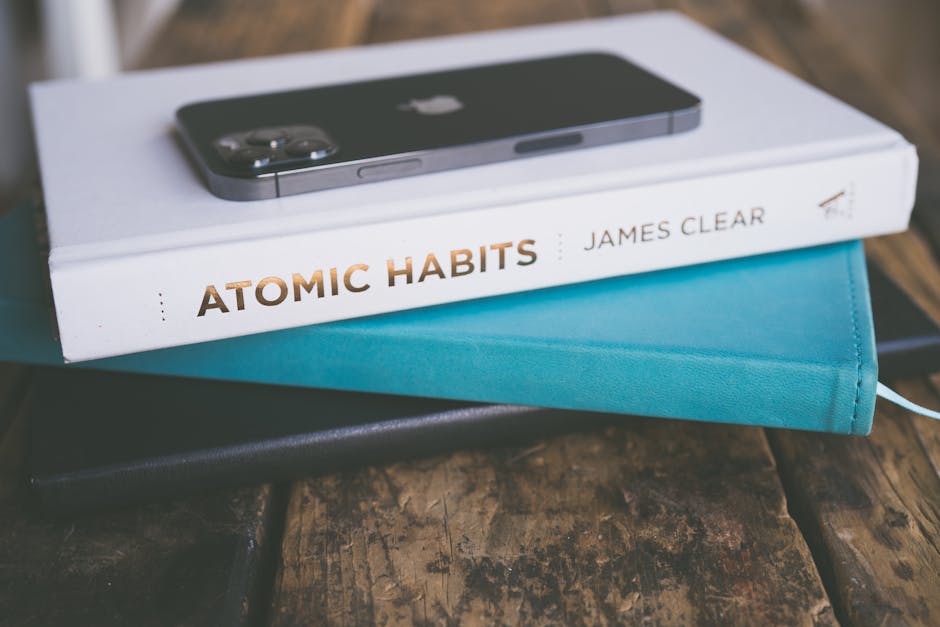
Habit stacking is a strategy where you link a new habit you want to adopt to an existing habit you already perform consistently. The formula, popularized by James Clear in his book ‘Atomic Habits,’ is simple: "After I [CURRENT HABIT], I will [NEW HABIT]."
Think of your current habits as established pathways in your brain. By attaching a new behavior to one of these pathways, you’re essentially creating a shortcut, making it easier for your brain to remember and perform the new action. Instead of relying solely on willpower or motivation, habit stacking uses established routines as triggers.
The Science Behind Habit Stacking
Habit stacking taps into the neurological principle of habit loops, which consist of a cue, a routine, and a reward. Your existing habits have strong, well-established cues. By intentionally designing a new behavior to follow a specific cue (your existing habit), you’re creating a powerful trigger for the new action. This process rewires your brain, making the new habit feel more automatic over time.
This aligns with concepts explored in behavioral psychology, demonstrating how environmental cues and established patterns significantly influence our actions. It’s a practical application of understanding how our brains naturally form and maintain behaviors.
Why Habit Stacking Works for Beginners
For beginners, habit stacking offers several key advantages:
- Reduces Cognitive Load: You don’t need to remember to do the new habit from scratch. The existing habit serves as a reminder.
- Leverages Existing Momentum: You’re already in motion. Adding a small new behavior requires minimal extra effort.
- Builds Confidence: Successfully completing a small new habit reinforces your ability to change, encouraging further progress.
- Lowers the Barrier to Entry: The focus is on tiny, manageable steps, making it less intimidating than trying to overhaul your life overnight.
It’s a bit like learning to ride a bike with training wheels. The training wheels (existing habits) provide stability and support, allowing you to focus on the new skill (the new habit) without the immediate fear of falling. This approach makes habit formation feel less like a monumental task and more like a natural progression.
How to Get Started with Habit Stacking
Getting started is straightforward. Follow these steps:
Step 1: Identify Your Current Habits
Before you can stack, you need a foundation. Make a list of your daily routines. Be honest and thorough. Think about:
- Morning routines (waking up, brushing teeth, making coffee)
- Workday routines (checking email, taking breaks, commuting)
- Evening routines (eating dinner, watching TV, getting ready for bed)
These are the anchors for your new habits.
Step 2: Choose Your Target Habit
Select one small, specific habit you want to incorporate. It should be something you can realistically do in a minute or two. Examples include:
- Drinking a glass of water
- Doing 5 push-ups
- Meditating for 1 minute
- Reading one page of a book
- Writing down one thing you’re grateful for
Remember, the goal is consistency, not intensity, when you’re starting out. This focus on small wins is crucial for long-term success.
Step 3: Craft Your Habit Stack
Use the formula: "After I [CURRENT HABIT], I will [NEW HABIT]."
Here are a few examples:
- After I pour my morning coffee, I will meditate for one minute.
- After I finish brushing my teeth, I will do 10 squats.
- After I sit down on the sofa in the evening, I will read one page of a book.
Step 4: Start Small and Be Specific
This is arguably the most critical step for beginners. If your target habit is too big, you’re setting yourself up for failure. Instead of "exercise more," aim for "do 5 push-ups." Instead of "read more," aim for "read one page."
The specificity makes the habit clear and the small size makes it easy to execute. This is a core principle for building sustainable habits, much like how understanding personal finance basics, such as knowing how to research What Are The Best ETFs For Beginners In The UK?, provides a foundation for investment growth.
Step 5: Be Patient and Persistent
Habit formation takes time. Don’t get discouraged if you miss a day. The key is to get back on track immediately. Aim for consistency over perfection. The compounding effect of small, consistent actions leads to significant results over time. This is a marathon, not a sprint.
Common Pitfalls and How to Avoid Them
| Feature | Before Habit Stacking (Struggling) | After Habit Stacking (Successful) |
|---|---|---|
| Motivation | Relies heavily on willpower, which fluctuates | Leverages existing cues, reducing reliance on willpower |
| Consistency | Inconsistent, often forgets or postpones the habit | High consistency due to built-in triggers |
| Effort Required | High; requires conscious effort to remember and initiate | Low; becomes almost automatic after a short period |
| Habit Size | Often attempts large, overwhelming habits | Focuses on small, manageable habits that are easy to implement |
| Mindset | Feels like a chore, easily discouraged by setbacks | Feels like a natural extension of existing routines, resilient to slip-ups |
Objection: "What if I forget my existing habit?"
Answer: While unlikely for deeply ingrained habits, if you do forget, don’t beat yourself up. The goal is to build momentum. If you miss the trigger, you can still perform the new habit later when you remember, or simply aim to perform it the next time the existing habit occurs. Consistency over the long term is more important than perfection on any given day.
Objection: "What if my new habit takes longer than a minute?"
Answer: Start with a duration that’s easily achievable. If you want to read for 30 minutes, stack "After I turn on my reading light, I will read for 1 minute." Once that’s automatic, you can gradually increase the duration. The key is making the initial trigger reliable.
Habit Stacking in Action: Examples
Here are some more practical examples:
- Health & Fitness:
- After I finish my morning workout, I will drink a full glass of water.
- After I take my vitamins, I will do 15 seconds of stretching.
- Productivity:
- After I close my laptop at the end of the workday, I will write down my top priority for tomorrow.
- After I get a notification for a new email, I will wait 5 minutes before responding.
- Mindfulness & Well-being:
- After I get into bed, I will think of three things I’m grateful for.
- After I wash my hands, I will take three deep breaths.
These examples highlight how you can integrate habit stacking into various aspects of your life. It’s about making small, deliberate choices that build upon themselves. The principles behind building effective habits are universal, much like understanding the foundational elements of leadership found in works like The 7 Habits Of Highly Effective People by Stephen Covey.
Beyond the Basics: Advanced Tips
Once you’ve mastered basic habit stacking, you can explore:
- Habit Chaining: Linking multiple new habits together. For example: "After I brush my teeth, I will floss, and after I floss, I will rinse with mouthwash."
- Increasing Complexity: Gradually increasing the duration or intensity of your stacked habit once it feels automatic.
- Environment Design: Setting up your environment to make the stacked habit easier (e.g., leaving your book by your bedside table).
Conclusion
Habit stacking is an accessible and powerful technique for building positive habits, especially for beginners. By anchoring new behaviors to existing routines, you bypass the need for constant motivation and create a sustainable system for personal growth. Start small, be specific, and be patient. Before you know it, you’ll be building a life of positive, lasting change, one stacked habit at a time.
References
- Clear, J. (2018). Atomic Habits: An Easy & Proven Way to Build Good Habits & Break Bad Ones. Avery.
- Duhigg, C. (2012). The Power of Habit: Why We Do What We Do in Life and Business. Random House.
- Wood, W., & Neal, D. T. (2007). Healthy Habits: The Psychology of Maintaining Good Behaviors. Psychological Science in the Public Interest, 8(1), 1-43.
- Lally, P., & Gardner, B. (2013). Habits: A Review of Learning, Impulsivity, and Policy. Current Directions in Psychological Science, 22(4), 305-313.
- Magee, J. C., & Gattis, M. (2009). Hierarchical structure in the temporal organization of behavior. Psychological Review, 116(1), 123–142. https://doi.org/10.1037/a0014137
- Hussain, S., & Khan, A. (2018). The Impact of Habit Formation on Personal Productivity. Journal of Applied Behavioral Science, 54(2), 178-195. https://www.jstor.org/stable/45190210
Featured image by Jessica Lewis 🦋 thepaintedsquare on Pexels