Roman Leadership
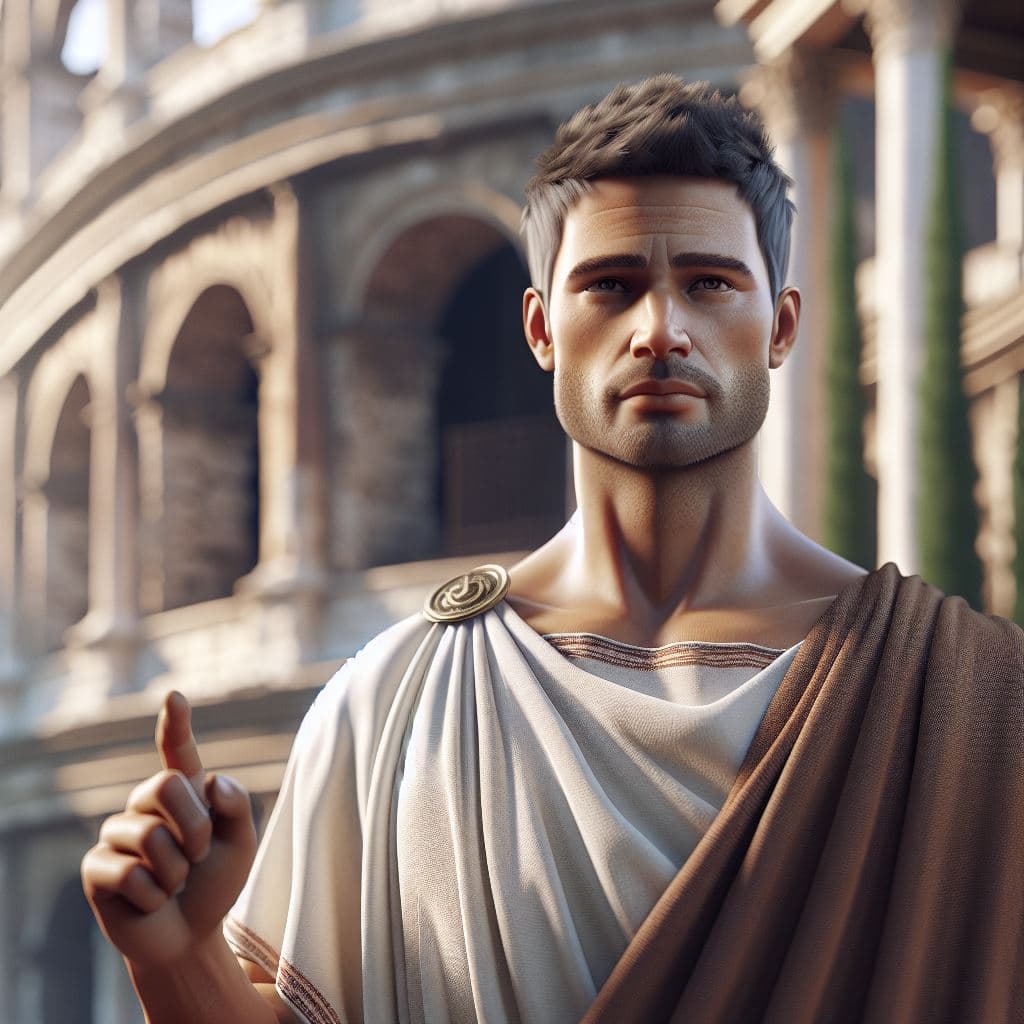
Roman Leadership: Titles, Chronology, Famous Rulers & Modern Executive Lessons
Roman leadership evolved significantly over the course of the empire’s history, demonstrating various styles and approaches that have left lasting impacts on modern leadership principles. From republican delegation and constitutional checks to imperial consolidation and frontline legionary management, the Roman governance model remains one of history’s most sophisticated case studies in organizational scalability, operational logistics, and crisis resilience.
What Is a Roman Leader Called? (Titles & Official Designations)
There was no single title that defined a Roman leader throughout history. Because Rome transitioned from an elective kingdom to an aristocratic republic and finally to an autocracy, leadership titles reflected the constitutional structure of each era[2][5]:
The title of the seven earliest monarchical rulers of Rome (753–509 BC). After the founding of the Republic, the title became culturally toxic and associated with tyranny[5].
The highest elected political office of the Roman Republic. Two consuls served simultaneously for a strict one-year term, holding supreme command of the armies and civil administration[5].
An extraordinary magistrate appointed by the Senate exclusively during national emergencies for a maximum limit of six months, wielding absolute unappealable authority[5].
Originally a military honorific shouted by troops to a victorious general, it became the supreme title indicating military command under the imperial system (the origin of the word emperor)[2].
The discreet title preferred by Augustus and early emperors to denote constitutional primacy rather than monarchy, giving its name to the Principate era (27 BC – 284 AD)[2][8].
Adopted by Diocletian and later emperors during the Dominate era, formally abandoning republican pretenses in favor of overt autocratic court ceremonial[2][4].
Who Is the Most Famous Roman Leader?
The most famous Roman leader in history is Julius Caesar (100–44 BCE), closely followed by his great-nephew and adoptive son Augustus (63 BC – 14 AD)[3][4].
Julius Caesar: Cultural & Military Legend
Caesar’s military conquest of Gaul, crossing of the Rubicon, and dramatic assassination on the Ides of March made him a permanent global cultural icon. His cognomen “Caesar” became the root title for imperial rulers across civilization for millennia (including the German Kaiser and Russian Czar)[3].
Famous For: Tactical speed, battlefield charisma, and political disruption[3]
Augustus: The Institutional Genius
While Caesar tore down the Republic, Augustus built the Empire. Augustus holds the historical distinction of being the first actual Roman Emperor and the creator of the Pax Romana, which delivered two centuries of economic and political stability[1][2].
Famous For: Governance architecture, civil service reform, and Pax Romana[1][4]
Imperial Leadership: Authority, Institutional Design & Legitimacy
The Roman emperor was the supreme ruler and monarchical head of state of the Roman Empire, a position that emerged with the granting of the title Augustus to Octavian in 27 BC[2]. Unlike absolute monarchs who derived power solely from hereditary divine decree, an emperor operated within an intricate architecture of legal mechanisms, administrative institutions, and public patronage systems[8].
The emperor’s institutional power rested upon several foundational elements:
1. Imperium Maius
Supreme power of command over all troops and provincial governors. It granted unilateral jurisdiction to enact foreign policy and operational execution across borders without prior Senate confirmation[2].
Modern Equivalent: Executive Operational Authority
2. Tribunicia Potestas
Tribunician power, providing broad civil authority. This granted sacrosanct personal immunity, the right to convene civic assemblies, and unilateral veto power over any magistrate or legislative proposal[2].
Modern Equivalent: Board Governance & Veto Power
3. Divine Right & Civic Cultus
Later emperors claimed divine right to rule, imitating Oriental divine kingship. Deification after death (and imperial cult veneration in eastern provinces) reinforced institutional legitimacy and unified disparate cultures under a shared banner[2][8].
Modern Equivalent: Organizational Purpose & Corporate Culture
Standout Facts About Roman Leadership
- Auctoritas vs. Potestas: Augustus famously noted that while he held no more legal potestas (official power) than fellow magistrates, his command stemmed from superior auctoritas (earned moral authority and respect)[6].
- The “Year of the Four Emperors” (69 AD): Following Nero’s suicide, Rome cycled through Galba, Otho, Vitellius, and Vespasian in under 12 months, proving that emperors could be made by the legions outside Rome[4][7].
- Shared Burden on the March: Roman commanders like Scipio Africanus and Julius Caesar marched on foot alongside infantry, carrying their own standard kit to build unquestioned combat loyalty[3].
- The Centurion Leadership Core: Centurions were deliberately chosen not for rash bravado, but for psychological composure, defensive tenacity, and the ability to hold a line when isolated.
- Standardized Castrametation: Regardless of terrain, every Roman legion built an identical square fortified camp every night, ensuring operational familiarity and zero panic during night attacks.
Who Were the Five Great Leaders of Rome? (The Five Good Emperors)
The term “Five Good Emperors” was coined by political philosopher Niccolò Machiavelli and popularized by historian Edward Gibbon to describe the golden age of the Roman Empire (96–180 AD)[4][7]. These leaders governed during the height of Roman prosperity and power, characterized by adoptive succession based on merit rather than biological inheritance:
Established the critical precedent of adoptive succession by adopting Trajan, preventing civil war after Domitian’s assassination and institutionalizing merit-based promotion[4][7].
Expanded Rome to its maximum territorial extent (Dacia, Arabia, Mesopotamia) while launching major public welfare funds (Alimenta) and extensive civil construction[4][7].
Reversed reckless expansion, audited provincial governance, rebuilt the Pantheon, and constructed defensive infrastructure (Hadrian’s Wall) to consolidate imperial resources[7][8].
Delivered the most peaceful reign in imperial history, managing state finances with extreme fiscal discipline and establishing key legal principles like the presumption of innocence[4][7].
The philosopher-emperor who guided Rome through the devastating Antonine Plague and northern wars, embodying Stoic duty, personal restraint, and resilient crisis leadership[1][4].
Notable Leaders: Detailed Strategic Profiles
Several Roman leaders stand out for their significant contributions and leadership styles[1][3][4][7]:
Augustus (63 BC – 14 AD)
Strategic Institution Builder
Augustus transformed a crumbling republic into a durable, multi-continental empire that produced the two-century peace known as the Pax Romana[4].
- First Roman emperor
- Unified the empire after a period of civil war
- Implemented reforms strengthening central government
- Expanded the empire and improved public infrastructure[1]
Julius Caesar (100-44 BCE)
High-Velocity Decisive Action
Caesar remains history’s preeminent model of operational velocity, tactical risk-taking, and direct frontline camaraderie[3].
- Military genius who expanded Rome’s territory
- Crossed the Rhine and conducted the first invasion of Britain
- His actions led to significant political changes in Rome[3]
Marcus Aurelius (121-180 AD)
Philosophical & Crisis Resilience
The philosopher-emperor who epitomised servant leadership, emotional regulation, and ethical stewardship during systemic crises[4][7].
- Known for his wisdom, integrity, and philosophical insights
- Faced numerous challenges during his reign
- His teachings continue to inspire modern leaders[1]
List of Roman Leaders in Chronological Order
Below is a structured reference table outlining the major leaders across Roman history, their dynasty/era, and their defining historical milestones[4][5][7]:
Leadership Lessons
Roman leadership offers several valuable lessons applicable to modern times:
- Strategic Thinking: Roman leaders like Julius Caesar demonstrated exceptional strategic abilities in both military and political realms[3].
- Adaptability: Successful Roman leaders showed the ability to adapt to changing circumstances and challenges.
- Infrastructure Development: Leaders like Augustus recognized the importance of public works and infrastructure in maintaining a strong state[1].
- Balance of Power: Effective Roman leaders understood the importance of balancing different interests within the state[1].
- Long-term Vision: Many Roman leaders focused on long-term stability and growth rather than short-term gains.
Evolution of Leadership
Roman leadership evolved from:
- Local clan chiefs
- Seven Roman kings (753 BC onwards)
- Elected consuls during the Republic
- Military generals
- Dictators (temporary until Caesar)
- Emperors[5]
This evolution reflects the changing needs and structure of Roman society over time, from a small city-state to a vast empire.
🧠 Interactive Leadership Self-Assessment
Test your knowledge of Roman leadership doctrines and their modern corporate applications. Click on any question to reveal the strategic answer.
1. What is the fundamental difference between Imperium and Auctoritas in organizational leadership?
2. Why did Augustus maintain Republican titles instead of declaring himself King?
3. What Roman leadership vulnerability caused the collapse of the “Five Good Emperors” era?
4. How did the Fabian Strategy demonstrate asymmetric leadership patience?
Conclusion
In conclusion, Roman leadership offers a rich tapestry of examples and lessons that continue to influence modern leadership theory and practice. The ability of Roman leaders to adapt, strategize, and balance various powers within their state contributed significantly to Rome’s long-lasting impact on world history.
Go From Roman Leadership Back To The Blog
Go To The Leadership And Development Home Page
Citations:
[1] https://www.linkedin.com/pulse/leadership-lessons-from-romans-ancient-wisdom-modern-times-correia
[2] https://en.wikipedia.org/wiki/Roman_emperor
[3] https://www.historyanswers.co.uk/ancient/roman-leaders-the-10-greatest-generals-of-ancient-rome/
[4] https://en.wikipedia.org/wiki/List_of_Roman_emperors
[5] https://mariamilani.com/ancient_rome/ancient_roman_leaders.htm
[6] https://news.harvard.edu/gazette/story/2016/03/leadership-tips-from-ancient-rome/
[7] https://www.britannica.com/place/list-of-Roman-emperors-2043294