Master Process Improvement Methodologies: A Comprehensive Guide
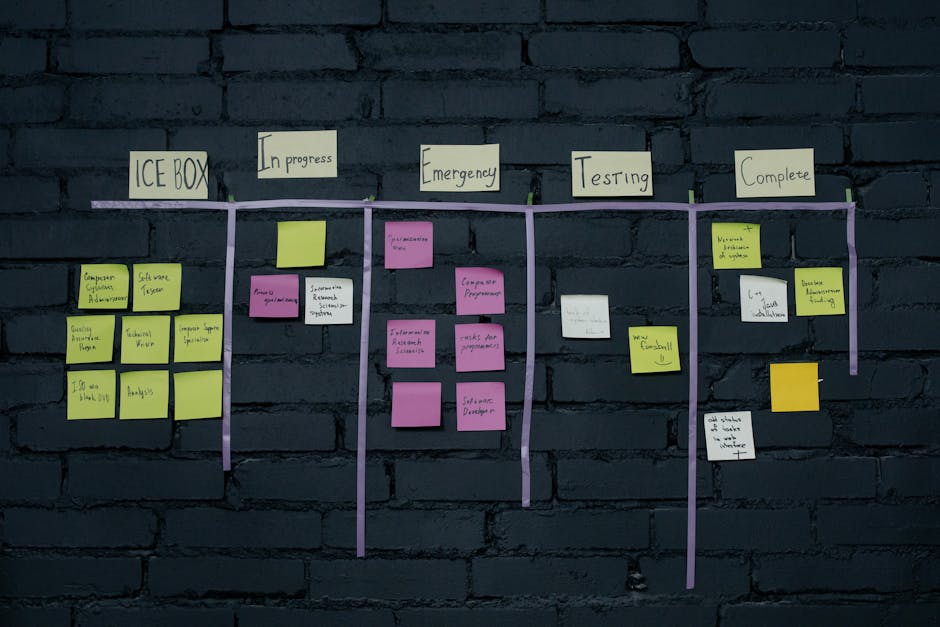
In today’s fast-paced business environment, optimizing operations isn’t just an advantage – it’s a necessity. Organizations that continually refine their processes are the ones that thrive, innovate, and lead their markets. But how do you achieve this consistent improvement? The answer lies in adopting robust Process Improvement Methodologies. These frameworks provide structured approaches to identify inefficiencies, eliminate waste, enhance quality, and ultimately drive better business outcomes.
Executive Summary
This article delves into the most impactful process improvement methodologies, offering a clear understanding of what they are, how they work, and which might best suit your organization’s needs. We’ll explore the core principles of Lean, Six Sigma, Kaizen, PDCA, and Agile, providing actionable insights and practical examples. By understanding and implementing these methodologies, you can transform your operations, boost productivity, and achieve sustainable growth.
Table of Contents
- Why Process Improvement Matters
- Understanding Core Methodologies
- Choosing the Right Methodology
- Implementing Process Improvement
- Analogies for Process Improvement
- Conclusion
- References
Why Process Improvement Matters
Imagine your business as a complex machine. If some parts are worn out, others are misaligned, or there’s too much friction, the machine won’t run as efficiently as it could. Process improvement is the ongoing maintenance and upgrade of that machine. It’s about making every part work together harmoniously to produce the desired output with minimal effort and maximum quality. This continuous effort is crucial for staying competitive, meeting customer demands, and fostering a culture of innovation.
Neglecting process improvement is like ignoring rust on a car; small issues can quickly escalate into major problems, leading to increased costs, decreased customer satisfaction, and ultimately, a decline in business performance. As author Peter Thiel notes in Zero to One, true innovation often comes from improving existing systems or creating entirely new ones that are significantly better.
Understanding Core Methodologies
Several powerful methodologies have been developed to guide organizations through the process improvement journey. Each has its unique focus and approach, but all aim for enhanced efficiency and effectiveness.
Lean Manufacturing: Eliminating Waste
Originating from the Toyota Production System, Lean focuses on maximizing customer value while minimizing waste. It identifies seven types of waste (often remembered by the acronym TIMWOODS):
- Transportation
- Inventory
- Motion
- Waiting
- Overproduction
- Over-processing
- Defects
- Skills (underutilized)
Lean emphasizes creating a smooth flow of value by eliminating non-value-adding activities. This can be applied not just in manufacturing but in service industries, software development, and healthcare. Tools like Value Stream Mapping (VSM) and Just-In-Time (JIT) inventory are central to Lean implementation.
Six Sigma: Reducing Variation
Developed by Motorola, Six Sigma is a data-driven methodology focused on reducing process variation and eliminating defects. The goal is to achieve near-perfect quality, typically defined as no more than 3.4 defects per million opportunities. Six Sigma uses a structured approach called DMAIC (Define, Measure, Analyze, Improve, Control) for existing processes and DMADV (Define, Measure, Analyze, Design, Verify) for new processes.
- Define: Identify the problem and project goals.
- Measure: Quantify the current process performance.
- Analyze: Identify the root causes of defects and variation.
- Improve: Develop and implement solutions.
- Control: Sustain the improvements.
Six Sigma relies heavily on statistical tools and rigorous analysis to identify and solve problems. Understanding What is the Purpose Of A Problem Statement In A Project is a critical first step in the Define phase.
Kaizen: Continuous Improvement
Kaizen, a Japanese term meaning "continuous improvement," is a philosophy that involves all employees, from top management to frontline workers, in making small, ongoing, positive changes. Unlike large-scale, radical changes, Kaizen focuses on incremental improvements that are sustainable over time. It encourages a culture where everyone is empowered to identify and suggest improvements, however minor.
Kaizen events (or workshops) are short, focused sessions where teams collaborate to identify and implement rapid improvements. This approach aligns with the idea of building momentum through consistent, small actions, as discussed in Vision To Reality: How Short Term Massive Action Equals Long Term Maximum Results.
PDCA Cycle: Plan-Do-Check-Act
The PDCA (Plan-Do-Check-Act) cycle, also known as the Deming Cycle or Shewhart Cycle, is an iterative four-step management method used for the control and continuous improvement of processes and products. It’s a straightforward yet powerful tool for problem-solving and implementing changes.
- Plan: Identify a problem or opportunity, develop a hypothesis and plan for change.
- Do: Implement the plan on a small scale.
- Check: Observe and measure the results. Did the change have the desired effect?
- Act: If successful, implement the change widely. If not, refine the plan and repeat.
This cyclical approach ensures that improvements are tested and validated before full implementation, minimizing risk and maximizing the chance of success.
Agile Methodologies: Flexibility and Iteration
While often associated with software development, Agile principles can be applied to various process improvement initiatives. Agile emphasizes adaptability, collaboration, customer feedback, and rapid iteration. Instead of rigid, long-term planning, Agile breaks projects into smaller, manageable cycles (sprints or iterations).
Key aspects include:
- Iterative Development: Building and improving in short cycles.
- Customer Collaboration: Continuous feedback and alignment.
- Responding to Change: Embracing flexibility over strict adherence to a plan.
- Cross-functional Teams: Empowering teams to self-organize.
Agile is excellent for environments where requirements are likely to change or where quick delivery of value is paramount. This mirrors the spirit of innovation found in concepts like The Lean Startup.
Choosing the Right Methodology
Selecting the appropriate methodology depends on your organization’s specific context, goals, and culture. Consider these factors:
- Nature of the Problem: Is it about reducing defects (Six Sigma), eliminating waste (Lean), fostering a culture of small improvements (Kaizen), or adapting to changing requirements (Agile)?
- Organizational Culture: Does your culture support data-driven analysis, employee empowerment, or rapid experimentation?
- Resources: What are your available time, budget, and expertise?
- Industry and Specific Processes: Some methodologies are more prevalent or effective in certain industries or for specific types of processes.
Often, a hybrid approach, combining elements from different methodologies, can yield the best results. For example, Lean Six Sigma is a popular combination that leverages the strengths of both.
Implementing Process Improvement
Successful implementation requires more than just understanding the theory; it demands practical execution.
Key Steps to Success
- Secure Leadership Buy-in: Ensure commitment from the top.
- Define Clear Goals: What do you want to achieve? (e.g., reduce cycle time by 15%). Understanding Goal Setting is crucial here.
- Form Dedicated Teams: Assign roles and responsibilities.
- Communicate Effectively: Keep everyone informed about progress and changes. Why Is Communication Important As A Leader? cannot be overstated.
- Provide Training: Equip your team with the necessary skills.
- Measure and Monitor: Track key performance indicators (KPIs) to gauge progress.
- Celebrate Successes: Recognize and reward achievements to maintain motivation.
Common Pitfalls to Avoid
- Lack of Clear Objectives: Not knowing what you’re trying to fix or improve.
- Resistance to Change: Employees or management may resist new processes.
- Insufficient Training: Teams don’t have the skills to implement or sustain changes.
- Poor Communication: Information doesn’t flow effectively, leading to confusion.
- Focusing on Symptoms, Not Root Causes: Implementing superficial fixes that don’t last.
- Inadequate Leadership Support: Projects falter without consistent backing from management.
To foster a culture where improvements are welcomed, consider how to encourage employees to speak up. See Why employees hesitate to speak up at work — and how to encourage them.
Analogies for Process Improvement
To grasp the essence of process improvement, consider these analogies:
- Cooking a Meal: You start with a recipe (plan), gather ingredients and cook (do), taste and adjust seasoning (check), and then serve the perfected dish (act). If the dish isn’t quite right, you adjust the recipe for next time. This is a micro-PDCA cycle.
- Gardening: You prepare the soil and plant seeds (plan), water and tend to them (do), observe growth and identify pests or weeds (check), and then prune, fertilize, or address issues (act). Continuous care leads to a thriving garden.
- Building a House: You have blueprints (plan), construct the foundation and frame (do), inspect the work for structural integrity and adherence to code (check), and then proceed with finishing or make necessary corrections (act). Each phase builds upon the previous, ensuring a solid structure.
Implementing Process Improvement: A Checklist
To get started or refine your approach, use this checklist:
- Identify a specific process to improve.
- Define the desired outcome and success metrics.
- Form a cross-functional team.
- Map the current state of the process.
- Analyze the current state to identify bottlenecks and waste.
- Brainstorm potential solutions.
- Select the most promising solution(s).
- Develop an implementation plan.
- Execute the plan (pilot if possible).
- Measure the results against your defined metrics.
- Standardize the improved process if successful.
- Establish a system for ongoing monitoring and refinement.
Conclusion
Process improvement methodologies are not just buzzwords; they are proven frameworks that drive tangible results. By adopting a structured approach like Lean, Six Sigma, Kaizen, PDCA, or Agile, organizations can systematically enhance efficiency, reduce costs, improve quality, and foster a culture of continuous learning and innovation. The key is to understand your specific needs, choose the right methodology (or combination), and commit to diligent implementation and ongoing refinement. Embracing these principles will position your organization for sustained success in an ever-evolving marketplace.
References
- Lean Six Sigma Basics
- The Toyota Production System
- What is Agile?
- The Deming Cycle: PDCA
- Understanding Problem Statements (Example of a resource that may cover similar topics)
Featured image by cottonbro studio on Pexels