Master Meeting Facilitation: Drive Outcomes & Collaboration
Understanding the Core Purpose of Meeting Facilitation
As leaders, we spend a significant portion of our professional lives in meetings. But how many of those hours are truly productive? This is where the art and science of effective meeting facilitation come into play. It’s not just about presiding over a room; it’s about actively guiding a group towards a shared goal, ensuring everyone’s voice is heard, and ultimately, driving meaningful outcomes.
Table of Contents
- Understanding the Core Purpose of Meeting Facilitation
- Pre-Meeting Preparation: Setting the Stage for Success
- During the Meeting: Guiding the Discussion
- Post-Meeting Follow-Up: Ensuring Action and Accountability
- Facilitation Techniques for Different Meeting Types
- Brainstorming Sessions: Unleashing Collective Creativity
- Decision-Making Meetings: Navigating Towards Clarity
- Problem-Solving Workshops: Uncovering Solutions
- Status Update Meetings: Efficient Information Exchange
- Team Building and Strategy Sessions: Vision and Cohesion
- Developing Your Facilitation Skills as a Leader
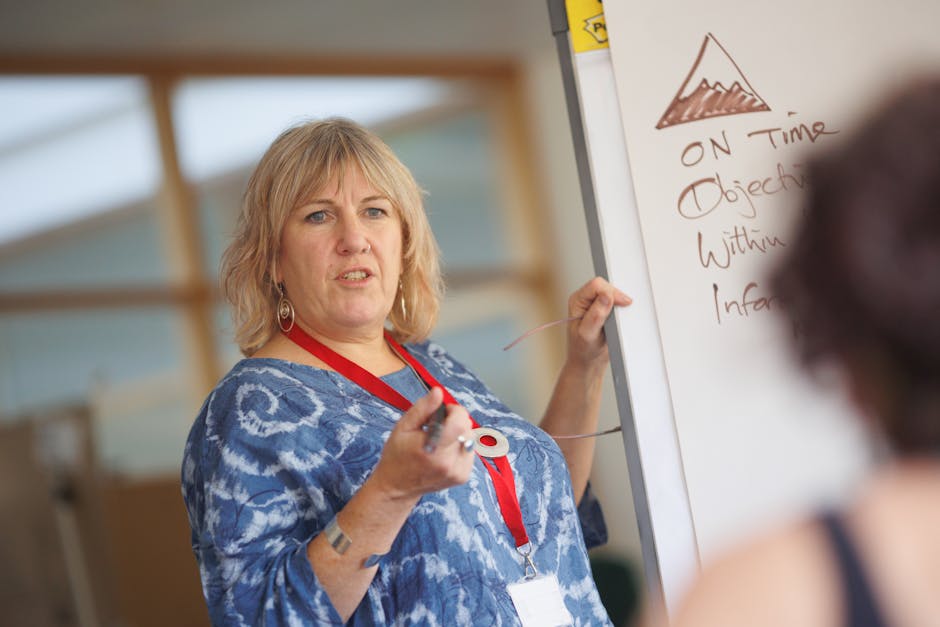
At its heart, effective meeting facilitation for leaders is the proactive process of designing, guiding, and managing a meeting to ensure it achieves its stated objectives efficiently and inclusively. It transforms a potentially chaotic gathering into a focused, purposeful event. It’s the difference between a brainstorming session that fizzles out and one that sparks genuine innovation, or a problem-solving discussion that leads to concrete action versus one that simply rehashes the same frustrations.
The consequences of poorly facilitated meetings are stark and surprisingly common. Think about the last time you sat through a meeting that felt like a time sink. Perhaps the agenda was unclear, or worse, non-existent. Maybe one or two dominant voices hijacked the conversation, leaving others feeling unheard and disengaged. Meetings can devolve into lengthy monologues, unproductive tangents, or outright arguments, leaving participants frustrated and with little to show for their time. These are not just minor inconveniences; they represent significant drains on resources, morale, and the organization’s ability to move forward.
The inextricable link between facilitation and achieving meeting objectives cannot be overstated. A well-facilitated meeting has a clear purpose, a structured approach, and mechanisms to keep participants on track. This structured environment allows for the effective exploration of ideas, critical analysis of options, and decisive action. Without skilled facilitation, even the most critical meetings can drift aimlessly, failing to address the core issues or make the necessary decisions.
The facilitator, in this context, is more than just an organizer. They are the architect of the meeting’s dynamic, the custodian of its purpose, and the champion of productive dialogue. This involves:
- **Setting the Stage:** Clearly defining the meeting’s purpose, objectives, and desired outcomes before it begins.
- **Guiding the Conversation:** Ensuring the discussion stays focused on the agenda, managing time effectively, and encouraging participation from all attendees.
- **Fostering Collaboration:** Creating a safe and inclusive environment where diverse perspectives are welcomed and respected.
- **Managing Conflict:** Skillfully navigating disagreements and guiding the group towards constructive resolutions.
- **Driving to Decisions:** Ensuring clear action items, owners, and deadlines are established before the meeting concludes.
By embracing these responsibilities, leaders can transform their meetings from dreaded obligations into powerful engines of progress and collaboration.
Pre-Meeting Preparation: Setting the Stage for Success
Before a single word is spoken in your meeting, its fate is largely sealed by the groundwork you lay. Think of pre-meeting preparation not as a chore, but as your secret weapon for unlocking efficient collaboration and driving meaningful decisions. Rushing into a meeting without this critical phase is akin to embarking on a journey without a map – you might end up somewhere, but it’s unlikely to be where you intended.
The bedrock of effective facilitation lies in defining clear meeting objectives and desired outcomes. What absolutely must be achieved by the end of this session? Are you brainstorming solutions, making a critical decision, sharing vital information, or planning the next steps of a project? Be specific. Instead of "discuss Q3 sales," aim for "decide on the top three marketing initiatives for Q3 and assign owners." This laser focus will guide every subsequent step.
Once your destination is clear, craft a structured agenda with time allocations. This isn’t just a list of topics; it’s a roadmap for your discussion. Allocate realistic time slots for each item, ensuring that the most crucial discussions get the attention they deserve. Build in buffer time for unexpected tangents or deeper dives. Remember, a well-paced agenda respects everyone’s time and keeps the momentum going.
Next, focus on identifying and inviting the right participants. Who needs to be there to achieve the objectives? Invite only those individuals whose input is essential for decision-making, problem-solving, or information dissemination. Too many attendees can stifle discussion and lead to indecision; too few can result in a lack of critical perspectives. Consider their roles, expertise, and any potential conflicts of interest.
To ensure smooth sailing, assign roles before the meeting begins. Designate a note-taker to capture key discussions, decisions, and action items. A timekeeper can gently steer the conversation back on track, ensuring you adhere to the agenda. Other roles might include a designated "devil’s advocate" to challenge assumptions or a summarizer for key discussion points. Clearly communicate these assignments and their importance.
Don’t forget the tangible elements: prepare necessary materials and technology. This includes any pre-reading documents, presentations, spreadsheets, or even just a whiteboard and markers. Test your audio-visual equipment beforehand. Nothing derails a meeting faster than technical glitches or a frantic search for a missing document. Ensure everyone has access to what they need, whether it’s a shared drive link or a printed handout.
Finally, and perhaps most critically, communicate the agenda and expectations in advance. Send out the agenda, objectives, desired outcomes, and any pre-reading materials at least 24-48 hours before the meeting. Clearly state what you expect from participants – their preparation, their active participation, and their commitment to the objectives. This courtesy not only shows respect for their time but also primes them for productive engagement.
By diligently investing time and thought into these pre-meeting steps, you transform your gatherings from potential time sinks into powerful engines of progress. You are no longer just calling meetings; you are orchestrating focused, productive, and outcome-driven sessions.
During the Meeting: Guiding the Discussion
The true magic of effective facilitation happens in the moment. This is where your skills as a leader come to the forefront, transforming a potential time-sink into a powerful engine for progress. It’s about more than just sitting at the head of the table; it’s about actively sculpting the conversation, ensuring every voice contributes and every minute counts.
Begin by honoring your attendees’ time. Starting on time isn’t just polite; it signals respect and sets an immediate expectation of efficiency. Pair this with a positive and welcoming tone. A brief icebreaker, a genuine smile, or a quick acknowledgment of everyone’s presence can significantly shift the energy from passive attendance to active engagement.
Before diving deep, clearly state the meeting’s objectives and expected outcomes. What are we here to achieve? What will success look like at the end of this session? This clarity acts as a compass, guiding every subsequent contribution.
Your primary tool here is active listening. Lean in, make eye contact, and truly absorb what’s being said. Then, paraphrase for clarity. "So, if I understand correctly, you’re suggesting we prioritize X because of Y. Is that right?" This not only confirms understanding but also validates the speaker and subtly encourages deeper thought.
A truly effective meeting is a collaborative endeavor. Actively encourage participation from all attendees. Don’t let the quiet ones fade into the background. Ask direct, open-ended questions that invite contributions. "Sarah, you have experience in this area, what are your thoughts?"
Simultaneously, you must master the art of managing dominant voices and ensuring everyone is heard. This is a delicate dance. Gently interrupt a lengthy monologue with a well-timed question to another participant, or offer a summary and ask, "Are there any other perspectives on this?" The goal isn’t to silence, but to broaden the conversational bandwidth.
The siren song of tangents can derail even the best-intentioned meetings. Your role is to keep the discussion focused and on track. Refer back to the stated objectives. "That’s an interesting point, John, and I’d love to explore it further. For today’s discussion, however, we need to stay focused on [objective]."
When unavoidable tangents arise, navigate them by deferring off-topic discussions. Create a “parking lot” – a designated space (physical or digital) for these valuable, yet currently irrelevant, ideas. "Let’s capture that excellent idea in our parking lot, and we can revisit it at a later time when we have dedicated focus."
Utilizing visual aids and collaboration tools effectively can be a game-changer. Whether it’s a shared whiteboard, a digital collaboration platform, or even just a flip chart, these tools make ideas tangible, foster shared understanding, and can help keep the energy high. They transform abstract concepts into concrete points of discussion.
Conflict is inevitable when diverse opinions meet, but it doesn’t have to be destructive. Manage conflict constructively and respectfully. Frame disagreements as opportunities for innovation. "It sounds like we have differing viewpoints here, which is valuable. Let’s explore the underlying concerns behind each perspective." Focus on the issue, not the person, and always maintain a tone of respect.
Throughout the meeting, your role is to synthesize. Summarize key decisions and action items periodically. This reinforces progress, clarifies next steps, and ensures everyone leaves with a shared understanding of what’s been decided and who is responsible for what. It also provides natural checkpoints to gauge progress against the agenda.
Consider this table for a quick reference on navigating common meeting dynamics:
| Challenge | Facilitation Strategy |
|---|---|
| Dominant Voices | Encourage others, paraphrase, ask direct questions to quieter participants. |
| Off-Topic Discussions | Acknowledge, park the idea for later, gently redirect to agenda. |
| Lack of Participation | Use round-robin, direct questions, create safe space for ideas. |
| Unclear Decisions | Restate agreements, confirm understanding, assign action items. |
Post-Meeting Follow-Up: Ensuring Action and Accountability
The magic of a well-run meeting doesn’t end when the last person logs off. In fact, for many leaders, the real value of a meeting is unlocked in the critical follow-up phase. This is where insights transform into tangible progress and where good intentions translate into concrete results. Neglecting this stage is akin to planting seeds and then walking away, expecting a harvest without tending to the soil.
Your primary responsibility as a facilitator is to ensure that the momentum generated in the meeting doesn’t dissipate. This begins with swift and clear dissemination of meeting minutes. Think of minutes not as a historical record, but as a roadmap for the days and weeks ahead. They must be distributed promptly, ideally within 24 hours, while the discussions are still fresh in everyone’s minds.
Crucially, these minutes should highlight key decisions made. Vague summaries are insufficient; clearly articulate what was agreed upon. Was a new strategy approved? Was a specific problem officially designated as a priority? Make these decisions unmistakable.
The heart of accountability lies in a meticulously crafted list of all assigned action items. For each action, be explicit about:
- What needs to be done: Clear, actionable verbs are your best friend here.
- Who owns it: Assign a single, clear owner for each item. This avoids the dreaded “diffusion of responsibility.”
- When it’s due: Set realistic yet firm deadlines.
But simply listing action items isn’t enough. You must establish a system for tracking action item progress. This could be a shared spreadsheet, a project management tool, or even a recurring brief check-in during subsequent team meetings. The key is visibility and consistent accountability. Regular nudges and opportunities to report progress, or flag roadblocks, are essential.
Beyond task management, actively gather feedback on the meeting’s effectiveness. Was the agenda clear? Were discussions productive? Did everyone have a chance to contribute? This feedback is gold. It allows you to refine your facilitation skills and ensure future meetings are even more impactful. Don’t shy away from asking, “What could we have done better?”
Finally, plan for future meetings based on this feedback and the outcomes of current action items. Are there recurring issues that need dedicated time? Has a new priority emerged that warrants a focused discussion? Proactive planning, informed by your post-meeting analysis, sets the stage for continuous improvement and sustained leadership effectiveness.
FAQ: What’s the quickest way to distribute meeting minutes?
Leverage technology! If using a collaborative platform (like Microsoft Teams, Slack, or Asana), you can often share minutes directly within the relevant channel or project. If not, a well-formatted email with clear bullet points and a direct link to a shared document (like Google Docs or OneDrive) is highly effective. Aim for clarity and conciseness, avoiding lengthy prose.
FAQ: How do I ensure action item owners actually complete their tasks?
Accountability is built through visibility and regular check-ins. As mentioned, a tracking system is vital. Beyond that, build a culture where owning an action item is taken seriously. When checking in, focus on support: “How can I help you overcome any obstacles?” rather than just “Did you finish it?” Publicly acknowledging completed tasks also reinforces positive behavior.
Facilitation Techniques for Different Meeting Types
Mastering the art of meeting facilitation isn’t a one-size-fits-all endeavor. The most effective leaders understand that different meeting objectives demand distinct approaches. Let’s explore how to tailor your facilitation skills to maximize impact across a range of common meeting types.
Brainstorming Sessions: Unleashing Collective Creativity
The goal here is pure idea generation, not immediate judgment. As a facilitator, your role is to create a safe and stimulating environment where every idea, no matter how wild, is welcomed.
- Techniques:
- Round Robin: Go around the room, asking each person to contribute one idea at a time. This ensures everyone participates and prevents dominant voices from stifling others.
- Brainwriting (or Silent Brainstorming): Participants write down their ideas individually on sticky notes or a shared document before sharing them aloud. This is excellent for introverts or to avoid “groupthink.”
- SCAMPER: Use this mnemonic (Substitute, Combine, Adapt, Modify, Put to another use, Eliminate, Reverse) to prompt new thinking about existing ideas or concepts.
- Visual Aids: Whiteboards, flip charts, or digital collaboration tools are your best friends. Encourage drawing, mind mapping, and visual connections.
- Key Focus: Encourage quantity over quality initially. Defer judgment. Build on each other’s ideas.
Decision-Making Meetings: Navigating Towards Clarity
Here, the objective is to arrive at a consensus or a clear path forward. Your facilitation needs to guide the group through analysis, discussion, and ultimately, commitment.
- Techniques:
- Pros and Cons List: A classic for a reason. Facilitate a structured discussion about the advantages and disadvantages of each option.
- Dot Voting: Assign a limited number of “dots” (physical or virtual) to participants. They then place their dots on the options they favor. This quickly surfaces popular choices.
- Consensus Building: Frame questions to ensure everyone’s concerns are heard and addressed, even if the final decision isn’t their absolute first choice. Look for agreement on the path forward, not necessarily perfect alignment on every detail.
- Data Presentation: Ensure all relevant data and information are clearly presented and understood before the discussion begins.
- Key Focus: Clearly define the decision to be made. Keep the discussion focused. Manage objections constructively. Ensure commitment to the chosen path.
Problem-Solving Workshops: Uncovering Solutions
These sessions are designed to dissect challenges and engineer practical, actionable solutions. Your role is to guide the group through diagnosis and ideation with a practical outcome in mind.
- Techniques:
- Root Cause Analysis (e.g., 5 Whys): Repeatedly ask “Why?” to drill down to the underlying causes of a problem, not just its symptoms.
- Fishbone Diagram (Ishikawa Diagram): Visually map potential causes of a problem, categorized into areas like People, Process, Equipment, Environment, etc.
- SWOT Analysis: Analyze Strengths, Weaknesses, Opportunities, and Threats related to the problem or potential solutions.
- Action Planning: Once solutions are identified, dedicate time to creating concrete action steps, assigning owners, and setting timelines.
- Key Focus: Deep dive into the problem’s genesis. Encourage critical thinking about potential causes and consequences. Focus on generating practical, implementable solutions.
Status Update Meetings: Efficient Information Exchange
These meetings are often perceived as a drain if not managed effectively. The goal is to share progress, identify roadblocks, and ensure alignment without devolving into lengthy individual reports.
- Techniques:
- Pre-read/Pre-work: Distribute reports or updates before the meeting. The meeting time is for discussion, not reading.
- Stand-up Meetings (especially for agile teams): Short, focused meetings (often 15 minutes or less) where each person answers: What did I do yesterday? What will I do today? Are there any impediments?
- Traffic Light System: Ask individuals to rate their progress or any roadblocks using Green (on track), Yellow (minor concerns), or Red (major roadblock).
- Parking Lot: Use a designated space (physical or virtual) to “park” topics that are important but not critical to the meeting’s objective, to be addressed later.
- Key Focus: Brevity and clarity. Focus on blockers and dependencies. Ensure everyone is aware of key project movements.
Team Building and Strategy Sessions: Vision and Cohesion
These are high-level, forward-looking meetings that require both strategic thinking and a focus on interpersonal dynamics. Your facilitation should foster open dialogue, shared vision, and a sense of collective ownership.
- Techniques:
- Visioning Exercises: Use future-casting techniques to articulate a compelling long-term vision. What does success look like in 3-5 years?
- Scenario Planning: Explore different potential future states and how the team or organization might respond.
- Values Clarification: Discuss and reaffirm core values that will guide decisions and behaviors.
- Open Forum Discussions: Dedicate significant time for open dialogue, allowing participants to share aspirations, concerns, and innovative ideas without strict agendas.
- Personality Assessments (used thoughtfully): Brief discussions around team personality styles (e.g., DISC, Myers-Briggs) can help improve understanding and collaboration.
- Key Focus: Inspire and align. Foster a shared understanding of purpose and direction. Build trust and psychological safety. Encourage ambitious thinking.
Developing Your Facilitation Skills as a Leader
As a leader, your ability to effectively facilitate meetings isn’t just a nice-to-have; it’s a critical driver of team productivity, engagement, and ultimately, success. Think of it as honing a superpower that transforms chaotic discussions into focused, action-oriented sessions. But like any superpower, it requires conscious development and practice.
The journey begins with building self-awareness. Before you can guide others, you need to understand your own tendencies. Do you tend to dominate conversations, or do you shy away from conflict? Are you more comfortable with structured agendas, or do you thrive in emergent discussions? Reflect on past meetings you’ve led or participated in. What worked well? Where did things get derailed? Understanding your natural facilitation style is the bedrock upon which you can build more impactful techniques.
Crucially, this self-awareness must be coupled with practicing empathy and emotional intelligence. Effective facilitation isn’t just about content; it’s about people. Can you sense the unspoken tension in the room? Can you pick up on cues that someone is hesitant to speak up or is feeling overlooked? By genuinely understanding and acknowledging the emotions and perspectives of your team members, you create a safe and inclusive environment where everyone feels valued and heard. This fosters psychological safety, which is paramount for open dialogue and robust problem-solving. Building effective habits for leaders is key to consistently applying these principles. Building Effective Habits for Leaders can profoundly impact your approach.
This leads directly to developing strong communication and interpersonal skills. This is the engine of your facilitation. It encompasses active listening – truly hearing what others are saying, not just waiting for your turn to speak. It means asking open-ended questions that encourage deeper thought and diverse viewpoints. It involves clear, concise articulation of ideas and objectives, and the ability to reframe or summarize complex points. Your ability to build rapport, managing personalities, and navigating disagreements with grace will significantly impact the meeting’s outcome. Learning about Effective Delegation Strategies for Leaders is also crucial for optimizing team output.
The real magic happens when you actively seek opportunities to practice and refine your techniques. Every meeting is a chance to experiment. Try a new icebreaker, deliberately employ a specific questioning technique, or practice a different method for decision-making. Track what works and what doesn’t for your specific team dynamics. Don’t be afraid to iterate and adjust your approach based on the feedback you implicitly or explicitly receive.
To accelerate your growth, make a point of learning from experienced facilitators. Observe them in action. What strategies do they use to keep discussions on track? How do they handle challenging participants? Don’t hesitate to ask for their insights and advice. Many seasoned professionals are generous with their knowledge and happy to share their hard-won wisdom. Consider seeking out formal training or workshops specifically focused on facilitation.
Finally, embrace the importance of continuous learning and adaptation. The landscape of work, technology, and team dynamics is constantly evolving. What worked yesterday might not be as effective tomorrow. Stay curious, read about new facilitation methodologies, and be willing to experiment with different tools and approaches. The best facilitators are lifelong learners, always seeking to improve their ability to guide their teams toward their collective goals. Your commitment to developing these skills will not only elevate your leadership but will empower your entire team to achieve more.
Featured image by Centre for Ageing Better on Pexels