Give: The Transformative Impact Of Giving

Let’s cut to the chase. We’re not talking about the obligatory office birthday card collection or that awkward moment when the donation tin comes around. We’re diving deep into the real power of giving – how it can fundamentally reshape us, our communities, and even our bottom line (yes, really!). Forget dry corporate speak; this is about the gritty, human, and surprisingly strategic impact of generosity. It’s about giving with intent, not just impulse.
Why Giving Isn’t Just Nice, It’s Necessary
So, why bother? Beyond the warm fuzzies, genuine giving is a powerful engine for positive change. Here’s the lowdown:
1. Cultivating the Empathy Muscle
Giving is like a gym workout for your heart. When you offer your time, resources, or even just a listening ear, you’re forced to step outside your own bubble. You start to see the world through someone else’s worn-out shoes. This isn’t just about feeling sorry for people; it’s about understanding their reality, their struggles, and their needs.
- Think about it: Instead of just donating to a food bank, consider volunteering a Saturday morning to sort donations. You’ll see firsthand the sheer volume, the variety of items, and maybe even chat with a client. That’s empathy in action.
- Action Tip: Next time you consider a donation, spend 15 minutes researching the organization. Understand who they serve and what specific challenges they tackle. It transforms a transaction into a connection.
2. Weaving the Community Fabric
Ever notice how tight-knit communities often have a strong giving culture? That’s no accident. When people pool their talents, skills, and resources for a common good, it’s like weaving a strong, resilient fabric. It creates this incredible sense of ‘us.’
- Real-world example: Think of a neighborhood rallying to help a family whose house burned down, or a local business sponsoring a youth sports team. It’s not just about the immediate help; it’s about building social capital and reinforcing the idea that people have each other’s backs.
- Your turn: What local initiatives are happening around you? Could your team offer pro-bono services for a local non-profit? Could you organize a skills-sharing workshop?
3. The ‘Helper’s High’: Good for Them, Great for You
This isn’t just folklore; science backs it up. Giving literally makes you feel good. It’s been shown to reduce stress, boost happiness hormones (hello, dopamine!), and crucially, inject a powerful sense of purpose into your life. Feeling adrift? Giving might be your anchor.
- Scenario: Imagine working late on a project, feeling totally drained. Then, you get a thank-you note from someone your company recently helped, detailing the exact difference your work made. Suddenly, that exhaustion feels a lot more meaningful, right?
- Quick Win: Make a point to acknowledge and thank someone who has helped you this week. The act of expressing gratitude can be surprisingly uplifting.
4. The Gratitude Ripple Effect
Giving and receiving are two sides of the same coin. When you give, you often spark gratitude. That feeling? It’s contagious. It can create a positive feedback loop, encouraging more kindness and generosity all around.
- Think of it like this: You give a colleague a hand with a tough task. They’re grateful. They then pay it forward by mentoring a junior team member. Suddenly, that one act has amplified.
5. Fueling the Engines of Change
Let’s be honest: impactful change doesn’t happen on good intentions alone. It needs fuel. Your giving – whether it’s a financial donation, volunteer hours, or advocating for a cause – directly powers the organizations and movements tackling critical issues.
- From local shelters to global health initiatives, giving makes the wheels turn. It funds research, provides essential services, and drives advocacy. Without it, many vital efforts would simply grind to a halt.
6. The Ultimate Personal Development Hack
Giving isn’t just outward-facing; it’s a powerful tool for your own growth. Stepping up, helping out, and focusing on others can:
- Boost Selflessness: It naturally shifts the focus from ‘me, me, me’ to ‘we.’
- Enhance Problem-Solving: You learn to see challenges from new angles.
- Build Resilience: Understanding diverse struggles can put your own into perspective.
- Deepen Appreciation: You gain a richer understanding of the world and what truly matters.

Myth vs. Fact: Giving Edition
Let’s bust some common misconceptions that might be holding back your giving strategy.
Myth: Non-profits are inefficient if they spend money on overhead (admin, salaries).
Fact: This is a dangerous oversimplification! Effective non-profits need strong infrastructure, skilled staff, and sound management to achieve their mission. Judging them solely on overhead is like judging a hospital by how little it spends on doctors. Effective philanthropy is about impact, not just minimal spending. (As highlighted in Giving Done Right: Effective Philanthropy).
Myth: Giving should always be anonymous to be truly selfless.
Fact: While anonymity has its place, publicly sharing your giving (when appropriate and authentic) can inspire others. It demonstrates commitment and can encourage a culture of generosity within your organization or community. Authenticity matters more than secrecy.
Interactive Scenario: The ‘One-Off’ Donation Dilemma
You’re scrolling through social media and see a friend’s heartfelt plea for their sick pet, including a link to a crowdfunding page. It tugs at your heartstrings, and you easily have the funds to help. But then you remember your company’s annual charity drive is next month, and you’ve been meaning to research more strategic ways to contribute.
What would you do?
Reveal Expert Answer
This is a common crossroads! Here’s a balanced approach:
- The Immediate Heartfelt Gesture: It’s perfectly okay to respond to the immediate emotional pull. Donate a smaller, manageable amount to your friend’s pet fund. It acknowledges their need and your connection.
- The Strategic Plan: Simultaneously, make a note to yourself: ‘Research company charity partners/personal giving plan.’ This ensures that while you address the immediate emotional need, you don’t neglect your longer-term, potentially higher-impact giving goals. You can allocate a larger, more strategic donation during the official drive or to an organization aligned with your values.
- Consider the ‘Why’: Reflect on why you feel compelled to give in both instances. Is it empathy? A desire for impact? Understanding your motivations helps refine your giving strategy over time.
The key is balancing spontaneous generosity with intentional, strategic giving.
Taking Your Giving to the Next Level
Ready to move beyond casual generosity to truly impactful giving? Consider these steps:
- Develop a Giving Plan: Don’t just give randomly. Define what causes matter most to you (or your company) and why. What impact do you want to see?
- Choose Partners Wisely: Research organizations thoroughly. Look beyond the surface – understand their mission, their leadership, their programs, and their actual outcomes. Resources like Charity Navigator or GiveWell can be valuable, but also talk to people involved.
- Measure What Matters: While not everything is quantifiable, try to understand the impact of your giving. Did the donation help achieve a specific goal? Did your volunteer hours lead to a tangible improvement?
Giving Done Right: Effective Philanthropy
This book dives deep into making your giving count. The authors emphasize that effective philanthropy isn’t just about writing checks; it’s about strategic allocation of resources to maximize positive change. They challenge conventional wisdom, like blindly focusing on low overheads, arguing instead for a results-oriented approach.
- Develop a giving plan
- Choose effective charities
- Evaluate the impact of your giving
They offer a critical perspective on measuring non-profit success, urging readers to apply different metrics than those used for for-profit businesses. It’s a must-read for anyone serious about making a tangible difference with their generosity.
Giving is an act of generosity that holds immense importance in fostering a compassionate and interconnected society. Here are some key reasons why giving is crucial:
-
Promotes Empathy and Compassion
Giving, whether through time, resources, or support, cultivates empathy and compassion towards others. It encourages us to step outside our perspectives and understand the challenges and needs of those around us. -
Strengthens Communities
Acts of giving bind communities together. When individuals contribute their talents, skills, or resources to support others, it creates a sense of unity and collective well-being. -
Improves Mental and Physical Health
Research has shown that giving can have positive effects on mental and physical health. It can reduce stress, increase happiness, and provide a sense of purpose and fulfillment. -
Inspires Gratitude and Positivity
Giving and receiving are interconnected. When we give, we often experience gratitude and positivity, which can create a ripple effect of kindness and generosity in our communities. -
Supports Causes and Initiatives
Giving enables various causes and initiatives to thrive, whether it’s supporting charitable organizations, funding research, or contributing to social or environmental movements. -
Fosters Personal Growth
The act of giving can be a transformative experience, helping individuals develop empathy, selflessness, and a deeper appreciation for the world around them.
In essence, giving is a powerful force that transcends material possessions and connects us to something greater than ourselves. It is a fundamental aspect of building a more compassionate, supportive, and resilient society.
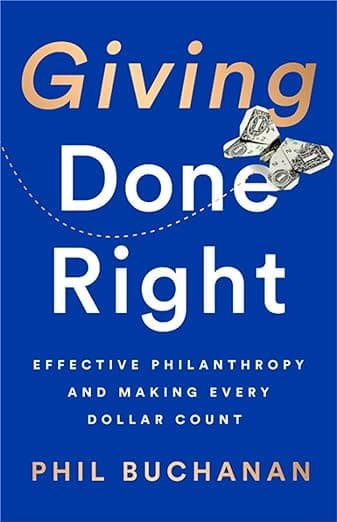
Giving Done Right: Effective Philanthropy
In this book, the authors argue that effective philanthropy is not about giving money to the first worthy cause that comes along. It’s about giving money strategically, in order to make the biggest impact.
The authors discuss how to:
- Develop a giving plan
- Choose effective charities
- Evaluate the impact of your giving
They also critique the idea of judging a nonprofit by its overhead costs. They argue that non-profits differ from businesses and that business thinking should not be applied to philanthropy.
This book is a must-read for anyone who wants to make a difference with their giving.