Facilitating Engaging Discussions
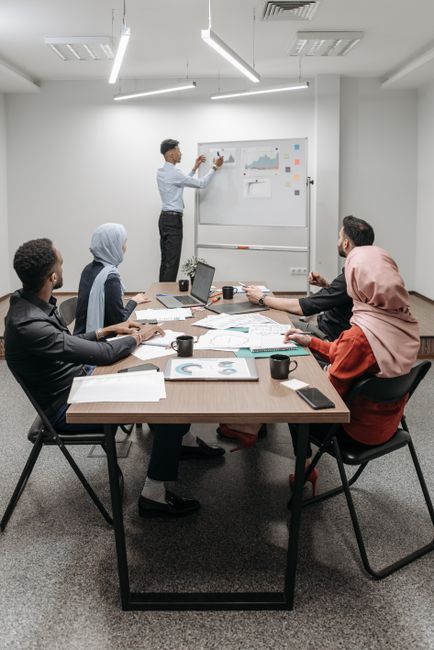
Table of Contents
- Understanding the Power of Engaging Discussions
- Pre-Discussion Preparation: Laying the Groundwork for Success
- Facilitation Techniques for Active Participation
- Navigating Challenges and Maintaining Momentum
- Post-Discussion Actions for Deeper Learning
- Developing Your Facilitation Skills
Understanding the Power of Engaging Discussions
When we talk about leadership and development, "engaging discussion" is far more than just people talking. It’s a dynamic exchange of ideas, perspectives, and experiences where every participant feels valued and contributes meaningfully to a shared outcome. It’s the fertile ground where learning accelerates, complex problems find innovative solutions, and teams truly gel. Think of it as the difference between a lecture where information is passively received and a collaborative workshop where knowledge is co-created.
The benefits of active participation in these discussions are profound. For learning, it’s the difference between rote memorization and deep understanding. When leaders and team members actively voice their thoughts, challenge assumptions, and build upon each other’s insights, they cement their learning in a way passive consumption simply can’t match. This active involvement is also a powerful engine for problem-solving. Diverse viewpoints unearthed during an engaging discussion can illuminate blind spots, uncover novel approaches, and lead to more robust and well-considered solutions than any single individual could devise. As research from sources like Harvard Business Review consistently demonstrates, diverse teams that leverage open dialogue are more innovative and effective.
Crucially, engaging discussions are the bedrock of psychological safety and inclusivity. When every voice is not only heard but also respected and responded to thoughtfully, participants feel safe to take risks, express dissenting opinions, and be their authentic selves. This fosters an environment where individuals feel a sense of belonging, encouraging them to bring their whole selves to the table. This sense of inclusion is vital for unlocking the full potential of any team, directly impacting morale and performance.
The facilitator, in this scenario, is not a mere moderator but a skilled architect of interaction. Their role is to artfully guide the conversation, ensuring it remains on track, encouraging quieter voices, managing dominant personalities, and creating space for constructive disagreement. A great facilitator understands the nuances of group dynamics and employs strategies to keep the energy high and the focus sharp. This is where the principles of Facilitating Team Collaboration: Leadership’s Secret Weapon for Success become paramount, as the facilitator acts as the linchpin in creating an environment ripe for collaborative exploration.
- Recognize that “engaging discussion” is about active, meaningful contribution, not just talking.
- Understand that active participation drives deeper learning and more effective problem-solving.
- Appreciate the direct link between engaging discussions, psychological safety, and team inclusivity.
- Embrace the facilitator’s role as a strategic guide, not just a timekeeper.
Pre-Discussion Preparation: Laying the Groundwork for Success
A truly impactful discussion doesn’t just happen. It’s a carefully orchestrated event, built on a foundation of meticulous preparation. As leaders, our role in facilitating engaging conversations begins long before anyone utters a word. Think of it as setting the stage for a captivating play; without a well-rehearsed cast, a clear script, and appropriate lighting, even the most brilliant actors will struggle to shine.
The first, and arguably most crucial, step is defining clear objectives and desired outcomes. What do you genuinely want to achieve by the end of this session? Is it to brainstorm innovative solutions, to foster deeper understanding of a complex issue, to align on a strategic direction, or perhaps to resolve a conflict? Be specific. Vague goals like "have a good discussion" will inevitably lead to unfocused conversations. Instead, aim for measurable outcomes, such as "participants will be able to articulate at least two potential solutions to X problem" or "the team will agree on the top three priorities for the next quarter."
Once your objectives are crystal clear, it’s time to select relevant and thought-provoking topics or questions. These should be directly linked to your desired outcomes and designed to spark genuine curiosity and critical thinking. Avoid questions that have obvious yes/no answers or are so broad they lead to rambling. Instead, craft open-ended, probing questions that encourage diverse perspectives and deeper exploration. For instance, instead of asking "Is our marketing strategy effective?", consider "What are the key assumptions underlying our current marketing strategy, and what evidence do we have to support or refute them?"
Crucially, consider your audience. Who will be participating? What is their collective background, their level of existing knowledge on the topic, and their comfort level with open discussion? Understanding group dynamics – whether it’s a small, intimate team or a large, diverse audience – will inform your approach. A highly technical group might benefit from data-driven prompts, while a more general audience might require more relatable scenarios. This audience consideration is also paramount when facilitating team collaboration, as understanding individual strengths and communication styles is key to unlocking collective potential.
The choice of format and platform is another vital pre-discussion element. Will this be an in-person meeting, a virtual session via video conferencing, or a hybrid model? Each has its own strengths and challenges. In-person meetings often foster stronger personal connections and non-verbal communication, while virtual platforms offer flexibility and accessibility. Hybrid meetings require extra attention to ensure equitable participation for both remote and in-person attendees. For actionable insights on maximizing team synergy, consider resources like Harvard Business Review’s extensive library on effective communication.
Next, you’ll want to structure the discussion flow. This involves allocating appropriate time for each segment, planning for any interactive activities (like breakout groups or polling), and designing smooth transitions between topics. A well-structured flow prevents the discussion from feeling rushed or disjointed. Consider a natural progression: setting the context, exploring different facets of the topic, synthesizing ideas, and finally, moving towards decision-making or action planning. This structured approach ensures that you’re not just talking, but actively moving towards your objectives.
Finally, don’t underestimate the power of preparing necessary materials and resources. This could include pre-reading materials to level-set knowledge, visual aids to illustrate complex points, or templates for note-taking and idea capture. For virtual discussions, ensuring everyone has the correct login details and understands how to use any interactive features is essential. A simple pre-discussion email outlining the agenda, objectives, and any required pre-work can significantly enhance engagement and preparedness.
- Define specific, measurable objectives.
- Craft open-ended, thought-provoking questions.
- Analyze audience demographics and knowledge levels.
- Select the most appropriate discussion format and platform.
- Outline a clear discussion flow with time allocations and activities.
- Gather and distribute all necessary pre-reading materials and resources.
By diligently attending to these preparatory steps, you lay a robust foundation for discussions that are not only engaging but also productive and impactful, directly contributing to your leadership and development goals.
Facilitation Techniques for Active Participation
As leaders, fostering an environment where every voice is heard and valued is paramount to effective decision-making and innovation. This isn’t about simply "managing" a conversation; it’s about actively facilitating engagement. The difference lies in intentional design and the strategic application of proven techniques.
Opening the Discussion Effectively: The initial moments of any discussion set the stage for what’s to come. Clearly articulate the purpose of the meeting, the desired outcomes, and establish ground rules for respectful interaction. A simple statement like, "Today, we’re here to brainstorm solutions for X, and my goal is for us to leave with at least three actionable ideas," sets a clear intention. Equally important is to articulate expectations around participation – encouraging everyone to contribute, even if their ideas seem preliminary. This proactive approach, setting the tone and expectations, is a cornerstone of successful Facilitating Team Collaboration: Leadership’s Secret Weapon for Success.
Employing Open-Ended Questions and Probing Techniques: Move beyond simple yes/no questions. Open-ended inquiries, starting with "What," "How," or "Why," invite deeper thought and broader responses. Instead of "Did you like the proposal?", try "What are your thoughts on the proposal and how might it impact our workflow?" When participants offer initial thoughts, don’t be afraid to probe. Ask clarifying questions like, "Can you elaborate on that?" or "What leads you to that conclusion?" This encourages deeper reflection and helps uncover underlying assumptions or valuable nuances.
Active Listening Skills: Paraphrasing, Summarizing, and Clarifying: True engagement stems from feeling heard. As a facilitator, your active listening is a model for others. When someone speaks, truly listen to understand, not just to respond.
- Paraphrasing: "So, if I understand correctly, you’re suggesting that we prioritize user feedback before the development phase. Is that right?" This confirms comprehension and shows you’re paying attention.
- Summarizing: Periodically, synthesize key points raised. "We’ve discussed the benefits of cloud migration, the potential security concerns, and the cost implications. It seems the consensus is leaning towards a phased approach." This helps keep the group on track and ensures everyone has a shared understanding.
- Clarifying: If a point is ambiguous, ask for clarification. "When you mentioned ‘streamlining processes,’ could you give an example of a specific process you have in mind?"
Encouraging Diverse Perspectives and Managing Dominant Voices: A key challenge in group discussions is ensuring all perspectives are heard and that no single voice overshadows others.
- Proactively solicit input: Directly ask quieter individuals for their thoughts: "Sarah, we haven’t heard from you yet. What are your initial reactions to this?"
- Acknowledge and validate: Even if you need to steer the conversation, validate contributions: "That’s an interesting point, John. Let’s hold onto that idea for a moment as we explore [another topic]."
- Politely redirect: For those who tend to dominate, you might say, "Thank you for your insights, David. I want to make sure we also hear from others on this. [Name], what’s your perspective?" Research from organizations like the Harvard Business Review often highlights the importance of psychological safety in encouraging diverse contributions. For instance, one study noted that teams with higher psychological safety exhibit better performance.
Using Icebreakers and Energizers to Foster Comfort and Energy: Especially at the start of a session or after a break, a brief icebreaker or energizer can significantly shift the mood. These aren’t just time-fillers; they are tools to build rapport and re-engage participants.
- Icebreakers: Simple questions like "What’s one skill you’re currently trying to develop?" or "Share a recent book or movie that inspired you."
- Energizers: Short, interactive activities like a quick "two truths and a lie" or a brief stretching session can re-energize a group, particularly in longer sessions.
Leveraging Visual Aids and Collaborative Tools: Our brains are wired to process visual information effectively. Whiteboards, flip charts, or digital equivalents are invaluable for capturing ideas, mapping out processes, and visually organizing discussions. Shared documents, like Google Docs or Microsoft Teams, allow for real-time collaborative note-taking and brainstorming, ensuring that every idea is documented. This transparency and shared ownership are crucial for effective teamwork.
Techniques for Virtual Environments: Facilitating in a virtual setting presents unique challenges but also offers powerful tools.
- Polls: Quick polls can gauge sentiment, gather quick opinions, or even introduce a lighthearted element.
- Breakout Rooms: For larger groups, breakout rooms are essential for fostering deeper discussion in smaller, more intimate settings. Assign specific tasks or questions to each room.
- Chat Functions: Encourage participants to use the chat for side questions, sharing links, or offering quick reactions. Monitor the chat actively and integrate relevant comments into the main discussion.
FAQ: How do I handle a situation where participants are reluctant to share their ideas?
Start by creating a safe and non-judgmental atmosphere. Ensure your opening remarks emphasize that all ideas are welcome and valued. You can also use anonymous methods like a shared document where people can submit ideas before a discussion, or a quick polling tool. Sometimes, pairing individuals up for a “think-pair-share” activity can help hesitant participants formulate their thoughts before presenting to the larger group. Remember, patience and consistent encouragement are key.
FAQ: What’s the best way to steer a discussion back on track without alienating anyone?
A gentle redirect is usually most effective. You can acknowledge the current point with a phrase like, “That’s a fascinating tangent, and we should definitely explore that further later,” and then pivot back to the original agenda. Using phrases like, “To ensure we stay on track with our objective of X, let’s refocus on…” can also be helpful. If a participant is consistently derailing the discussion, a private word after the meeting might be necessary.
Navigating Challenges and Maintaining Momentum
Even the most thoughtfully planned discussions can encounter turbulence. As a leader, your role in navigating these bumps is paramount to ensuring a productive and inclusive experience. It’s not about perfection, but about skillful adaptation and proactive management.
Silence can be a formidable barrier. Often, it stems from shyness, a fear of being wrong, or a lack of confidence. When faced with a quiet group, avoid the urge to fill the void yourself. Instead, employ strategies like paired discussions, anonymous polling, or simply offering a more structured question to prompt initial thoughts. For those who are hesitant, direct, gentle encouragement can be effective. Ask open-ended questions, acknowledge their presence without pressure, and create a safe space where all contributions are valued. Remember, the goal is to draw out diverse perspectives, not to force them.
Tangents are the siren song of engaging conversations, but unchecked, they can derail progress. Your keen ear is your greatest asset here. Gently acknowledge the interesting point raised, perhaps suggesting it could be a valuable topic for future discussion, and then artfully steer the conversation back to the primary agenda. Phrases like, "That’s a fascinating insight, and it reminds me of [topic], which we could explore later. For now, let’s get back to…" can be very effective. This validates the contribution while maintaining focus.
Conflict, while uncomfortable, is an inevitable part of group dynamics and can even be a catalyst for innovation if managed well. The key is to de-escalate rather than suppress. Focus on the issue, not the person. Encourage participants to use "I" statements to express their perspectives and actively listen to understand underlying concerns. Mediating disagreements constructively involves helping individuals find common ground and explore alternative solutions. This requires a neutral stance and a commitment to finding a resolution that benefits the collective. For more on this, consider the principles outlined in research on constructive conflict resolution, often explored in publications like the Harvard Business Review.
Unhelpful behaviors, such as constant interrupting, dominating the conversation, or pervasive negativity, can poison the well of discussion. For interrupters, a quiet, non-verbal cue or a direct but polite interjection like, "Please let [name] finish their thought," can be surprisingly effective. Dominators require a more strategic approach, perhaps by actively inviting other voices or by setting time limits for individual contributions. Negativity can be addressed by acknowledging the concern and then shifting the focus to potential solutions, asking, "Given that challenge, what steps could we take to overcome it?"
- Observe and understand group dynamics.
- Proactively plan for potential challenges.
- Be prepared to adapt your facilitation style.
- Seek feedback to improve future sessions.
- Model desired behaviors consistently.
- Know when to pause and regroup.
Adapting to unexpected shifts in discussion dynamics is where true facilitation prowess shines. Sometimes, a seemingly minor comment can unlock a cascade of new ideas or reveal a deeper, unaddressed issue. Be present and observant. If the energy shifts, embrace it. This might mean pausing to explore a spontaneous, valuable thread or subtly guiding the group to synthesize emerging themes. This flexibility is crucial for fostering genuine engagement and demonstrating that the discussion is a living, breathing entity, not a rigid script. This adaptability is a cornerstone of Facilitating Team Collaboration: Leadership’s Secret Weapon for Success.
Maintaining energy levels throughout a session requires a conscious effort to vary the pace and format. Incorporate short breaks, switch between individual reflection and group interaction, and use energizing activities or prompts. If possible, vary the physical environment or simply encourage participants to stand and stretch. Recognizing the ebb and flow of attention is vital. A well-timed, thought-provoking question or a brief, inspiring anecdote can reignite enthusiasm. Remember, a truly engaging discussion isn’t just about the content; it’s about creating an environment where participants feel energized, valued, and motivated to contribute.
Post-Discussion Actions for Deeper Learning
The true magic of an engaging discussion doesn’t end when the last participant logs off or leaves the room. In fact, the post-discussion phase is where the real learning solidifies, transforming insightful conversations into tangible progress. As leaders, our role extends beyond simply guiding the dialogue; it involves strategically orchestrating the follow-through that maximizes impact.
The immediate aftermath of a robust discussion is the perfect time to capture its essence. Summarizing key takeaways and action items is paramount. This isn’t just about creating a neat document; it’s about reinforcing the most critical insights and ensuring everyone is aligned on the path forward. A concise recap, shared promptly, serves as a powerful memory jog and a roadmap for subsequent actions.
Beyond the "what," we must also consider the "how." Facilitating reflection on the discussion process itself is a sophisticated leadership move. Encourage participants to think about what worked well, what could have been improved, and how they felt during the conversation. This metacognitive approach not only enhances future discussions but also fosters a culture of continuous improvement. It’s about understanding the dynamics that unlock genuine engagement, a key component in Facilitating Team Collaboration: Leadership’s Secret Weapon for Success.
To refine our facilitation skills, gathering feedback on the discussion and facilitation is invaluable. This can be done through a quick anonymous survey or a brief dedicated feedback moment. Honest feedback, even if it’s critical, is a gift that helps us evolve as leaders. As Amy Edmondson highlights in her work on psychological safety, creating an environment where feedback is welcomed is crucial for team learning and performance.
The most impactful discussions often lead to commitments. Therefore, following up on action items and commitments is non-negotiable. This means assigning owners, setting deadlines, and providing support. Without this accountability, even the most brilliant ideas can wither. Regular check-ins, whether in dedicated meetings or informal nudges, demonstrate that the organization values these discussions and the contributions of its people.
Finally, to ensure the learning isn’t confined to a select few, documenting and sharing discussion outcomes is essential. This could involve creating a knowledge base, publishing internal blog posts, or even presenting key findings to broader teams. Transparency and accessibility amplify the impact of these conversations, making them a valuable asset for the entire organization.
Developing Your Facilitation Skills
Becoming a truly exceptional facilitator is not an innate talent; it’s a craft honed through deliberate practice and continuous learning. As leaders, our ability to guide productive and engaging discussions directly impacts team synergy, problem-solving efficacy, and ultimately, organizational success. This journey of skill development is as crucial as any strategic initiative.
The first step on this path is self-assessment and identifying areas for improvement. Honestly evaluate your strengths and weaknesses. Do you find yourself dominating conversations, or do you struggle to draw out quieter voices? Are you adept at managing time, or does discussion often run long? Keep a reflective journal after each facilitation, noting what went well and what could have been better. Consider using a simple rubric, perhaps inspired by frameworks found in articles on effective meeting management, to score yourself on key facilitation competencies.
Crucially, don’t operate in a vacuum. Seeking feedback from participants and peers is invaluable. After a session, consider distributing a brief, anonymous survey asking about clarity, engagement, and perceived fairness. More potent still is to invite a trusted colleague to observe your facilitation and provide constructive criticism. This peer feedback loop, when approached with an open mind, can reveal blind spots you might never uncover on your own.
To broaden your toolkit, commit to practicing different facilitation techniques. Familiarize yourself with methods like the "round robin" for ensuring everyone speaks, "brainstorming variations" to foster creativity, or "silent writing" to allow for individual reflection before group sharing. Experiment with different icebreakers and energy-shifting activities. The more diverse your repertoire, the better equipped you’ll be to adapt to different group dynamics and meeting objectives. This ties directly into Facilitating Team Collaboration: Leadership’s Secret Weapon for Success as a well-facilitated discussion is the bedrock of strong teamwork.
Furthermore, learning from observation and engaging in professional development is non-negotiable. Watch seasoned facilitators in action, whether in person or through online resources. Analyze their pacing, their questioning techniques, and how they handle challenging situations. Invest in workshops, webinars, or even read foundational texts on group dynamics and communication. Organizations like the Association for Talent Development (ATD) offer numerous resources and certifications for professionals looking to enhance their facilitation prowess.
FAQ: How can I overcome nervousness when facilitating?
Nervousness is common, especially early on. Preparation is key: know your material, anticipate potential questions, and practice your opening. Arrive early to set up and greet participants as they arrive, which helps build rapport. Focus on the group and their needs, rather than solely on yourself. Remember that your role is to serve the discussion, not to be the sole source of knowledge. With practice and positive experiences, your confidence will grow naturally.
Finally, building confidence and presence as a facilitator is an ongoing process. It stems from a combination of preparation, experience, and a genuine belief in the value of the discussion you are leading. Stand tall, make eye contact, and use your voice effectively. Project calm and control, even when navigating uncertainty. Your confidence will be contagious, encouraging others to participate more freely.
FAQ: What’s the most important quality of a good facilitator?
While many qualities are important, active listening is arguably the most critical. A good facilitator doesn’t just hear words; they understand the underlying meaning, the unspoken emotions, and the group’s collective sentiment. This allows them to ask probing questions, redirect conversations effectively, and ensure everyone feels heard and valued. As research from Harvard Business Review often highlights, effective communication hinges on truly understanding others.
Featured image by Pavel Danilyuk on Pexels