Cognitive Biases in Decision Making: Unmasking Your Mind’s Hidden Traps
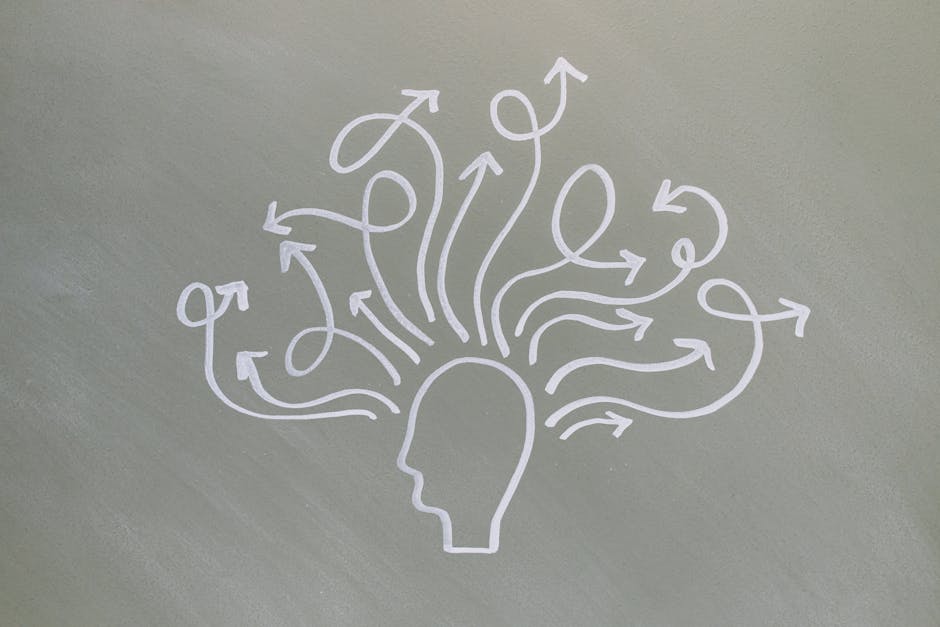
Cognitive Biases in Decision Making: Unmasking Your Mind’s Hidden Traps
Ever made a decision you later regretted, only to realize you were influenced by something you couldn’t quite pinpoint? You’re not alone. Statistics suggest that humans make an estimated 35,000 decisions a day. Imagine if a significant portion of those were subtly skewed by invisible mental shortcuts. These aren’t signs of weakness; they are cognitive biases – systematic patterns of deviation from norm or rationality in judgment. They are the hidden architects of many of our choices, from the mundane to the momentous.
This article delves into the fascinating world of cognitive biases, exploring how these ingrained mental processes can lead us astray and, more importantly, how we can recognize and mitigate their influence for more effective and rational decision-making.
Table of Contents
- What Are Cognitive Biases?
- Why Do We Have Cognitive Biases?
- Common Cognitive Biases and Their Impact
- The Role of Biases in Leadership and Business
- Strategies for Mitigating Cognitive Biases
- Frequently Asked Questions
- Conclusion
- References
What Are Cognitive Biases?
Cognitive biases are essentially mental shortcuts, or heuristics, that our brains use to process information and make decisions quickly. In a world brimming with data, these shortcuts are often essential for survival and efficient functioning. However, they can also lead to systematic errors in judgment, causing us to deviate from rational thinking. Think of them like the “auto-pilot” feature in an airplane; it’s incredibly useful for routine flights, but you wouldn’t want it making all the critical decisions during a storm.
Why Do We Have Cognitive Biases?
Cognitive biases are a byproduct of our brain’s evolutionary development and its constant effort to manage cognitive load. Our brains are wired to seek patterns, make associations, and conserve energy. This often means relying on intuition and past experiences rather than engaging in deep, analytical thought for every single decision. While incredibly efficient, this reliance can sometimes lead us to jump to conclusions or favor information that confirms our pre-existing beliefs.
Common Cognitive Biases and Their Impact
Understanding the most prevalent biases is the first step toward overcoming them. Here are some of the most common ones:
Confirmation Bias
This is the tendency to search for, interpret, favor, and recall information in a way that confirms or supports one’s prior beliefs or hypotheses. It’s like wearing glasses that only let you see things that match your outfit – you miss out on everything else.
- Impact: Can lead to poor strategic decisions, resistance to new ideas, and echo chambers in information consumption.
Anchoring Bias
The tendency to rely too heavily on the first piece of information offered (the “anchor”) when making decisions. For instance, the initial price offered for a car often sets the benchmark for subsequent negotiations, even if that price is arbitrary.
- Impact: Influences negotiation outcomes, financial forecasting, and even initial impressions of a product or service. It’s a key factor in The 8 Psychological Triggers That Influence Our Buying Decisions (and How to Use Them for Good!).
Availability Heuristic
Overestimating the importance or likelihood of events that are more easily recalled. Vivid, recent, or frequently encountered information tends to be judged as more probable than less accessible information.
- Impact: Can skew risk assessment, marketing effectiveness, and perception of success or failure based on readily available anecdotes rather than comprehensive data. This links to the importance of Data-Driven Decision Making for Leaders: The Ultimate Guide to Success.
Hindsight Bias
The “I-knew-it-all-along” phenomenon. After an event has occurred, we tend to overestimate our ability to have predicted the outcome beforehand.
- Impact: Can lead to an underestimation of the uncertainty involved in decision-making and hinder learning from past mistakes.
Overconfidence Bias
The tendency to be more confident in one’s own judgments than objective accuracy.
- Impact: Can lead to taking excessive risks, inadequate planning, and poor performance assessments. This is particularly dangerous in areas like Financial Forecasting for Executives: Drive Strategic Decisions with Precision.
Framing Effect
Drawing different conclusions from the same information, depending on how that information is presented (framed).
- Impact: Can significantly influence consumer choices, employee motivation, and the perception of policies or proposals. This is closely related to 8 Psychological Triggers: The Secret Drivers of Buying Decisions Revealed.
Sunk Cost Fallacy
Continuing a behavior or endeavor as a result of previously invested resources (time, money, or effort), even when it’s clear that continuing is not the best decision.
- Impact: Leads to throwing good money after bad, clinging to failing projects, and missing opportunities for better alternatives.
Pro-Tip: When evaluating a decision, focus on future costs and benefits, not on past investments. Ask yourself: "If I were starting today, would I make this choice?"
The Role of Biases in Leadership and Business
In leadership and business, the stakes are often high, making the impact of cognitive biases particularly significant. Leaders must navigate complex markets, make critical investments, and manage teams – all under pressure. Biases can lead to flawed strategic planning, missed market opportunities, poor hiring decisions, and ineffective change management. Recognizing and addressing these biases is crucial for effective Strategic Decision Making: The Ultimate Leader’s Playbook for High-Stakes Success. Understanding the underlying Cognitive Biases in Leadership Decision-Making is essential for leaders aiming to guide their teams through transitions successfully.
Important Warning: Ignoring cognitive biases in your team can lead to groupthink, where a desire for harmony or conformity results in an irrational or dysfunctional decision-making outcome. True Ethical Leadership Principles: Your Guide to Principled Decision-Making requires actively challenging assumptions.
Strategies for Mitigating Cognitive Biases
While completely eliminating cognitive biases is impossible, we can develop strategies to minimize their impact:
Cultivate Self-Awareness
The first and most crucial step is to acknowledge that you are susceptible to biases. Regularly reflect on your decisions and try to identify potential influences. Understanding Cognitive Biases in Behavioral Change: Unlocking Lasting Transformation begins with recognizing these internal influences.
Seek Diverse Perspectives
Actively solicit opinions from people with different backgrounds, experiences, and viewpoints. This can help challenge your own assumptions and expose you to information you might otherwise overlook. Surrounding yourself only with those who agree with you can amplify biases like confirmation bias.
Embrace Data and Logic
Whenever possible, ground your decisions in objective data and logical reasoning. Tools like AI-Driven Performance Analytics: The Leader’s Edge in Data-Powered Decision Making can provide a more objective lens.
Practice Mindfulness
Being present and aware of your thoughts and emotions can help you pause before making a decision, allowing for more deliberate consideration rather than impulsive reactions driven by bias.
Develop Structured Decision-Making Processes
Implementing frameworks for decision-making, such as cost-benefit analysis, pre-mortems, or using decision trees, can provide a systematic way to evaluate options and reduce the influence of intuition-based biases. This complements the principles outlined in Navigating Success: The Art of Strategic Decision Making. Remember, effective decision-making often involves leveraging heuristics – but understanding when they might become biases is key to Heuristics in Decision Making: Shortcuts to Smarter Choices.
Frequently Asked Questions
Q1: Can cognitive biases be completely eliminated?
A1: No, cognitive biases are deeply ingrained mental shortcuts. The goal is not to eliminate them entirely but to become aware of them and develop strategies to mitigate their influence, leading to more rational choices.
Q2: How do cognitive biases affect everyday decisions?
A2: They influence everything from what we buy (influenced by framing or anchoring) to how we perceive news (confirmation bias) or remember events (availability heuristic and hindsight bias). They are pervasive in our daily lives.
Q3: Are cognitive biases always negative?
A3: Not necessarily. Heuristics, which often give rise to biases, are crucial for quick decision-making in many situations. The challenge lies in distinguishing between a useful shortcut and a flawed judgment that leads to a poor outcome.
Conclusion
Cognitive biases are an intrinsic part of the human experience, shaping our perceptions and decisions in ways we often don’t realize. By understanding these mental pitfalls – from confirmation bias to the sunk cost fallacy – and by actively employing strategies for self-awareness, seeking diverse inputs, and using structured decision-making frameworks, we can significantly improve the quality of our choices. This conscious effort is essential for personal growth, effective leadership, and navigating the complexities of the modern world with greater clarity and rationality.
References
- Kahneman, D. (2011). Thinking, Fast and Slow. Farrar, Straus and Giroux.
- Tversky, A., & Kahneman, D. (1974). Judgment under uncertainty: Heuristics and biases. Science, 185(4157), 1124-1131. scholar.google.com
- Hilton, J. L., & Fein, S. (2007). The psychology of stereotypes and prejudice. In The Cambridge Handbook of Thinking and Reasoning (pp. 617-638). Cambridge University Press. books.google.com
- Ariely, D. (2008). Predictably Irrational: The Hidden Forces That Shape Our Decisions. HarperCollins.
- Harvard Business Review. (2018). HBR Guide to Making Smarter, Faster Decisions. Harvard Business Review Press. hbr.org
- Mullainathan, S., & Thaler, R. H. (2000). Behavioral economics. MIT Initiative on Technology & the Economy, Working Paper.
- Forbes. (2021). 10 Cognitive Biases That Sabotage Your Business Decisions. forbes.com
Featured image by Tara Winstead on Pexels