Leadership Personality Assessment Tools: Your Guide to Unlocking Potential
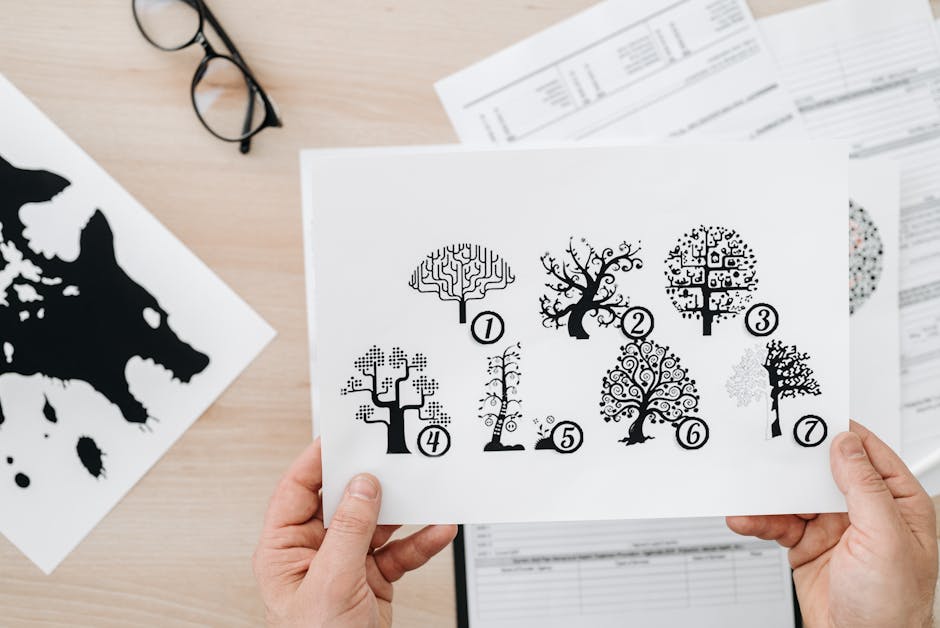
Leadership Personality Assessment Tools: Your Guide to Unlocking Potential
Executive Summary
In the trenches of leadership, intuition only gets you so far. You need tools that cut through the noise and provide actionable insights into your own leadership style and that of your team. Leadership personality assessment tools aren’t academic curiosities; they are practical instruments for building stronger teams, identifying development gaps, and fostering genuine growth. This article dives into why these assessments matter, which ones are worth your time, and how to wield them effectively to drive real-world results.
Table of Contents
- Why Bother? The Real-World Payoff of Understanding Leader Personalities
- Navigating the Landscape: Popular Assessment Tools and What They Tell You
- Beyond the Scorecard: How to Use Assessments Effectively
- Case Study: A Real-World Application
- Common Pitfalls to Avoid
- Action Plan: Putting Assessments to Work
- Conclusion: Continuous Development Through Self-Knowledge
- Further Reading & Frameworks
Why Bother? The Real-World Payoff of Understanding Leader Personalities
You’ve led teams, you’ve made decisions, and you’ve likely had those moments where you just knew how someone would react or perform. But relying solely on gut feel is a gamble. Personality assessment tools offer a more systematic, data-driven approach to understanding the intricate dynamics of leadership and team behavior.
Beyond Gut Feel: Moving from Subjectivity to Data
Leadership is complex, and human behavior even more so. Generic advice won’t cut it when you’re dealing with specific operational challenges. Assessments provide a framework for objective observation, helping you move beyond subjective interpretations of why certain situations unfold the way they do. This data can be crucial for improving processes, like Warehouse Layout Optimization: A Leadership Blueprint for Operational Excellence.
Unlocking Team Dynamics: The Power of Self-Awareness
As a leader, your self-awareness is the bedrock of effective leadership. Understanding your own natural tendencies, biases, and blind spots is the first step to improving your impact. When you understand yourself, you’re better equipped to understand others. This is fundamental to mastering Leadership Communication Styles.
Identifying Development Needs: Targeted Growth Strategies
One of the most powerful uses of these tools is in identifying specific areas for leader development. Instead of broad training initiatives, you can pinpoint exact behaviors or traits that, if honed, will yield the greatest return. This targeted approach is far more efficient than guessing. It helps in setting and tracking goals, as outlined in our article on Tools and Resources For Setting and Tracking Goals. Furthermore, embracing modern frameworks such as Circular Economy Principles for Leaders can also uncover significant areas for strategic growth and innovation. Developing a robust Talent Acquisition Strategy for Leadership Roles also benefits greatly from this targeted approach.
Navigating the Landscape: Popular Assessment Tools and What They Tell You
The market is flooded with assessments, but a few stand out for their utility in leadership development. It’s not about finding the ‘best’ tool, but the right tool for your specific needs.
The Big Five (OCEAN): Understanding Core Traits
This is arguably the most scientifically validated model. It breaks personality down into five broad dimensions: Openness, Conscientiousness, Extraversion, Agreeableness, and Neuroticism. Understanding where you and your team members fall on these spectrums can predict a great deal about performance and interaction styles. It’s a solid foundation for understanding fundamental Leadership & Development.
Myers-Briggs Type Indicator (MBTI): Preferences and Interactions
While debated in academic circles, the MBTI is incredibly popular for its focus on preferences in how people perceive the world and make decisions. It categorizes individuals into 16 types based on four dichotomies (e.g., Introversion/Extraversion, Sensing/Intuition). It’s useful for understanding communication preferences and team roles, especially in contexts like The Quiet Catalyst: Ambient Leadership for Unleashing Innovation in Distributed Introverted Engineers.
DISC: Dominance, Influence, Steadiness, Conscientiousness
DISC is a practical, behavior-focused model. It assesses how people respond to challenges (Dominance), interact with others (Influence), pace themselves (Steadiness), and respond to rules and procedures (Conscientiousness). It’s excellent for understanding observable behaviors and improving interpersonal dynamics.
StrengthsFinder (CliftonStrengths): Identifying Natural Talents
Developed by Gallup, StrengthsFinder focuses on identifying your top talent themes. The philosophy is simple: maximize your strengths rather than solely focusing on weaknesses. For leaders, this means understanding what you naturally do well and how to leverage that for greater impact. This aligns with the broader goal of Mastering Leadership: Unlock Your Full Potential with Emotional Intelligence.
Beyond the Scorecard: How to Use Assessments Effectively
Raw scores from any assessment are just data points. The real value lies in how you interpret and apply that data. Simply handing out reports without context or facilitation is a wasted opportunity.
The Assessor’s Role: Facilitation, Not Just Administration
Ideally, assessments should be administered and debriefed by a trained professional or facilitator. They can help individuals understand their results in a supportive environment, ask clarifying questions, and connect the dots to real-world leadership challenges. This nuanced approach prevents misinterpretation.
Integrating Assessments into Development Programs
Think of assessments not as standalone events, but as modules within a larger leadership development strategy. Use the insights to inform coaching conversations, mentorship pairings, and specific skill-building exercises. For instance, understanding personality can inform approaches to Supply Chain Resilience Leadership: Navigate Disruption & Drive Growth.
Avoiding the ‘Box’: Recognizing Limitations and Nuances
No assessment can perfectly capture the complexity of a human being. People are dynamic, and their behavior can shift based on context. Avoid rigidly ‘boxing’ individuals based on their assessment results. Use them as a starting point for dialogue, not a definitive label.
Cultural Considerations: Ensuring Global Applicability
If you lead diverse or global teams, be mindful of cultural nuances that can impact assessment responses and interpretations. A tool that works well in one cultural context might need adaptation or careful interpretation in another. This is critical for Mastering Cross-Cultural Leadership: Adaptability for Global Teams.
Case Study: A Real-World Application
A tech company noticed persistent communication breakdowns between its engineering and marketing departments. After administering the DISC assessment to key leaders and team members, they discovered a pattern: engineers scored high on ‘Conscientiousness’ and ‘Steadiness’ (detail-oriented, process-driven), while marketing leaders scored high on ‘Influence’ and ‘Dominance’ (big-picture, action-oriented). Understanding these differences, fostered by a facilitated debrief, allowed teams to adapt their communication styles. Engineering learned to present information more concisely, and marketing learned to provide clearer project briefs. This significantly improved project alignment and reduced friction.
Common Pitfalls to Avoid
While powerful, these tools aren’t foolproof. Awareness of common mistakes can prevent you from undermining their value.
Over-reliance and Misinterpretation
The biggest mistake is treating assessment results as gospel. Don’t use them to make hiring/firing decisions or to pigeonhole individuals. They are development tools, not definitive judgments.
The Halo/Horn Effect
Be wary of letting a single positive (halo) or negative (horn) trait from an assessment unduly influence your overall perception of an individual. Focus on a holistic view of their performance and potential. Similarly, leaders must be aware of their own Psychological Barriers to Personal Growth, which can also shape their perceptions and hinder development.
Ignoring Contextual Factors
Personality is only one piece of the puzzle. Consider environmental factors, skills, experience, and situational demands when interpreting assessment data. A person’s behavior is a product of both personality and context. For example, even the most introverted leader might exhibit extraverted behaviors when necessary; this is a topic explored in The Quiet Catalyst: Ambient Leadership for Unleashing Innovation in Distributed Introverted Engineers.
- Define Your Goal: What specific leadership challenge are you trying to address?
- Select the Right Tool: Choose an assessment that aligns with your objective.
- Invest in Facilitation: Ensure results are debriefed by a qualified individual.
- Integrate Insights: Connect assessment data to coaching, development plans, and team strategies.
- Promote Self-Reflection: Encourage individuals to explore their results and their implications.
- Focus on Behavior: Translate insights into observable behavioral changes.
- Revisit Periodically: People and situations evolve; reassess as needed.
Conclusion: Continuous Development Through Self-Knowledge
Leadership personality assessment tools are valuable allies in your journey of continuous learning and development. They provide a mirror, reflecting your inherent strengths and areas ripe for growth. By embracing these tools with a discerning eye and a commitment to action, you can unlock deeper self-understanding, foster more effective team dynamics, and ultimately, become a more impactful leader. This ongoing process is crucial for navigating complex environments, much like those discussed in Navigating Ambiguity in Leadership: Thriving in Uncertainty.
Further Reading & Frameworks
- The Big Five Personality Traits: The most empirically supported model of personality. Look for research by Costa & McCrae.
- Myers-Briggs Type Indicator (MBTI): Developed by Isabel Myers and Katharine Briggs, based on Carl Jung’s theories of psychological types. Unlock Your Potential: A Deep Dive into Personality Typology Systems
- DISC Assessment: Popularized by William Moulton Marston, focusing on observable behaviors.
- CliftonStrengths (StrengthsFinder): Developed by Gallup, focusing on identifying and leveraging individual talents.
- Emotional Intelligence (EI): Frameworks by Daniel Goleman. Understanding EI is critical for interpreting personality assessments in a leadership context. Mastering Leadership: Unlock Your Full Potential with Emotional Intelligence
- Situational Leadership Theory: Developed by Hersey and Blanchard, highlighting how effective leadership depends on the situation and the developmental level of followers. This complements personality insights by adding situational context.
- Book: StrengthsFinder 2.0 by Tom Rath (Gallup Press) – A practical guide to understanding and applying your strengths.
- Book: Introduction to type and leadership by Beth Gordon, Sandra Krebs, and Richard J. J. Long (CPP) – Specifically links MBTI types to leadership roles.
- Book: Quiet: The Power of Introverts in a World That Can’t Stop Talking by Susan Cain – Explores the strengths of introverts, relevant when discussing personality types. (While not a direct framework, it provides crucial context for understanding certain personality dimensions.)