AI-Driven Workforce Augmentation: Unlock Human Potential & Boost Productivity
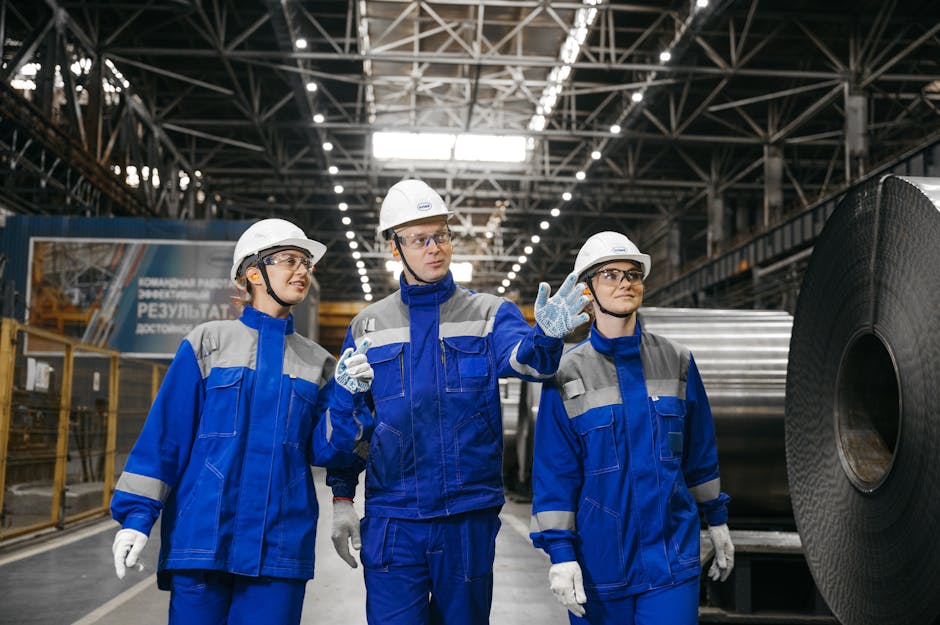
The Dawn of the Augmented Employee: Where Human Ingenuity Meets Artificial Intelligence
Imagine Sarah, a brilliant marketing analyst, drowning in mountains of data, struggling to extract actionable insights before deadlines loom. Her days are spent sifting, sorting, and synthesizing, leaving little room for the creative strategy development she truly excels at. Now, picture this: an AI assistant, seamlessly integrated into her workflow, automating the tedious data crunching, highlighting key trends, and even suggesting campaign optimizations. Sarah isn’t replaced; she’s empowered. This isn’t science fiction; it’s the reality of AI-driven workforce augmentation.
Table of Contents
- The Dawn of the Augmented Employee: Where Human Ingenuity Meets Artificial Intelligence
- Executive Summary
- The Core Principles of Augmentation
- Distinguishing Augmentation from Automation
- Enhanced Productivity and Efficiency
- Improved Decision-Making
- Increased Employee Engagement and Job Satisfaction
- Fostering Innovation and Creativity
- Ethical Implications and Bias
- Data Privacy and Security
- Skill Gaps and Workforce Training
- Implementation Costs and ROI
- References
Executive Summary
- AI-driven workforce augmentation leverages artificial intelligence to enhance, not replace, human capabilities.
- It focuses on automating repetitive tasks, providing data-driven insights, and improving decision-making.
- Key benefits include increased productivity, enhanced employee skills, improved job satisfaction, and greater innovation.
- Challenges involve ethical considerations, data privacy, skill gaps, and the need for strategic implementation.
- Successful augmentation requires a human-centric approach, focusing on collaboration between humans and AI.
Understanding AI-Driven Workforce Augmentation
AI-driven workforce augmentation is the strategic integration of artificial intelligence technologies to complement and enhance the skills and performance of human employees. Unlike automation that aims to replace human labor entirely, augmentation focuses on creating a symbiotic relationship where AI handles the rote, data-intensive, or computationally complex aspects of a job, freeing up humans to focus on higher-level cognitive functions like creativity, critical thinking, emotional intelligence, and complex problem-solving.
The Core Principles of Augmentation
At its heart, AI workforce augmentation is about amplifying human potential. It operates on several key principles:
- Task Automation: AI takes over repetitive, rule-based, or time-consuming tasks (e.g., data entry, basic report generation, scheduling).
- Insight Generation: AI analyzes vast datasets to identify patterns, trends, and anomalies that humans might miss, providing actionable intelligence. Tools for AI-Driven Performance Analytics are crucial here.
- Decision Support: AI provides real-time data and predictive models to assist human decision-makers, leading to more informed and effective choices. This aligns with the principles of Data-Driven Decision Making for Leaders.
- Skill Enhancement: AI can serve as a learning tool, offering personalized training, feedback, and access to information, thereby upskilling the workforce.
Distinguishing Augmentation from Automation
It’s crucial to differentiate augmentation from pure automation. Automation typically aims to replace human intervention in a process, often leading to job displacement. Augmentation, conversely, seeks to work with humans, making them more efficient and effective. Think of a surgeon using robotic assistance for precision surgery; the robot augments the surgeon’s skill, it doesn’t replace them. Similarly, AI tools can augment the capabilities of HR professionals in areas like AI for Predictive Talent Management, making their work more strategic.
Benefits of AI-Driven Workforce Augmentation
The strategic implementation of AI augmentation yields significant advantages for both organizations and their employees.
Enhanced Productivity and Efficiency
By automating mundane tasks and providing rapid access to information, AI allows employees to dedicate more time to strategic thinking, innovation, and customer interaction. This leads to a measurable increase in output and a reduction in operational costs. For instance, AI can process and categorize customer feedback far faster than a human team, enabling quicker responses and service improvements.
Improved Decision-Making
AI algorithms can analyze complex datasets, identify correlations, and generate predictive insights that human analysts might overlook. This empowers leaders and teams to make more informed, data-backed decisions, minimizing guesswork and reducing risk. The insights derived can be invaluable for strategic planning and resource allocation.
Increased Employee Engagement and Job Satisfaction
When employees are relieved of tedious, repetitive tasks, they can focus on more engaging, meaningful work that utilizes their unique human skills. This often leads to higher job satisfaction, reduced burnout, and a greater sense of purpose. Furthermore, AI-powered tools can provide personalized learning paths, fostering continuous development and career growth, contributing to a more positive work environment that values individual contributions. This ties into fostering a workplace that benefits from Inclusive Hiring: Building a Stronger, More Innovative Workforce.
Fostering Innovation and Creativity
By handling the heavy lifting of data analysis and routine operations, AI frees up cognitive bandwidth for employees to engage in creative problem-solving and innovative thinking. AI can also act as a brainstorming partner, suggesting novel approaches or identifying emerging trends that can spark new ideas.
Challenges and Considerations
Despite its immense potential, the path to successful AI workforce augmentation is not without its hurdles.
Ethical Implications and Bias
AI systems are trained on data, and if that data contains historical biases, the AI can perpetuate or even amplify them. This is a significant concern in areas like hiring, performance evaluation, and customer service. Ensuring fairness, transparency, and accountability in AI algorithms is paramount.
Data Privacy and Security
Augmentation tools often require access to sensitive employee and company data. Robust security measures and clear data governance policies are essential to protect this information from breaches and misuse.
Skill Gaps and Workforce Training
The successful integration of AI requires a workforce equipped with new skills. Employees need training not only on how to use AI tools but also on how to collaborate effectively with AI systems. Organizations must invest in reskilling and upskilling programs to bridge these emerging skill gaps.
Implementation Costs and ROI
Implementing AI solutions can involve significant upfront investment in technology, training, and change management. Organizations need to carefully plan their strategy and measure the return on investment to ensure the initiative is sustainable and beneficial.
The Future of Work: Human-AI Collaboration
AI-driven workforce augmentation is not a fleeting trend; it represents a fundamental shift in how work will be done. The future workplace will likely be characterized by deep collaboration between humans and intelligent machines. Success will hinge on organizations’ ability to embrace this new paradigm, fostering a culture that values both human ingenuity and artificial intelligence.
Organizations that strategically implement AI augmentation will not only boost their operational efficiency and competitive edge but will also create more fulfilling and dynamic work experiences for their employees, unlocking unprecedented levels of human potential.
References
- Brynjolfsson, E., & McAfee, A. (2014). The Second Machine Age: Work, Progress, and Prosperity in a Time of Brilliant Technologies. W. W. Norton & Company.
- Daugherty, P. R., & Wilson, H. J. (2018). Human + Machine: Reimagining Work in the Age of AI. Harvard Business Review Press.
- Manyika, J., Chui, M., Miremadi, M., Bughin, J., George, K., Willmott, P., & Dewhurst, M. (2017). A Future That Works: Automation, Employment, and Productivity. McKinsey Global Institute. scholar.google.com
- Ford, M. (2015). Rise of the Robots: Technology and the Threat of a Jobless Future. Basic Books.
- Agrawal, A., Gans, J., & Goldfarb, A. (2018). Prediction Machines: The Simple Economics of Artificial Intelligence. Harvard Business Review Press.
- Susskind, D., & Susskind, R. (2015). The Future of the Professions: How Technology Will Transform the Work of Human Experts. Oxford University Press.
- National Bureau of Economic Research. (2019). The Economics of Artificial Intelligence: An Agenda. nber.org
- MIT Technology Review. (2020). The AI Race: China, the US, and the Global Competition for Artificial Intelligence Dominance. technologyreview.com
Featured image by Sergey Sergeev on Pexels