Tier 1-3 Daily Operations Huddles (Scripts & Template)
As an Amazon Associate I earn from qualifying purchases. Product links on this page are affiliate links — they cost you nothing extra.
What Is a Tiered Daily Operations Huddle System?
A tiered daily operations huddle system is a synchronized cadence of daily 15-minute standup meetings linking three operational layers: front-line teams (Tier 1), middle managers (Tier 2), and senior leaders (Tier 3). Operating on a strict 24-hour cycle, Tier 1 surfaces operational blockers, Tier 2 reallocates resources across departments to resolve them, and Tier 3 addresses systemic risks and resource constraints. Unresolved issues escalate from the frontline to executive leadership in less than 8 hours, replacing disjointed weekly status calls with disciplined daily execution.
Variance management is the systematic practice of identifying the exact numerical gap between planned operational targets and actual daily output so teams can correct deviations immediately.
[Tier 1: Front-Line (08:00)]
             │
      Escalate Blockers
             ▼
[Tier 2: Middle Mgmt (08:30)]
             │
      Escalate Systemic
             ▼
[Tier 3: Executives (09:15)]
Why Standard Shift Meetings Fail
Most daily shift meetings fail because they default to passive status reporting. Supervisors read task lists, staff tune out, and discussions wander into circular debates. Nobody identifies variances until end-of-month financial reports expose missed targets.
In contrast, high-performing operational tiers focus exclusively on active variance management. According to research published by the Lean Enterprise Institute, organizations that implement structured daily management systems reduce issue-resolution lead times by up to 40%. Instead of reciting what went well, leaders track key performance indicators against daily run rates. If an assembly cell, engineering sprint, or customer support queue is off target by 5% or more, the team records the root cause and assigns a 24-hour countermeasure immediately. Developing strong leadership skills for meeting facilitation is what separates these actionable standups from unproductive status updates.
Bidirectional Information Flow
Tiered systems run on synchronized, bidirectional communication:
- Bottom-Up Escalation: Front-line teams at Tier 1 identify constraints they cannot resolve locally within 10 minutes. The Tier 1 leader carries that specific barrier to the Tier 2 meeting 30 minutes later. If cross-functional department heads at Tier 2 cannot resolve the issue, it escalates to Tier 3 by mid-morning.
- Top-Down Cascading: Strategic priorities, regulatory updates, and safety alerts clear executive review at Tier 3 and cascade down to frontline personnel within 24 hours.
When operational bottlenecks require fast trade-offs across departments, leaders use frameworks like Lead Under Pressure: 5 Steps to Fast Decisions (With Template) to clear obstacles without stalling frontline flow. This structured rhythm anchors modern strategic operations management, ensuring critical operational data bypasses traditional corporate silos.
| Myth | Fact |
|---|---|
| Tiered huddles add meeting bloat to a manager’s calendar. | Each huddle is hard-capped at 15 minutes. Front-line managers attend two huddles maximum (Tier 1 and Tier 2), eliminating hours of ad-hoc email threads and emergency alignment meetings. |
| Standup huddles only work on factory floors or software teams. | Service operations, healthcare systems like the Cleveland Clinic, and financial institutions use tiered huddles to manage daily processing volumes and service-level agreements. |
| Daily huddles replace weekly deep-dive meetings. | Huddles identify and contain daily operational variances. Complex root-cause investigations and strategic pivots move to dedicated problem-solving sessions outside the 15-minute standup window. |
Maintaining this 15-minute timebox across three separate tiers requires strict adherence to a standard verbal agenda and visual board architecture. The exact facilitation scripts, time allocations, and physical board layouts below show how to run each tier without letting discussions run over.
Key Takeaways
- Cap Tier 1, 2, and 3 huddles at exactly 15 minutes each.
- Resolve issues within 24 hours or escalate them to the next management tier.
- Structure whiteboard zones into Safety, Quality, Delivery, Cost, and Morale metrics.
- Use a standardized facilitation script to prevent status updates from turning into problem-solving sessions.
Table of Contents
- What Is a Tiered Daily Operations Huddle System?
- The 3 Tiers Defined: Cadence, Attendees, and Objectives
- Word-for-Word Facilitation Scripts for Tiers 1, 2, and 3
- The 24-Hour Escalation and Countermeasure Rules
- Your Copy-Paste Whiteboard Layout Template and Run Sheet
- Sources & Further Reading
The 3 Tiers Defined: Cadence, Attendees, and Objectives
A tiered daily huddle system is a structured escalation framework where operational issues move from front-line workers to site executives within hours through three distinct, tightly timeboxed meetings.
Instead of waiting for weekly staff meetings or monthly reviews, teams flag and resolve disruptions in real time. Organizations like Danaher and Toyota use this three-tiered architecture to solve roughly 80% of daily process abnormalities within 2 hours of discovery.
[ Tier 1: Shift-Start ]
         |
         v (Escalate within 60 mins)
[ Tier 2: Mid-Morning ]
         |
         v (Escalate by 11:00 AM)
[ Tier 3: Executive Standup ]
Tier 1: Front-Line Operations
- Cadence: Daily at shift start (strictly 15 minutes).
- Owner: Front-line supervisor or team lead.
- Attendees: Shift technicians, operators, and line leads.
Tier 1 takes place directly at the work cell or team area around a visual board. The supervisor leads a crisp review of the previous 24 hours against targets for Safety, Quality, Delivery, and Cost (SQDC).
The team checks equipment status, staffing gaps, and material availability for the incoming shift. If a line is missing a key operator or a machine tolerance is drifting, the lead logs it immediately. The rule is absolute: no problem-solving happens during this standup. The supervisor either assigns a direct owner for a quick fix or escalates the item to Tier 2. Mastering effective meeting facilitation techniques keeps these sessions strictly under the 15-minute mark.
Tier 2: Departmental Leadership
- Cadence: Daily, typically between 09:00 and 10:00 AM (strictly 15 minutes).
- Owner: Operations manager or department head.
- Attendees: Tier 1 supervisors, manufacturing engineers, maintenance leads, quality specialists, and materials planners.
Tier 2 brings support functions to the front line’s blockers. According to research from the Lean Enterprise Institute, cross-functional daily response teams cut maintenance mean-time-to-repair (MTTR) by up to 35% compared to static ticketing queues.
Supervisors present only the items they could not resolve within their own shift boundaries. A maintenance lead commits to fixing an air leak by 1:00 PM; a quality engineer agrees to inspect a supplier batch by noon. This cadence prevents supervisors from chasing support staff across the plant and forms a key practice when developing operations managers.
Tier 3: Executive and Site Leadership
- Cadence: Daily or 3x weekly at 10:30 AM (15 minutes).
- Owner: Plant manager, site director, or VP of operations.
- Attendees: Department heads (production, supply chain, environmental health and safety, HR, finance, engineering).
Tier 3 reviews aggregate site health rather than individual line tickets. The site director looks at systemic patterns emerging across departments over the trailing 7 to 30 days.
If three separate lines missed output due to the same resin supplier, Tier 3 directs procurement to initiate a vendor audit. If Tier 2 teams report that unscheduled downtime exceeded 8% for two consecutive days, executive leadership reallocates capital or maintenance headcount on the spot. Tier 3 ties daily plant reality directly to strategic operations management.
Tier Comparison Matrix
| Attribute | Tier 1 (Front-Line) | Tier 2 (Departmental) | Tier 3 (Site Leadership) |
|---|---|---|---|
| Cadence | Daily, shift start | Daily, mid-morning | Daily or 3x/week |
| Duration | 15 minutes | 15 minutes | 15 minutes |
| Owner | Shift Supervisor / Lead | Operations Manager | Plant / Site Director |
| Core Attendees | Operators, Technicians | Supervisors, Maintenance, Quality, Eng. | Functional Heads, Site Staff |
| Primary Focus | Last 24h run & immediate shift risks | Multi-team blockers & intraday help | Systemic trends & site resource allocation |
| Escalation Trigger | Unresolved within 30 mins / needs help | Cross-department failure / >$5k impact | Site-level metric breach / budget reallocations |
Try This Today: Audit your current Tier 1 handoff. Stand next to one operational board at shift start today with a stopwatch, note the exact duration, and count how many minutes the team spends debating solutions rather than logging blockers.
To run these standups without running over time, your team needs a rigid physical or digital tracking layout and a word-for-word facilitation script.
Word-for-Word Facilitation Scripts for Tiers 1, 2, and 3
Every tier of a daily operational tiered huddle runs on a strict 15-minute timebox. According to research from the Lean Enterprise Institute, daily tiered escalation cadences fail most often because conversations devolve into unstructured problem-solving rather than rapid operational triage.
Recommended gear
Secura 60-Minute Visual Countdown Timer
A 60 minute mechanical timer showing remaining time as a coloured segment, keeping short timed exercises on track without a screen.
Affiliate link
An SQDC scorecard is a visual management tool that tracks daily performance across four standard operational pillars: Safety, Quality, Delivery, and Cost, indicating red or green status for each shift.
To keep meetings under 15 minutes, every tier follows the same four-part agenda:
- 0:00–2:00 (2 min): Safety. Review incidents, near-misses, and 5S findings from the previous 24 hours.
- 2:00–5:00 (3 min): SQDC scorecard. Review binary metric status (Red or Green) against the 24-hour target.
- 5:00–12:00 (7 min): Operational blockers. Identify root causes for red metrics and log new system constraints.
- 12:00–15:00 (3 min): Countermeasure assignments. Assign single-threaded owners and delivery deadlines for immediate actions.
Mastering leadership skills for meeting facilitation requires strict adherence to this operational rhythm.
Tier 1: Front-Line Supervisor Script (Crew Level)
The Tier-1 huddle occurs at the work-cell or line level 10 minutes prior to shift startup. The front-line supervisor leads the standup directly in front of the primary cell board.
- Opening (0:00): "Safety check. We worked 24 hours with zero recordables and one near-miss reported at Station 4 regarding oil seepage. Maintenance logged work order 4402. Are there any other uncontained safety risks on this line right now?"
- Scorecard Review (2:00): "Yesterday’s production target was 1,200 units; we completed 1,080. That is a red for Delivery. Quality scrap was 1.2% against a 1.0% target—red for Quality. Shift two lost 45 minutes on Cell B due to feeder jams."
- Soliciting Blockers (5:00): "State the constraint, the station, and what is blocking your flow right now. Do not offer solutions yet—just the facts."
- Cutting Off Technical Debates (8:00): "Stop. We are moving into root-cause engineering, which belongs in a separate technical breakout. John and Dave, meet at Station 3 at 08:30 for 10 minutes to verify feed tolerances. Log the action on the board."
- Closing & Escalation (12:00): "Action item 1: Dave owns the sensor recalibration by 10:00. Action item 2: I am escalating the raw material variance on Lot 9 to the Tier-2 huddle at 08:15. Shift starts in two minutes. Clear the floor."
Tier 2: Cross-Functional Manager Script (Value-Stream Level)
The Tier-2 meeting gathers area supervisors, maintenance leads, quality engineers, and supply chain planners at 08:15. Applying effective meeting facilitation techniques here prevents cross-departmental finger-pointing.
A Service Level Agreement is an internal operational contract between supporting departments that defines the required turnaround time, quality standard, and handoff expectations for critical cross-functional workflows.
- Opening & Scorecard (0:00): "Starting Tier 2. Lines 1 and 3 hit volume targets. Line 2 missed delivery by 120 units due to feed variance on raw material Lot 9. Safety is green across the department."
- Assigning Cross-Departmental Owners (4:00): "Tier 1 escalated feeder jams caused by Lot 9 resin thickness. Quality and Supply Chain: who is taking point on the supplier containment?"
- Resolving Ownership (6:00): "Sarah [Quality], pull three samples from Lot 9 and test melt-flow by 11:00. Mark [Procurement], hold shipment delivery PO-8819 until Sarah verifies spec. We need an initial disposition by 12:00."
- Verifying SLA Handoffs (10:00): "Maintenance, the SLA for emergency work orders on Line 2 is 30 minutes. Yesterday’s average response was 52 minutes. Tom, what is the constraint preventing maintenance tech dispatch within target?"
- Escalation to Tier 3 (13:00): "If Lot 9 is rejected across all 14 pallets, our raw material safety stock drops below 48 hours. I will escalate this stockout risk to the Plant Manager at Tier 3 for expedited freight approval."
Building this level of cross-functional accountability is a core capability when developing operations managers across high-volume environments.
Tier 3: Plant Leadership Script (Site Executive Level)
The Tier-3 huddle brings together the Plant Manager, Operations Director, Supply Chain Director, Continuous Improvement Lead, and HR Manager at 08:45. A benchmarking study by McKinsey & Company found that site-level tiered escalations cut incident resolution time by 40% when executives focus strictly on clearing cross-boundary bottlenecks rather than rehashing line-level metrics.
- Opening & Site Scorecard (0:00): "Site safety is green at 142 days incident-free. Yesterday’s overall plant delivery closed at 91.4% against our 96.0% SLA. Quality scrap cost was $4,200, within our daily $5,000 threshold."
- Evaluating Site-Level Risk (3:00): "Value Stream 2 flagged a non-conformance risk on resin Lot 9. Rejection of that lot puts Line 2 down tomorrow morning, risking 2,400 finished units for our primary regional customer."
- Approving Emergency Spend (7:00): "Supply Chain has an alternate vendor in Ohio that can courier 10,000 lbs of qualified resin by 20:00 tonight. Expedited transport cost is $3,200. I am approving the emergency spend against the plant contingency budget. Procurement, issue the purchase order immediately."
- Cascading Strategic Priorities (11:00): "Corporate has finalized the Q3 equipment changeover schedule. Engineering will begin the retrofit on Line 4 next Monday. Value stream leaders, adjust your overtime coverage to build 15% safety stock by Friday."
- Action Log Verification (13:00): "Procurement owns PO issuance by 09:30. Quality delivers the Lot 9 final test report to my desk by 12:00. Operations cascades the Line 4 downtime schedule to Tier 1 boards before shift two starts."
This structured communication mechanism supports strategic operations management across all leadership layers.
Copy-Paste Template: Tier 1–3 Daily Huddle Facilitation Protocol
TIER [1 / 2 / 3] DAILY OPERATIONS HUDDLE PROTOCOL

Meeting Leader: [NAME / ROLE]
Timebox: Exactly 15 Minutes (Daily at [00:00 AM/PM])
Location: [BOARD LOCATION / VIRTUAL ROOM LINK]

AGENDA & TIME STAMPS:

0:00–2:00 | SAFETY & COMPLIANCE
Leader Prompt: "Safety status for the last 24 hours. Report recordables, near-misses, and active containment."
- Incidents Reported: [COUNT / DETAILS]
- Near-Misses / Hazards: [COUNT / LOCATION]
- Containment Owner: [NAME] | Target Completion: [TIME/DATE]

2:00–5:00 | SQDC METRIC RECAP (Binary Red/Green Status)
- Safety: [GREEN / RED] -> Variance: [DESCRIPTION]
- Quality: [GREEN / RED] -> Target: [X]% | Actual: [Y]%
- Delivery: [GREEN / RED] -> Target: [X] Units | Actual: [Y] Units
- Cost / Labor: [GREEN / RED] -> Target: [X] Hours | Actual: [Y] Hours

5:00–12:00 | OPERATIONAL BOTTLENECK TRIAGE
Leader Cut-off Script: "State the blocker in one sentence: Location, Symptom, Impact. Technical root-cause discussions are parked for separate breakout sessions."
1. Blocker: [SPECIFIC CONSTRAINT]
   - Impacted Area: [WORK CELL / DEPARTMENT]
   - Escalation Tier Required: [RESOLVE AT CURRENT TIER / ESCALATE TO TIER +1]
2. Blocker: [SPECIFIC CONSTRAINT]
   - Impacted Area: [WORK CELL / DEPARTMENT]
   - Escalation Tier Required: [RESOLVE AT CURRENT TIER / ESCALATE TO TIER +1]

12:00–15:00 | COUNTERMEASURE & ACTION ASSIGNMENTS
Leader Assignment Script: "Assigning single-point owner and deadline. Read back your commitment."
- Action 1: [ACTION DESCRIPTION] | Owner: [NAME] | Due: [TIME / DATE]
- Action 2: [ACTION DESCRIPTION] | Owner: [NAME] | Due: [TIME / DATE]
- Escalations Upward: [ESCALATION SUMMARY] | Owner: [LEADER NAME] | Escalation Time: [NEXT TIER HUDDLE TIME]

HUDDLE ADJOURNED AT 15:00
Having scripts for each tier guarantees conversational discipline, but huddles quickly collapse if the visual board behind the leader is cluttered or disorganized.
The 24-Hour Escalation and Countermeasure Rules
A countermeasure is an immediate operational fix designed to stop a specific process defect from recurring, distinct from a permanent engineering redesign that requires extended development time.
Daily standup meetings fail when operational issues linger on the board for days without resolution. Operations teams practicing Strategic Operations Management enforce strict 24-hour escalation gates to keep issues moving. If an abnormal condition is not contained within a single 8-hour shift, it escalates to the next management tier.
[Shift 1: Operator Containment]
             |
             v
[Shift 2: Supervisor Root Cause]
             |
             v
[Shift 3: Tier-2 Multi-Team Esc.]
The 3-Strike Escalation Rule
The 3-strike rule prevents minor line stoppages from silently draining capacity. Research published by the Lean Enterprise Institute shows that unresolved operational disruptions increase line-level operating costs by roughly 12% to 15% when unescalated past 24 hours.
- Strike 1 (Shift 1): The operator logs the abnormality on the Tier-1 tracking sheet and applies an immediate temporary containment. Target resolution: under 2 hours.
- Strike 2 (Shift 2): If the defect repeats or containment fails, the shift supervisor assumes ownership and initiates a 5-Why analysis. Target resolution: end of shift.
- Strike 3 (Shift 3): If the issue remains open after 24 elapsed hours, the supervisor places a red escalation tag on the card. The problem automatically moves to the Tier-2 value stream board for engineering and maintenance intervention.
Daily Escalation Threshold Matrix
Not every problem should wait 24 hours. Severe safety events and high-cost stoppages require immediate bypass directly to Tier-2 or Tier-3 leadership. Use clear trigger criteria so team leads do not hesitate during line disruptions.
| Tier Level | Safety Trigger | Scrap / Cost Impact | Downtime Limit | Customer Impact | Escalation Path |
|---|---|---|---|---|---|
| Tier 1 (Frontline) | Ergonomic strain or minor near-miss | Under $250 scrap per shift | Under 15 minutes | Zero schedule delay | Shift Team Lead |
| Tier 2 (Department) | First-aid injury or hazardous condition | $250 to $2,500 scrap per shift | 15 to 60 minutes | Late dispatch risk (<4 hours) | Operations Manager |
| Tier 3 (Plant / Exec) | Recordable injury or OSHA reportable | Exceeds $2,500 scrap or run batch | Over 60 minutes (>$1,200/hr) | Missed customer delivery date | Plant Director & VP |
Applying this matrix removes subjective debate about when to notify upper management. Supervisors can lead under pressure with fast decisions because the operating boundaries are pre-defined.
The ‘Park It’ Protocol: 5 Transition Scripts
A daily Tier-1 huddle must finish in 10 to 15 minutes. When an issue requires deeper troubleshooting, discussions often devolve into line-side arguments. Meeting leads should master effective meeting facilitation techniques and use the "Park It" protocol to redirect root-cause analysis into dedicated 30-minute breakout sessions.
Use these word-for-word facilitation phrases:
- When technical debate stalls the board: "We have defined the symptom, but root-cause diagnosis belongs in a problem-solving circle. Let’s park the technical debate, assign Marcus as owner, and schedule a 20-minute breakout at 10:00 AM."
- When missing data halts progress: "We cannot solve this without maintenance telemetry logs. I am parking this item on the side rail until 1:00 PM when Sarah gets the sensor readout."
- When cross-functional handoffs are disputed: "Quality and Tooling need an alignment session on this spec. Let’s log the scrap cost here, park the dispute, and review their proposed fix at tomorrow morning’s Tier-2 huddle."
- When a fix requires budget approval: "This exceeds our Tier-1 authorization limit. I am tagging this red, parking the solution design, and carrying the financial justification directly to the 9:00 AM Tier-3 huddle."
- When a side discussion threatens the time limit: "We have 4 minutes remaining to cover safety and delivery. Let’s write this constraint in the parking lot column and confirm the action team before we break."
Building these habits is essential when developing operations managers across multi-shift facilities. Next, look at the physical whiteboard layout that organizes these columns to keep your team aligned.
Your Copy-Paste Whiteboard Layout Template and Run Sheet
A tiered huddle is a structured daily standup where frontline performance metrics and operational blockers move rapidly from shift workers to executive leadership across fixed morning intervals. In David Mann’s book Creating a Lean Culture, structured visual management boards serve as the operating system that cuts problem-resolution cycles from weeks down to hours.
To eliminate meeting drift, your board requires a rigid 4-quadrant layout. Every shift uses the same visual architecture so any leader walking the floor can assess station health in under 10 seconds.
+-------------------+-------------------+
|  Q1: SAFETY &     |  Q2: QUALITY &    |
|  ENVIRONMENT      |  DELIVERY         |
|                   |                   |
|  - Incidents (24h)|  - Target vs Act  |
|  - Near Misses    |  - Scrap / Rework |
|  - 5S Audit Score |  - On-Time Ship % |
+-------------------+-------------------+
|  Q3: ACTION ITEM  |  Q4: ESCALATION   |
|  TRACKER          |  QUEUE            |
|                   |                   |
|  - Task / Counter |  - Tier-2 Handoff |
|  - Single Owner   |  - Target SLA     |
|  - Due (Date/Hr)  |  - Ticket Number  |
+-------------------+-------------------+
Color-Coding Standards
Visual management fails when teams debate whether a metric is acceptable. Set objective, binary thresholds across the entire facility:
- Green Marker / Magnet: The metric met or exceeded target over the trailing 24-hour cycle. No verbal discussion is needed during the standup.
- Red Marker / Magnet: The metric missed the target by any margin. The owner must state the root cause and the immediate containment action in two sentences or fewer.
- Yellow Magnetic Disk: Placed on any line item in Quadrant 4 to signal an open escalation awaiting action from the Tier-2 operational meeting.
Standardize on physical dry-erase accessories and high-visibility visual indicators so metrics remain obvious from 10 feet away.
Applying basic leadership skills for meeting facilitation keeps the standup strictly inside its 15-minute operational boundary.
Step 1: Pre-Huddle Setup (T-10 to T-0 Minutes)
- Update Metric Cards: The shift lead writes yesterday’s final actuals against targets in Quadrant 2 (Delivery and Quality).
- Verify Safety Logs: Confirm zero open hazards in Quadrant 1, or record any incident that occurred during the last shift.
- Review Open Actions: Check Quadrant 3. Any action past its due date turns red before the team gathers.
Step 2: The 15-Minute Huddle Execution (T-0 to T-15 Minutes)
Run the meeting standing up directly in front of the board. The National Institute of Standards and Technology (NIST) Manufacturing Extension Partnership emphasizes that disciplined 15-minute daily cadences directly increase operational throughput by addressing micro-stoppages before they compound into systemic line failures.
- Minutes 0:00–2:00 | Quadrant 1 (Safety): Review incidents and near-misses. If green, state "Safety is green" and move immediately to Quadrant 2.
- Minutes 2:00–7:00 | Quadrant 2 (Quality & Delivery KPIs): Read actual versus target numbers. For any red metric, the assigned lead gives a 30-second root cause update using the Point of Cause & Countermeasure format.
- Minutes 7:00–11:00 | Quadrant 3 (Action Tracker): Confirm completion of items due today. Add new single-owner countermeasure tasks for today’s red metrics.
- Minutes 11:00–14:00 | Quadrant 4 (Escalations): Flag blockers requiring engineering, maintenance, or management intervention outside this team’s authority. Place a yellow magnet on the item.
- Minute 14:00–15:00 | Adjourn: Confirm the designated Tier-1 representative who will carry Quadrant 4 tickets into the 09:00 Tier-2 operations huddle.
Step 3: Post-Huddle Handoff (T+0 to T+5 Minutes)
- Transfer Escalations: The Tier-1 lead posts the escalated blocker ticket directly into the plant-wide maintenance or digital operations backlog.
- Lock the Board: Leave the board untouched throughout the shift. It serves as the live operating record for plant tours and shift crossover handoffs.
Integrating these visual cues into your broader strategic operations management structure stops departmental silos from hiding manufacturing defects and project delays. Pair this layout with structured effective meeting facilitation to train line supervisors into proactive problem solvers.
Print this run sheet, divide your floor whiteboard into these four quadrants using black graphic line tape today, and run tomorrow’s morning shift against the 15-minute clock.
Sources & Further Reading
Tiered escalation is a structured operational process where unresolved blockers move up management levels on fixed schedules within a single shift or day to ensure rapid leadership intervention.
Implementing a three-tier daily huddle system requires rigid adherence to timeboxes, visual clarity, and disciplined problem escalation. Operational research published in Harvard Business Review by Steven J. Spear and H. Kent Bowen demonstrates that high-performing operating systems specify direct, unambiguous pathways for every operational request, cutting problem-resolution latency by up to 50%. When you structure each huddle around a 15-minute window and enforce a 24-hour resolution SLA for Tier-2 blockers, your management team shifts from reactive firefighting to systematic variance control.
- David Mann, Creating a Lean Culture: Tools to Sustain Lean Conversions (2005) – Establishes the foundational mechanics of visual management boards, leader standard work, and daily tier accountability meetings.
- Jeffrey K. Liker, The Toyota Way: 14 Management Principles from the World’s Greatest Manufacturer (2004) – Details the principles of genchi genbutsu and visual controls that underpin front-line daily huddles.
- John Shook, Managing to Learn: Using the A3 Management Process (Lean Enterprise Institute, 2008) – Provides the standard root-cause problem-solving structure used to resolve blockers escalated out of Tier-1 and Tier-2 meetings.
- Steven J. Spear and H. Kent Bowen, "Decoding the DNA of the Toyota Production System" (Harvard Business Review, 1999) – Analyzes the specific rules for designing self-diagnosing operational workflows and rapid escalation loops.
- Lean Enterprise Institute, Lean Daily Management Systems Overview – Offers reference architectures for cascading information flow between frontline teams and executive review boards.
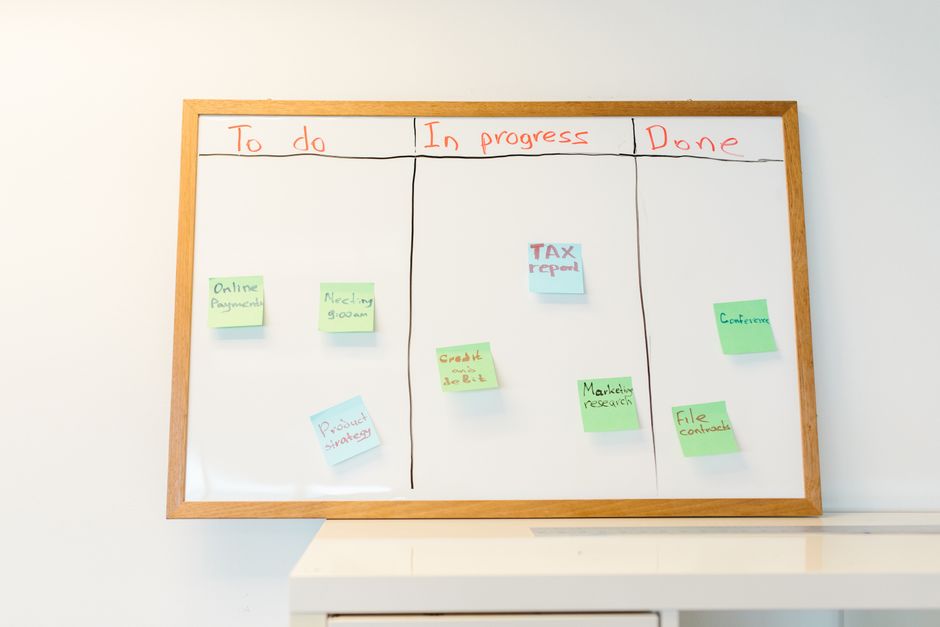
Featured image by RDNE Stock project on Pexels