Plan Your Day And Achieve More With Time Blocking

Time blocking is a time management technique that involves dividing your day into distinct blocks of time, each dedicated to a specific task or group of tasks. This method helps enhance productivity by providing a structured schedule that allows individuals to focus on one activity at a time, reducing distractions and improving the quality of work.
Key Features of Time Blocking
-
Structured Scheduling: Each block of time is allocated for a particular task, such as responding to emails or working on a project. For instance, you might schedule 9 AM to 10 AM for emails and 10 AM to 12 PM for project work[1][2].
-
Enhanced Focus: By concentrating on one task during each block, individuals can enter a flow state, which is conducive to deep work and minimizes the tendency to multitask[2][5].
-
Flexibility and Adaptation: Although time blocking encourages a rigid schedule, it also allows for adjustments. Users can pad their schedules with buffer times to accommodate unexpected interruptions or tasks that take longer than anticipated[1][3].
Variations of Time Blocking
There are several methods related to time blocking:
-
Traditional Time Blocking: Allocating fixed time slots for different tasks.
-
Pomodoro Technique: Working in short, focused intervals (typically 25 minutes) followed by brief breaks.
-
Task Batching: Grouping similar tasks together to complete them in a single time block, which reduces context switching and improves efficiency[1][2][3].
-
Day Theming: Assigning specific themes to different days of the week, such as dedicating Mondays to creative tasks and Tuesdays to meetings.
-
Energy Management Time Blocking: Scheduling tasks based on individual energy levels throughout the day[2][5].
Benefits of Time Blocking
The primary advantages of time blocking include:
-
Increased Productivity: By having a clear plan, individuals can focus on high-priority tasks without the anxiety of an open-ended to-do list[1][3].
-
Improved Organization: Time blocking categorizes tasks and helps prioritize them effectively, leading to better time management overall[1][2].
-
Reduction of Decision Fatigue: With a predefined schedule, individuals spend less time deciding what to do next, allowing for more mental energy to be directed toward completing tasks[4][5].
In summary, time blocking is a powerful tool for anyone looking to enhance their productivity and manage their time more effectively. By implementing this technique, individuals can create a more organized and focused work environment.
For more on time blocking please see below:
How Can I Avoid Overloading My Schedule With Too Many Tasks?

To avoid overloading your schedule with too many tasks, it’s essential to adopt effective time management strategies. Here are some practical approaches: Prioritize Tasks Use a Prioritization Method: Employ techniques like the Eisenhower Matrix to categorize tasks into urgent and important, allowing you to focus on what truly matters[2][3]. Create a Master To-Do List: Maintain […]
What Are Some Effective Ways To Review And Adjust My Time Blocks Regularly?

Regularly reviewing and adjusting your time blocks is crucial for maintaining an effective time management system. Here are some effective ways to review and adjust your time blocks:Conduct Weekly ReviewsSet aside time each week to review your time blocking system:Analyze how well you stuck to your planned scheduleIdentify areas where you consistently ran over or […]
How Do I Balance Work And Personal Tasks In My Time Blocks?

Here are some tips to help you balance work and personal tasks when using time blocking: Create separate blocks for work and personal time The key to balancing work and personal tasks is to intentionally schedule time for both. Don’t just focus on work – make sure to block out time for personal activities as […]
What Strategies Can Help Me Stay Flexible With My Time Blocks?

To maintain flexibility with your time blocks while maximizing productivity, consider the following strategies: Embrace Flexible Time Blocking Adjust Your Mindset: Instead of viewing time blocks as strict commitments, treat them as guidelines. This allows for adjustments based on daily circumstances and energy levels[1][4]. Plan Weekly: Schedule your time blocks at the end of the […]
How Can I Ensure My Time Blocks Are Realistic And Not Overly Optimistic?
Time blocking can be a powerful productivity tool, but ensuring your time blocks are realistic is crucial for its effectiveness. Here are some strategies to help you create more accurate and achievable time blocks: Track Your Time Start by tracking how long tasks actually take you to complete. This will give you a baseline for […]

What Are The Best Practices For Scheduling Breaks During Time Blocking?

Time blocking is an effective productivity technique, and incorporating breaks strategically is crucial for maintaining focus and preventing burnout. Here are some best practices for scheduling breaks during time blocking: Plan Regular Short Breaks Incorporate frequent short breaks throughout your day: Schedule 5-10 minute breaks between time blocks to refresh your mind[1]. Use these brief […]
What Are The Benefits Of Starting Each Day With Time Blocking?

Starting each day with time blocking offers several key benefits for productivity and overall time management: Improved Focus and Concentration By dedicating specific blocks of time to individual tasks, time blocking helps eliminate distractions and promotes deep focus. This allows you to give your full attention to one task at a time, leading to higher […]
Can Time Blocking Be Adapted For Different Types Of Tasks Or Professions?
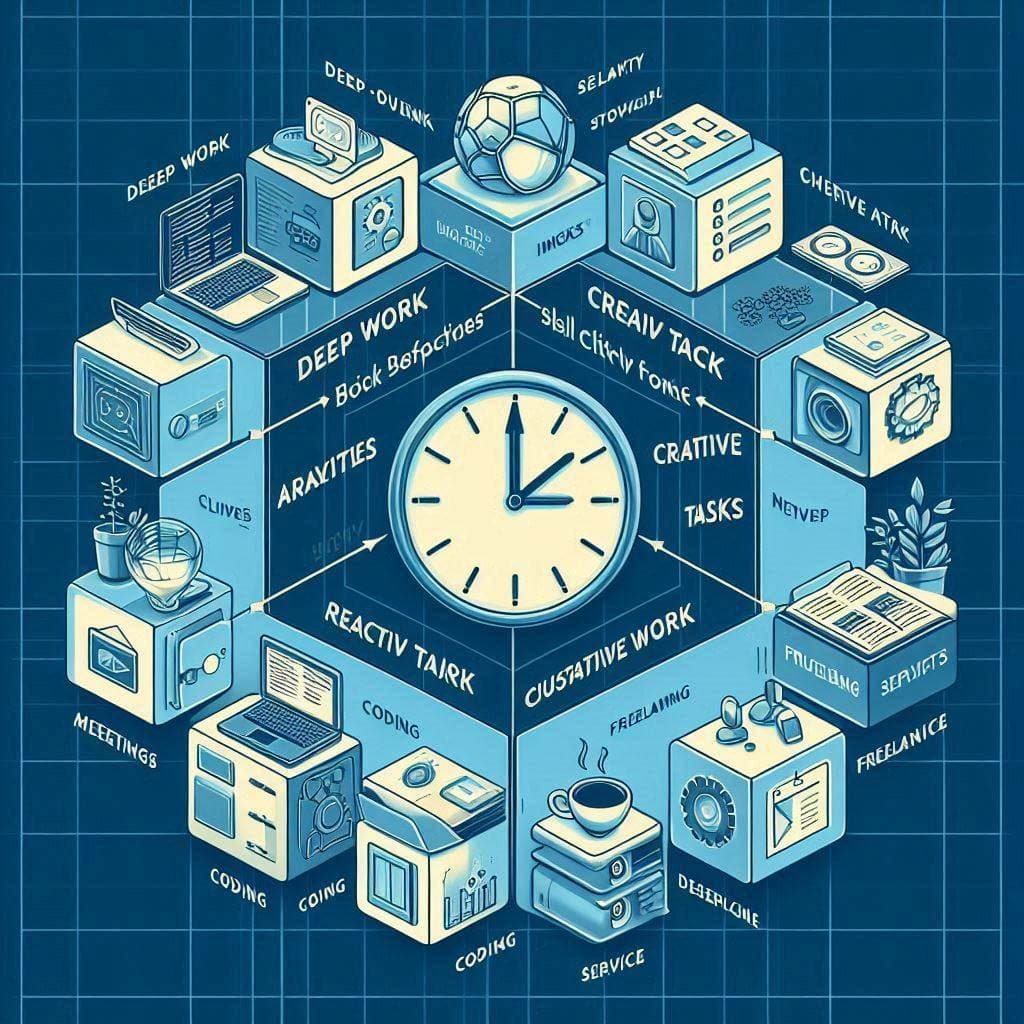
Time blocking can indeed be adapted for different types of tasks and professions. Here are some ways time blocking can be customized: Adapting Time Blocking for Different Tasks Deep Work vs. Shallow Work Deep work tasks that require intense focus (like writing, coding, or strategic planning) can be given longer uninterrupted blocks, typically 2-4 hours. […]
What Are Some Common Mistakes To Avoid When Using Time Blocking?

When using time blocking as a productivity technique, several common mistakes can undermine its effectiveness. Here are some key pitfalls to avoid: 1. Overcommitting One of the most prevalent mistakes is scheduling too many tasks in a single day. This can lead to stress and a feeling of being perpetually behind. To avoid this, limit […]
How Does Time Blocking Compare To The Pomodoro Technique?

Time blocking and the Pomodoro Technique are both productivity methods that can be used to improve focus and time management, but they have some key differences: Time Blocking vs. Pomodoro Technique Structure Time blocking involves dividing your entire day into distinct blocks of time for specific tasks or activities[1][5]. The Pomodoro Technique uses fixed 25-minute […]
What Are The Main Benefits Of Time Blocking For Productivity?

Time blocking is a powerful productivity technique that involves dividing your day into specific blocks of time, each dedicated to a particular task or activity. This method offers several significant benefits for enhancing focus and overall productivity. Main Benefits of Time Blocking 1. Improved Focus Time blocking encourages concentration on one task at a time, […]
How Can I Start Implementing Time Blocking In My Daily Routine?

To start implementing time blocking in your daily routine, follow these structured steps: 1. Identify Your Tasks Begin by listing all tasks you need to complete, including work-related duties, personal errands, and breaks. This comprehensive list will serve as a reference for your planning[1][5]. 2. Prioritize Your Tasks Use a prioritization method, such as the […]
Citations:
[1] https://todoist.com/productivity-methods/time-blocking
[2] https://monday.com/blog/productivity/increase-your-productivity-with-time-blocking-a-step-by-step-guide/
[3] https://resourceguruapp.com/blog/time-management/time-blocking
[4] https://www.youtube.com/watch?v=FLxt4Sbpud4
[5] https://zapier.com/blog/time-blocking-method/
[6] https://www.betterup.com/blog/time-blocking
[7] https://www.meistertask.com/blog/time-blocking
[8] https://uk.indeed.com/career-advice/career-development/time-blocking
Image by Karolina Grabowska from Pixabay