Warehouse Operations: Master Efficiency, Reduce Costs & Boost Growth
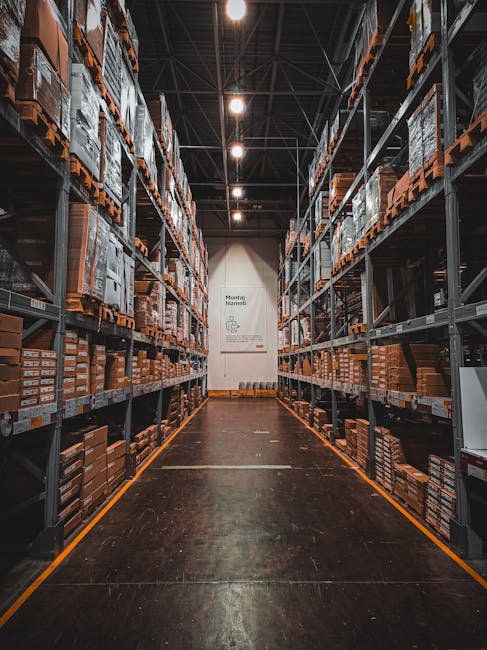
Mastering Warehouse Operations: The Backbone of Your Supply Chain
Imagine a bustling city, where every car, bus, and truck moves with purpose, delivering goods exactly where they’re needed, precisely when they’re needed. That intricate dance of logistics, that heartbeat of commerce, is akin to what happens within the walls of a well-oiled warehouse. Without it, even the most innovative products or the most compelling marketing campaigns would falter. Warehouse operations are not just about storing things; they are about orchestrating the flow of goods, ensuring accuracy, speed, and cost-effectiveness.
From the moment a product enters the facility to the moment it leaves for its final destination, a series of complex, interconnected activities takes place. Optimizing these operations is crucial for any business relying on physical goods. This article dives deep into the core components of warehouse operations, explores best practices, and highlights the technologies that are revolutionizing the field.
Table of Contents
- Executive Summary
- Understanding Warehouse Operations
- Key Processes in Warehouse Operations
- Essential Elements for Efficient Warehouse Operations
- Optimizing Warehouse Operations: A Step-by-Step Guide
- The Role of Technology in Modern Warehousing
- Conclusion
- References
Executive Summary
Warehouse operations are the critical logistical processes involved in managing the flow of goods from their point of origin to their point of sale. This encompasses receiving, storing, picking, packing, and shipping. Efficient warehouse operations are vital for controlling costs, ensuring customer satisfaction through timely delivery, and maintaining inventory accuracy. Key elements for success include strategic layout, robust inventory management, effective use of technology (such as WMS and automation), and a well-trained workforce. Implementing a structured approach to analysis, optimization, and continuous improvement is essential for maximizing efficiency and driving business growth.
Understanding Warehouse Operations
At its core, warehouse operations are about managing the physical movement and storage of goods. Think of a warehouse as the central nervous system of a supply chain. It receives signals (incoming goods), processes them (stores and organizes), and then dispatches them (outgoing orders) to their intended destinations. This involves a complex interplay of processes, technology, and human capital, all working in concert to ensure that products are available when and where they are needed, with minimal waste and maximum accuracy.
Effective warehouse management is a cornerstone of good Operations Management Fundamentals. It directly impacts customer satisfaction, operational costs, and overall business profitability. Inefficient operations can lead to stockouts, delayed deliveries, increased carrying costs, and damaged goods, all of which erode customer trust and harm the bottom line.
Key Processes in Warehouse Operations
Each step in the warehouse lifecycle is critical. Here’s a breakdown of the primary functions:
Receiving
This is the entry point for all goods. It involves unloading incoming shipments, verifying quantities against purchase orders, inspecting for damage, and accurately recording the inventory into the system. A smooth receiving process sets the stage for the rest of the warehouse operations.
Put-away
Once received, goods need to be moved to their designated storage locations. This process requires an efficient system to ensure items are placed in the most optimal spot, considering factors like product velocity (how fast it sells), size, weight, and any specific handling requirements.
Storage
This refers to the organized housing of inventory. Effective storage maximizes space utilization, protects goods from damage, and facilitates easy retrieval. Different storage methods (e.g., racking systems, shelving, bulk storage) are employed based on the nature of the products and demand.
Order Picking
This is often the most labor-intensive and error-prone part of warehouse operations. It involves accurately retrieving items from storage to fulfill customer orders. Efficiency here directly impacts order fulfillment speed and accuracy. Strategies range from simple zone picking to more complex wave picking.
Packing
Once items are picked, they are consolidated and packed for shipment. This involves selecting appropriate packaging materials to protect the product during transit, ensuring all items for an order are included, and preparing the shipment for the next stage.
Shipping
This is the final stage before goods leave the warehouse. It includes sorting shipments by destination, generating shipping labels and documentation, coordinating with carriers, and loading goods onto outgoing transport. Accuracy and timeliness are paramount.
Essential Elements for Efficient Warehouse Operations
Achieving operational excellence requires a holistic approach, focusing on several key pillars:
Layout and Design
The physical layout of a warehouse is critical. An optimized layout minimizes travel time for staff, improves workflow, and enhances safety. This includes strategic placement of receiving docks, storage areas, picking zones, packing stations, and shipping docks, often following principles similar to those discussed in Lean Six Sigma for Operations Leaders.
Inventory Management
Accurate and up-to-date inventory data is non-negotiable. This involves systems and processes for tracking stock levels, managing stock rotation (e.g., First-In, First-Out – FIFO), minimizing discrepancies, and preventing both overstocking and stockouts. Effective inventory management is a core component of Operations Management Fundamentals.
Technology and Automation
Modern warehousing relies heavily on technology. This includes Warehouse Management Systems (WMS) for tracking inventory and managing workflows, barcode scanners for accuracy, and increasingly, robotics and automation for tasks like picking and moving goods. The trend towards Digital Transformation is profoundly impacting warehouse efficiency.
Workforce Management
The human element is indispensable. A well-trained, motivated, and properly managed workforce is key. This involves effective training, clear communication, performance monitoring, and ensuring a safe working environment.
Optimizing Warehouse Operations: A Step-by-Step Guide
Transforming warehouse operations from adequate to exceptional requires a systematic approach. Here’s a guide to help you achieve greater efficiency and effectiveness:
Step 1: Analyze Current Processes
Begin by thoroughly mapping out every current process within your warehouse, from receiving to shipping. Use flowcharts and gather data on cycle times, error rates, and resource utilization for each step. Understand where time and resources are being spent.
Step 2: Identify Bottlenecks and Inefficiencies
Once you have a clear picture of your current state, pinpoint the areas causing delays, errors, or excessive costs. Are orders taking too long to pick? Is there significant time lost in put-away? Are inventory counts frequently inaccurate? These are your opportunities for improvement.
Step 3: Implement Technology Solutions
Evaluate and implement appropriate technologies. This could range from upgrading your inventory tracking software to investing in a robust WMS, or introducing barcode scanners or even automated guided vehicles (AGVs) for material handling. Choose solutions that directly address your identified bottlenecks.
Step 4: Optimize Layout and Storage
Reconfigure your warehouse layout to reduce travel distances and improve traffic flow. Implement a logical storage strategy, perhaps utilizing ABC analysis to place high-velocity items closer to packing and shipping areas. Ensure your shelving and racking systems are appropriate for your inventory.
Step 5: Train and Empower Your Workforce
Invest in comprehensive training for your staff on new processes and technologies. Empower them to identify issues and suggest improvements. A motivated team is crucial for implementing and sustaining changes.
Step 6: Continuous Improvement and Monitoring
Optimization is not a one-time event. Establish key performance indicators (KPIs) and regularly monitor them. Conduct periodic reviews of your processes, solicit feedback from your team, and stay abreast of new technologies and best practices to ensure ongoing improvement.
The Role of Technology in Modern Warehousing
Technology is no longer a luxury but a necessity for competitive warehousing. It drives accuracy, speed, and efficiency.
Warehouse Management Systems (WMS)
A WMS acts as the brain of the warehouse, providing real-time visibility into inventory levels, directing staff activities, optimizing storage space, and managing all inbound and outbound movements. It’s foundational for modern, efficient operations.
Automation and Robotics
From automated storage and retrieval systems (AS/RS) to robotic arms for picking and packing, and autonomous mobile robots (AMRs) for moving goods, automation is transforming the physical labor within warehouses. This can significantly increase throughput and reduce errors.
Data Analytics and AI
By analyzing data generated from WMS and other systems, businesses can gain deeper insights into demand forecasting, inventory optimization, labor productivity, and operational bottlenecks. Artificial intelligence (AI) can further enhance these capabilities, leading to predictive maintenance, smarter routing, and more personalized customer fulfillment.
Conclusion
Warehouse operations are a critical, often overlooked, component of business success. By meticulously managing receiving, storage, order fulfillment, and shipping, and by embracing technological advancements and continuous improvement methodologies, businesses can transform their warehouses from cost centers into strategic assets. Mastering warehouse operations is key to ensuring customer satisfaction, reducing costs, and ultimately, driving sustainable growth in today’s competitive market.
References
- "Warehouse Management Systems: Definition, Benefits, and How They Work." Manhattan Associates, scholar.google.com/scholar?q=warehouse+management+systems+benefits+scholar
- "The Impact of Automation on Warehouse Operations." McKinsey & Company, mckinsey.com/industries/manufacturing/our-insights/the-impact-of-automation-on-warehouse-operations
- "Lean Warehousing: Optimizing Your Storage and Distribution." Lean Enterprise Institute, lean.org/lean-library/articles/lean-warehousing-optimizing-your-storage-and-distribution
- "Supply Chain Management Best Practices." Council of Supply Chain Management Professionals, cscmp.org/supply-chain-management-best-practices
- "The Future of Warehousing: Technology Trends." Forbes, forbes.com/sites/forbesbusinesscouncil/2023/01/10/the-future-of-warehousing-technology-trends/
- "Warehouse Design and Layout Optimization." MIT Supply Chain Management, mit.edu/research/supply-chain-research/warehouse-design-optimization
Featured image by Selim Can Işık on Pexels